
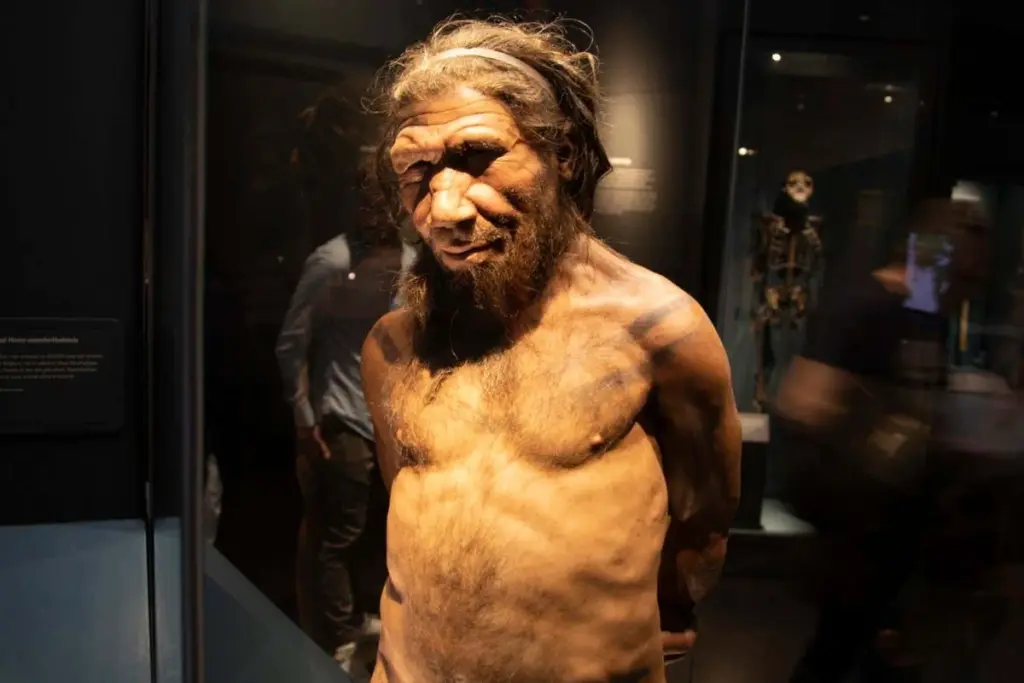
The genetic remnants of interspecies matings between Homo sapiens and Neanderthals suggest a specific pattern: it may have primarily involved female Homo sapiens and male Neanderthals. This conclusion stems from an analysis of the genetic traces left behind by this ancient intermixing within both populations.
The reasons behind this apparent sex-biased mating pattern remain unclear. It is possible that male Neanderthals favored Homo sapiens females over those of their own species. Alternatively, female Homo sapiens might have been drawn to Neanderthal males, or a combination of these preferences could have been at play. Furthermore, the available data does not provide a way to determine whether these encounters were consensual or forced.
“I think we can say very little,” stated Alexander Platt from the University of Pennsylvania in Philadelphia. “The significant point we can make is that this process occurred over many generations.”
Other geneticists find the evidence intriguing but ultimately inconclusive. “I believe we need more evidence, as this is a substantial claim regarding behavior,” commented Arev Sümer from the Max Planck Institute for Evolutionary Anthropology in Leipzig, Germany.
Unraveling the Genetic Interplay
Since 2010, it has been understood that Homo sapiens, often referred to as modern humans, interbred with Neanderthals after some of our ancestors migrated from Africa into Eurasia. Evidence indicates that these interbreeding events happened multiple times. One significant period occurred approximately 50,000 to 43,000 years ago, preceded by an earlier, less precisely dated event that may have taken place 200,000 years or more in the past. Today, all individuals of non-African descent carry some Neanderthal DNA within their genetic makeup.
Despite this knowledge, researchers have not extensively focused on how these interbreeding events impacted the sex chromosomes. Typically, females possess two X chromosomes, while males have one X and one Y chromosome. Platt and his colleagues, Sarah Tishkoff and Daniel Harris, also at the University of Pennsylvania, directed their attention to the human and Neanderthal X chromosomes.
“One of the striking observations when examining the human X chromosome is that it appears to be almost entirely a Neanderthal desert,” noted Harris. In comparison to other chromosomes, the human X chromosome contains remarkably little Neanderthal DNA. The research team explored four potential explanations for this scarcity.
Exploring the Explanations
The first possibility is that Homo sapiens and Neanderthals were sufficiently genetically distinct that their DNA did not integrate well. This phenomenon, known as hybrid incompatibility, could lead to health or reproductive issues in human-Neanderthal hybrids. However, the team’s findings indicated that the Neanderthal X chromosome contained more Homo sapiens DNA than the Neanderthal non-sex chromosomes. This suggests that the X chromosome DNA from both hominin groups was, in fact, compatible.
A second hypothesis suggests that natural selection might have favored modern human DNA. Neanderthals lived in relatively small populations, making it challenging for natural selection to effectively remove harmful mutations. In contrast, modern humans, with larger populations, could more readily eliminate deleterious mutations. This would theoretically allow modern human X chromosome DNA to proliferate within the Neanderthal population. However, the team argues this explanation also falls short, as the modern human DNA preserved on the Neanderthal X chromosome is predominantly located in non-functional regions, where it would offer no discernible benefit.
A third consideration points to a cultural factor. Societal structures vary in how the sexes migrate; in some, females leave their natal group to join their partners, while in others, males relocate. The relocation of modern human women to Neanderthal communities could indeed influence the X chromosome profile. Nevertheless, this alone would not account for the significant bias observed by the team, even if every interbreeding female had been a modern human.
This process of elimination, according to the team, leaves a single remaining explanation: a mating preference. Either male Neanderthals showed a preference for female Homo sapiens over Neanderthal partners, or female Homo sapiens preferred male Neanderthals over human partners—or a combination of both scenarios was true. “If they simply liked it that way, that explains everything,” commented Platt.
Alternative Perspectives and Further Research
However, other geneticists caution against drawing such definitive conclusions and believe the alternative explanations are not yet fully discounted. Sümer highlights that an earlier period of interbreeding had a profound impact on the Neanderthal genome: their original Y chromosomes were entirely replaced by Homo sapiens Y chromosomes. “There must have been a substantial number of modern human males involved in this mixing process,” she stated.
Moisès Coll Macià from the Institute of Evolutionary Biology in Barcelona, Spain, agrees that hybrid incompatibility cannot be entirely ruled out. He points out that the research team assumed this incompatibility would be equally potent in both directions—when Neanderthal DNA entered the modern human genome and vice versa. “That might not be the case,” he suggests.
Coll Macià also advocates for considering another possibility: meiotic drive. Certain genetic elements can unfairly promote the transmission of one chromosome from a pair over the other. His team has uncovered preliminary evidence of such an occurrence in modern humans outside of Africa, which has led to the deletion of Neanderthal DNA from their X chromosomes.