
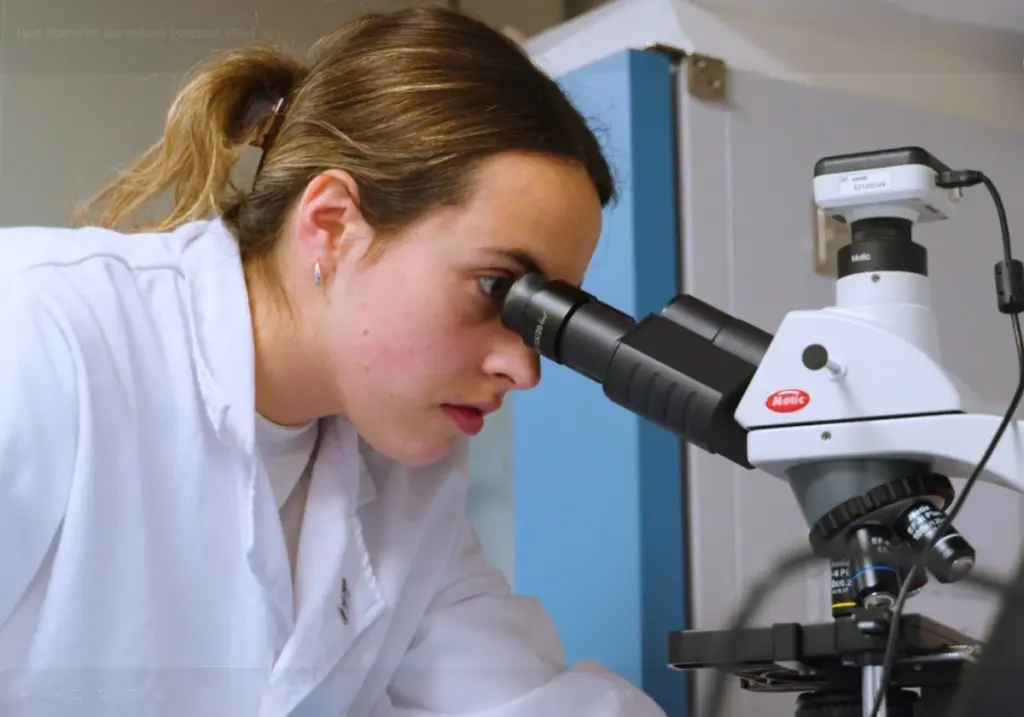
The United Kingdom holds a prominent position in scientific excellence and innovation, making its involvement in research proposals and projects critically important for the advancement of sustainable pharmaceutical practices.
Dr. Laura Rodríguez, a leading scientific figure in an ambitious research initiative funded by Europe, underscored this importance. She is at the forefront of a continent-wide collaboration involving her company, IRIS Technology Solutions, based in Barcelona, and several research institutions.
This exchange of expertise has amplified the impact of the research, exceeding the sum of individual contributions. “The multicultural and multidisciplinary environment is crucial to the results,” Dr. Rodríguez stated. These collaborative endeavors are facilitated by Horizon Europe, the European Union’s significant €96 billion program dedicated to research and innovation funding.
Rethinking the Pharmaceutical Lifecycle for a Greener Footprint
Dr. Rodríguez’s current collaboration aims to significantly reduce the environmental impact of the pharmaceutical industry. This involves a comprehensive re-evaluation of the entire lifecycle of medicines, from the initial molecular design phase through to the patient’s disposal of unused medication.
The scientific complexity of this undertaking necessitates the combined knowledge of world-class researchers, innovative small and medium-sized enterprises (SMEs), and major pharmaceutical corporations operating across Europe. For instance, IRIS Technology Solutions has established partnerships with UK entities, including Quotient Sciences in Nottingham and the pharmaceutical giant AstraZeneca.
Addressing Waste and By-products in Pharmaceutical Manufacturing
The manufacturing of pharmaceuticals generates a disproportionately large amount of waste and by-products when compared to other chemical sectors. Dr. Sara Sànchez, also affiliated with IRIS, highlighted that for every kilogram of medicine produced, the industry yields over ten kilograms of waste. This figure surpasses that of industries often perceived as more pollutive, such as petrochemicals.
Unlike the continuous flow production common in fuel manufacturing, medicines are typically produced in discrete batches. This process demands frequent and intensive cleaning between different product runs, leading to substantial chemical runoff and waste generation.
“The nature of these wastes and products has a significant impact on the environment,” explained Dr. Rodríguez. “Therefore, it’s not solely the quantity of waste and by-products that matters, but also the complexity of the chemicals involved and the potential dangers they present.”
The ETERNAL Project: Innovations in Green Chemistry
To address these pressing issues, the Horizon Europe innovation program is supporting a €5.9 million project named ETERNAL. This initiative involves 16 partners from across the continent, forming a four-year collaborative effort.
The project is actively exploring green chemistry techniques designed to reduce solvent usage and minimize residues in wastewater. It is also investigating mechanochemistry, a method that leverages mechanical forces, such as grinding and compression, to initiate chemical reactions, thereby decreasing reliance on solvents and energy-intensive heating processes. Furthermore, ETERNAL is developing digital twins—virtual replicas of manufacturing processes—to predict the environmental consequences of potential changes before any chemicals are utilized.
A truly “clean” supply chain extends beyond the factory gates to encompass the patient. In line with this, ETERNAL is launching public awareness campaigns to promote responsible medicine disposal. These efforts aim to encourage consumers to return unused pills to pharmacies rather than flushing them down drains, thereby preventing environmental contamination.
Improving Drug Design and Real-Time Reaction Monitoring
The challenges associated with pharmaceutical production begin with the fundamental approach to drug design. In the early stages of drug development, pharmaceutical companies primarily focus on bringing effective and safe medicines to market rapidly. Consequently, factors such as the volume of by-products generated can become secondary considerations. This often results in the adoption of inefficient chemical pathways that become entrenched in manufacturing processes.
One strategy to counter this involves gaining a deeper understanding of chemical reactions as they occur. To this end, IRIS and Quotient Sciences are employing Raman spectroscopy. This technique, akin to chemical fingerprinting, monitors chemical reactions in real-time. This capability allows for enhanced control over the process, leading to a reduction in waste.
The technology functions by directing a laser beam into the reaction vessel and analyzing the reflected light. This light undergoes frequency shifts based on the vibrations of chemical bonds within the mixture’s substances, enabling researchers to gauge the reaction’s progress. If adjustments to reaction conditions, such as temperature or pressure, are required, they can be implemented immediately without the need to sample the chemicals.
Synergistic Partnerships Driving Innovation
The success of these advancements hinges on the synergistic collaboration between partners, as neither IRIS nor Quotient could have achieved this independently. IRIS possesses expertise in developing optical hardware and creating software for data analysis, while Quotient brings an in-depth understanding of the intricate chemical reactions involved.
Dr. Rowena Howie of Quotient noted that her company would not have been able to pursue the Raman spectroscopy approach without external support. “One of the most significant benefits of our collaboration with IRIS is access to technology and expertise that we wouldn’t otherwise possess,” she stated.
Once fully validated, this technique is expected to establish a novel pathway for precisely understanding and monitoring the chemical processes central to drug manufacturing. “The real-time interface is what will truly drive improvements,” Dr. Howie added.
The aspiration is for this partnership to continue beyond the ETERNAL project, allowing the Raman spectroscopy technique to be applied to a broader range of chemical processes.
Digital Twins and Advanced Filtration for Efficiency
IRIS has also collaborated with AstraZeneca to develop membranes for filtering active ingredients or impurities from solvents. This method consumes considerably less energy than conventional separation techniques, such as distillation.
A critical aspect of this development involves identifying the optimal pore size for the filter. Traditionally, this would require numerous time-consuming and wasteful experiments. To circumvent this, IRIS has created a digital twin of the process. This computer simulation models the fluid dynamics around the pores, incorporating the properties of the solvent, solutes, and membrane.
“A digital simulation is, naturally, far less expensive and faster,” commented Dr. David Nettleton from IRIS. It empowers researchers to explore numerous “what-if” scenarios, effectively testing different experimental parameters virtually. This process allows for the identification of the most efficient methodology before any actual chemicals are used.
This complex problem was also beyond the scope of what either party could solve alone. Dr. Nettleton described the partnership as an iterative process, wherein AstraZeneca defined the challenge, and IRIS developed prototype simulation models. “We receive feedback… and we implement updates,” he explained, refining the simulation until it closely mirrors its real-world counterpart.
Open Collaboration and Data Sharing for Future Benefits
The open exchange of ideas among the project participants has been instrumental to its success, according to Dr. Rory MacDonald at Quotient Sciences. “All partners, I believe, have been completely open.” This spirit of openness is set to continue beyond the formal conclusion of the ETERNAL project in August, as a substantial portion of the collected data will be made publicly available.
“It will deliver benefits in terms of reduced environmental impact for all the various partner companies that have been involved,” he affirmed.
Dr. Rodríguez concurred that, on a scientific level, the collaboration has been “fluid and collaborative,” fostering strong personal connections. However, she acknowledged one area where national rivalries remain challenging to transcend.
“We try not to talk about soccer,” she admitted. In Barcelona, a city with a rich footballing heritage, European collaboration, it appears, has its boundaries.
Find out more about collaborating with UK businesses and researchers here