
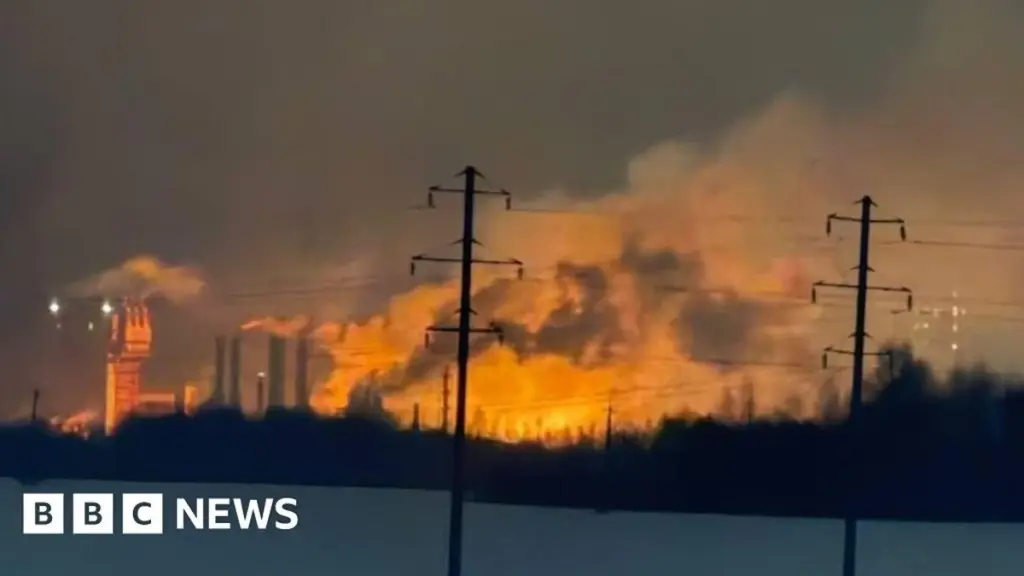
A fertilizer production facility located in western Russia experienced a significant attack involving Ukrainian drones, resulting in the deaths of seven individuals and injuries to at least ten others. The incident occurred in the Smolensk region, approximately 290 kilometers (180 miles) from the Ukrainian border.
Russia’s Investigative Committee reported that the plant in Dorogobuzh was targeted by an estimated 30 drones. The regional governor, Vasily Anokhin, described the event on social media as a “barbaric terrorist attack by the Ukrainian Armed Forces” that struck a “civilian plant.”
The Dorogobuzh facility is known for producing ammonium nitrate and nitric acid. These chemicals are primarily used in the manufacturing of fertilizers but also possess properties that allow them to be component parts in explosives.
Emergency Response and Environmental Concerns
Emergency crews were actively working at the site and had reportedly managed to bring the resulting fire under control, according to Governor Anokhin. He did not immediately clarify the extent of potential toxic pollution risks stemming from the strike on the chemical plant.
To mitigate risks to the local population, authorities were considering the possibility of evacuating residents from a nearby settlement. In response to the incident, educational institutions in Dorogobuzh, including schools, transitioned to remote learning, and kindergarten classes were canceled.
Kyiv has not issued any official statements regarding the drone attack.
Broader Context of Ukrainian Drone Activity
This event follows a recent Ukrainian drone strike that impacted the Kaleykino oil pumping station in the Republic of Tatarstan. This location is situated considerable distance from Ukraine, over 1200 kilometers (750 miles) away.
The targeted pumping station plays a role in the Druzhba pipeline network. This extensive network is responsible for transporting Russian crude oil, passing through Ukraine and supplying refineries in Hungary and Slovakia. According to reports from Reuters, this attack necessitated a reduction in crude oil intake by Russia’s oil pipeline operator, Transneft, by an estimated 250,000 barrels per day.
The Evolving Nature of the Conflict
The full-scale invasion of Ukraine by Russia, which commenced in February 2022, has now entered its fifth year. The conflict on the ground shows little sign of a decisive shift, with neither side appearing poised to gain a significant military advantage.
In this environment, Ukraine has increased its use of long-range drones targeting Russian energy infrastructure. This strategy has had tangible economic consequences; last autumn, Moscow was compelled to implement a ban on petrol exports, which is set to remain in effect until the end of 2025. This decision followed disruptions to facilities across Russia caused by drone attacks.
Peace negotiations between the involved parties have reportedly stalled, largely due to disagreements concerning the Donbas region of Ukraine. Russia has publicly stated its demand for Kyiv to cede control over this territory.
Ukrainian President Volodymyr Zelensky announced on Wednesday that another series of U.S.-brokered trilateral talks would take place in early March. He also indicated that he had directed his chief negotiator to pursue a prisoner exchange agreement.