
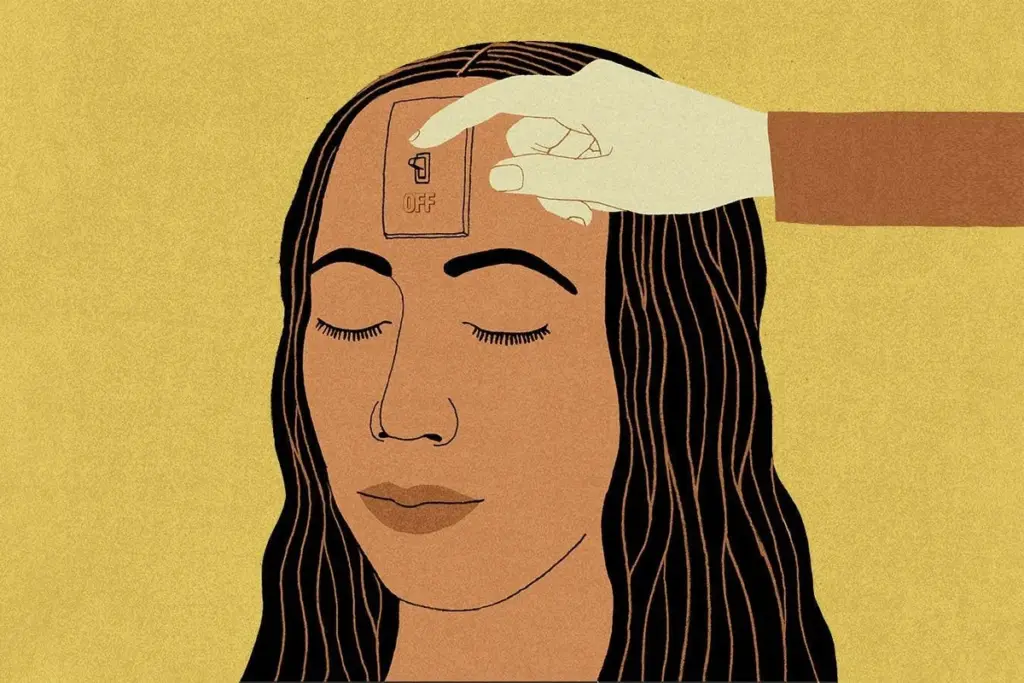
Imagine this: you finally fall asleep at 2 AM, fully aware your alarm is ringing at 6 AM. The immediate thought might be a day of bleary eyes and foggy thoughts. Yet, it’s entirely possible to awaken with a clear mind and a positive outlook, ready to engage in social activities or even some light exercise.
For many, this scenario feels like a distant fantasy. Our society often fixates on the scarcity of sleep and its detrimental effects. We eagerly seek solutions—eye masks, blue-light filters, sleep-enhancing probiotics—all in a relentless pursuit of that elusive eight hours.
But what if the key to feeling truly revitalized has less to do with the quantity of sleep you’ve actually had? Emerging research suggests that, in numerous situations, your perception of sleep carries more weight than the duration itself. Simply convincing yourself that you are well-rested can be enough to unlock the psychological and physical benefits typically associated with restorative sleep. The pertinent question then becomes: how can one cultivate the belief of having slept better than reality dictates? The answer might be surprisingly straightforward.
The Potent Influence of Mindset
The notion that a simple shift in perspective can lead to a feeling of being well-rested might initially seem far-fetched. However, over twenty years of research has firmly established the profound impact of mindset on our health and behaviors.
Educating children on adopting a growth mindset—the conviction that their abilities can be developed through dedication and hard work—is now a standard practice in UK schools. Studies have demonstrated that young individuals who view their intellect and abilities as malleable, rather than fixed, are better equipped to navigate failure and more inclined to embrace new challenges.
Similarly, an individual’s “stress mindset” is closely intertwined with their physical and mental well-being. Those who perceive stress as an energizing force, rather than a debilitating one, exhibit more adaptive physiological responses to stressful situations and tend to perform more effectively under pressure. Perhaps the most extensively studied illustration of mindset’s power lies in its contribution to the placebo effect. Compelling evidence indicates that the mere belief in an intervention’s efficacy can trigger tangible physiological changes, even in the absence of an active therapeutic agent.
Exploring Mindset’s Impact on Sleep
Given this substantial body of evidence showcasing how mindset shapes our waking lives, researchers are now investigating whether analogous effects extend to sleep. While chronic sleep deprivation is linked to adverse health outcomes, it has become evident that even a single night or two of inadequate rest can negatively impact mood and diminish reaction times, thereby impairing skills such as driving.
However, we are surprisingly imprecise in our judgment of sleep quality. This inaccuracy persists even over extended periods; research has shown that some individuals develop an “insomnia identity.” This means that over a third of those who identify as insomniacs are, in reality, achieving adequate sleep. This observation has prompted many researchers to explore whether our beliefs and expectations surrounding sleep itself can influence how we feel.
Last year, Samir Akre and his colleagues at the University of California, Los Angeles, conducted a 13-week study involving 249 individuals with depression. They meticulously recorded both their actual sleep duration, tracked via smartwatches, and their self-reported sleep behaviors. The discrepancy between these two data sets was notable. Many participants claimed to have slept poorly, reporting significant difficulty falling asleep and frequent nighttime awakenings. However, the objective data contradicted these assertions.
Crucially, when participants undertook cognitive tests, it was their self-reported sleep quality, not the objective sleep metrics, that predicted their performance. In essence, the belief that they had slept poorly had a greater detrimental effect on their cognitive function the following day than the actual sleep duration.
This study represents one of several recent investigations suggesting that our thoughts about sleep exert a powerful influence on subsequent emotions and cognition. In a slightly unconventional experiment conducted in 2021, researchers permitted 16 adult participants to sleep for eight hours on one night, followed by only five hours the next. Upon waking, a discreetly manipulated clock informed them of their supposedly recorded sleep duration. Participants then rated their subjective sleepiness and completed a vigilance test measuring their reaction times.
Those who were led to believe they had slept for eight hours—despite actually having slept only five—performed significantly better on the test compared to participants who had slept for eight hours but were told they had slept for only five. The manipulation, making individuals believe they had slept less soundly than they had, resulted in a reduction of their reaction times by approximately 20 milliseconds. The research team posits that this decrement in performance is comparable to what one might observe after four nights of five hours of sleep or two nights of just three hours of sleep.
The participants’ brain activity revealed an even more intriguing narrative. Slow-wave activity in the brain, known as delta power, is directly correlated with “sleep drive”—the innate urge to sleep. Delta power is at its lowest upon waking and gradually increases throughout the day, prompting the need for sleep at night. As anticipated, delta power was more elevated during the daytime following the five-hour sleep compared to the eight-hour rest. However, in instances where participants believed they had slept longer than they actually had, there was a discernible reduction in delta power during the day. This suggests that the mere conviction of having slept well can exert a potent neurological effect, modulating sleep drive and fostering a sustained feeling of alertness.
Understanding Sleep Quality Judgments
Collectively, these findings indicate that altering our perception of sleep duration might enhance our ability to cope with sleep deficits. Yet, to fully harness this potential, it is also essential to understand how individuals determine whether they have experienced a good or bad night’s sleep.
Nicole Tang at the University of Warwick, UK, identified a gap in our understanding within this domain. “When you discuss sleep quality with people, everyone believes they fully comprehend the topic. It’s something profoundly familiar, yet our ideas and definitions often diverge,” Tang observed.
She noted that when assessing sleep, individuals not only referred to the rest they obtained but also how they felt the preceding day or the subsequent morning. Tang points out that sleep experts frequently focus solely on the nighttime hours. “We recognized the necessity of broadening the timeframe to examine what transpired before and after sleep, in addition to events during the night itself,” she stated.
Tang and her colleagues presented 100 individuals, categorized as either good or bad sleepers, with multiple sleep scenarios. Each scenario was constructed with randomly selected parameters. Participants were asked to identify which scenario represented the best night’s sleep.
A representative scenario might read: “I engaged in extensive activities yesterday; I felt positive upon retiring to bed. My sleepiness was moderate. My mind was quiescent, but I felt very comfortable lying down. I fell asleep almost immediately. I awoke several times, but only briefly. I slept for approximately 5.5 hours and did not dream. Upon waking, I felt motivated to rise from bed. Throughout the day, I experienced drowsiness and a sense of mental fogginess. My mood was poor, and I was sociable.”
While this description might seem somewhat disconnected, an analysis of responses across numerous trials enabled researchers to isolate the factors most instrumental in shaping our judgment of sleep quality.
Their discoveries were surprising: our perceptions of sleep quality are not solely dictated by nocturnal events. Tang explained that a person’s “level of physical activity, their mood, their social aptitude, and their ability to think clearly all influenced judgments of sleep quality.”
This realization prompted Tang to consider: if daytime occurrences impact perceptions of the previous night’s sleep, then perhaps an individual’s feelings about their sleep evolve as the day progresses.
To investigate this hypothesis, she designed a subsequent study involving 119 adults. These participants were asked to rate the quality of their preceding night’s sleep every two hours between 8 AM and 10 PM. They also provided information regarding their mood, physical and social activities, and any instances of pain or discomfort. Finally, at the conclusion of the day, participants completed a test designed to assess their recall of the information they had provided earlier.
Over 90 percent of the participants altered their rating of their perceived sleep quality at least once. This change was not attributable to forgetfulness; all participants who modified their ratings accurately remembered their initial assessments. Far from being a static metric, individuals’ sleep quality ratings fluctuated throughout the day. The factor that most significantly enhanced people’s perceptions of their sleep was physical activity.
“When individuals engaged in more positive physical activities, their sleep quality ratings tended to increase,” Tang reported. This held true even when they had experienced an objectively poor night’s sleep. Tang suggests that even after minimal sleep, exercising is a beneficial pursuit, as it has the potential to positively reframe one’s memory of sleep, leading to advantageous downstream effects.
Following insufficient sleep, people often tend to cancel appointments, forgo exercise, and believe they should remain indoors. Tang notes that these are all safety behaviors that impose limitations on one’s actions, but research indicates this approach might also prevent the positive revision of one’s view of sleep.
Many individuals fail to recognize our remarkable capacity to cope with short-term sleep loss. “It’s a resilience we’ve largely forgotten,” Tang stated. “If your conception of sleep quality is not rigid, and you understand that it can be modified, you can effectively enhance your well-being.” Essentially, a few nights of poor sleep do not incapacitate us, unless we believe they do.
Strategies for Adjusting Sleep Perception
Much of the research on sleep mindset focuses on scenarios involving one or two nights of missed sleep. However, these insights may also be beneficial for individuals experiencing long-term sleep difficulties. This has significant implications, given that chronic sleep problems are associated with serious health consequences, including an elevated risk of diabetes, cardiovascular disease, and dementia.
While numerous factors can contribute to persistent sleep issues, a simple cycle of short-term sleep loss can sometimes escalate into chronic insomnia. Tang explains that beliefs about poor sleep can become self-fulfilling prophecies: when individuals perceive they have slept poorly, it can lead to worry about insufficient sleep and anxiety about the subsequent night’s rest. This state can elevate the brain’s arousal levels, making individuals more susceptible to waking during the night, thereby perpetuating a cycle of poor sleep.
Actively reframing one’s perception of the previous night’s sleep the following day—through activities like exercise, for instance—could help to disrupt this cycle. Mindfulness also appears to be another effective method.
In a study directed by Jason Ong at Nox Health in Alpharetta, Georgia, researchers utilized EEG to examine overnight brain activity in participants both before and after they completed eight weekly mindfulness sessions, coupled with daily practice. Their sleep improved, yet their brain activity demonstrated an increase in metrics associated with wakefulness during the night.
Ong suggests that the practice of mindfulness—a form of meditation that trains the mind to focus on internal and external experiences without judgment—altered participants’ mindset during the night. Upon waking, they exhibited improved capacity to regulate their emotional responses and avoid anxious thoughts, thereby preventing the detrimental feedback loops that frequently exacerbate insomnia. “From that perspective,” he commented, “it’s changing how they perceive or relate to the state of being asleep [or awake].”
The Microbiome and Sleep: An Interconnected Relationship
Research is increasingly highlighting the intricate connection between sleep and the gut microbiome, suggesting that dietary choices during the day could positively influence sleep quality at night.
Revisiting Sleep Duration Expectations
A final approach to cultivating a more positive sleep mindset involves reassessing the perceived number of hours one requires. The often-cited benchmark of eight hours is not universally applicable (see “How Much Sleep Do You Actually Need?”). Carlos De Las Cuevas at the University of La Laguna in Spain notes, “Even healthy sleepers may internalize an ideal—frequently eight hours—that doesn’t align with their personal physiological requirements, thereby creating a subtle yet persistent expectation gap.” He adds, “Assisting individuals in recalibrating their expectations can diminish worry and enhance sleep satisfaction, even without increasing total sleep time.”
It is important to acknowledge that none of these strategies negate the importance of adhering to good sleep hygiene practices. These include avoiding bright screens before bed, ensuring adequate light exposure upon waking, and maintaining a balanced diet.
While prioritizing sufficient sleep remains the ideal scenario, knowing that not all is lost when this isn’t feasible offers reassurance. A simple alteration in mindset can provide the much-needed energy boost, resetting your brain for a day characterized by clarity and positivity, and a night of restful slumber—even after an uncomfortably early start.
How Much Sleep Do You Actually Need?
Sleep anxiety can be exacerbated by the perceived necessity of obtaining eight hours of sleep per night. However, while this is frequently presented as the optimal duration, many individuals can function well with less.
Research indicates that cultural expectations play a significant role in how individuals value sleep. People in pre-industrial agricultural societies typically sleep between 5.7 and 7.1 hours per night and report complete satisfaction with their sleep quality. For those residing in industrial societies, there is little evidence of harm associated with consistently sleeping more than six hours, and individuals who sleep seven hours per night tend to live longer than those who sleep for extended periods.
To determine your individual sleep needs, Michael Goldstein, co-director of sleep medicine at Harvard Medical School, suggests identifying a period within the past year when you consistently experienced the most sleep—or within the past decade if you are aged 30 or older—and using that average duration as an initial target. He emphasizes, “Crucially, consider only the actual time spent asleep and not the time in bed.”