
For decades, a specific set of numbers has been foundational to nuclear physics research. Now, scientists finally understand how these numbers emerge from the intricate quantum interactions of nuclear particles and forces. This understanding resolves a long-standing discrepancy between theoretical models and experimental observations.
Nearly 80 years ago, physicist Maria Goeppert Mayer observed that atomic nuclei containing certain quantities of protons and neutrons, such as 50 or 82, exhibit exceptional stability. The accumulation of evidence in the subsequent years pointed to more such “magic numbers.” These numbers are associated with the most stable elements, which, consequently, are the most abundant in the universe.
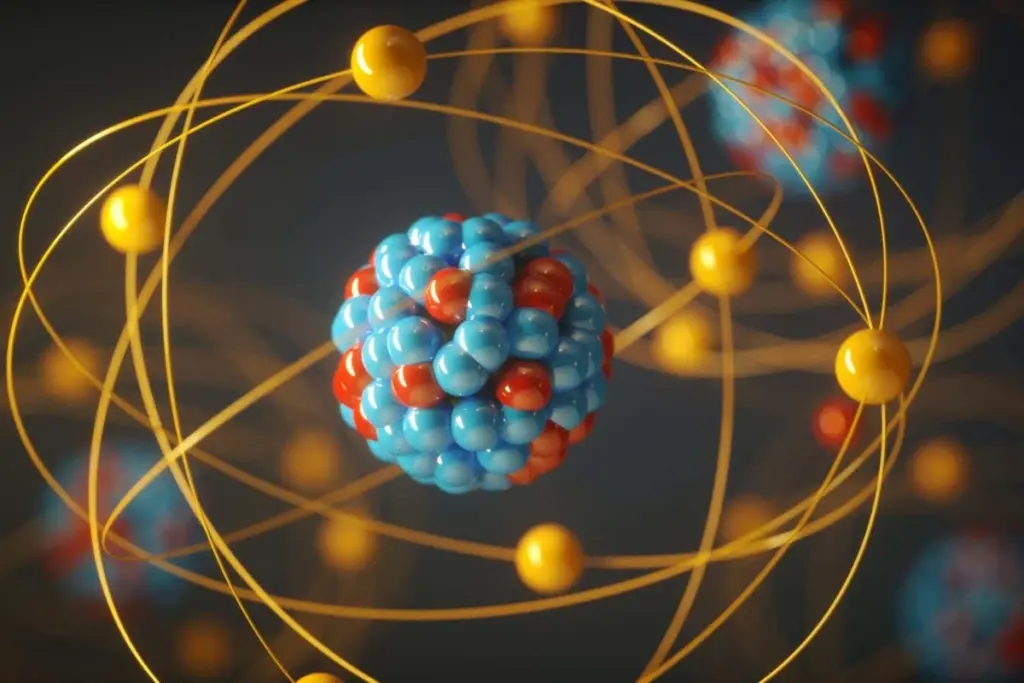
Goeppert Mayer and her contemporaries proposed that protons and neutrons occupy distinct energy levels, commonly referred to as shells. This model, still prevalent in the interpretation of numerous nuclear physics experiments, treats each nuclear particle as independent. However, our current understanding of quantum mechanics asserts that particles within nuclei interact quite strongly.
A team led by Jiangming Yao at Sun Yat-sen University in China has now reconciled this apparent contradiction, shedding light on how magic numbers arise from these complex interactions.
Bridging Theoretical Descriptions
Yao explained that the traditional shell model relies on experimental data and does not fully incorporate the detailed interactions between individual particles. In contrast, his team commenced their calculations from fundamental principles. This approach involved mathematically describing the intricate relationships between particles, how they bind together, and the energy required to separate them.
Yao likened the two descriptive approaches to images captured at low and high resolutions. “Previously, researchers either modeled the system directly at a low resolution or attempted to understand nuclear structure at high resolution,” he stated. “We employed modern methodologies to construct a bridge connecting these descriptions.”
The researchers began with a high-resolution representation of the nuclear system. Through successive steps in their calculations, they progressively blurred this representation, observing the resulting transformations in the particle structures. This process allowed them to track the evolution of the nuclear configuration.
As they navigated this mathematical framework, the scientists noted a shift in the symmetry of the particles’ quantum states. Plotting equations that define these states accordingly revealed shapes with varying symmetries at different levels of detail. This phenomenon ultimately led to a nuclear structure characterized by maximum stability when particles naturally aggregated into configurations corresponding to the magic numbers.
Experimental Analogies and Broader Implications
Jean-Paul Ebran of the French Alternative Energies and Atomic Energy Commission highlighted the work’s significance, describing it as a theoretical probe—a kind of mathematical microscope—that mirrors experimental methodologies. “Nature appears different depending on the resolution at which it is observed,” Ebran remarked. “This study truly resonates with our experimental practices.”
Ebran further noted that the observed symmetry shifts are linked to effects described by Albert Einstein’s theory of special relativity. This connection suggests a more comprehensive understanding of how magic numbers integrate diverse aspects of nuclear theory.
The researchers have validated their theoretical model using a specific isotope of tin that is doubly magic, possessing 50 protons and 82 neutrons, and several other nuclei. Future research aims to extend this analysis to heavier atomic nuclei. These heavier elements are typically unstable, and understanding their formation processes, particularly within cataclysmic cosmic events such as exploding stars or merging neutron stars, is a key objective.