
Genetic analysis has identified a cold virus that infected a woman in London approximately 250 years ago. This discovery marks the oldest confirmed human RNA virus found to date.
While DNA sequencing has allowed scientists to detect viral traces up to 50,000 years old from ancient human remains, many viruses, including common cold-causing rhinoviruses, possess RNA genomes. RNA is significantly less stable than DNA, typically degrading within a few hours after death.
Our cells also generate RNA as part of the process involved in interpreting genetic code and synthesizing proteins. Recent years have seen researchers successfully extend the age from which ancient RNA can be retrieved. One notable instance involved a team extracting RNA from a woolly mammoth that had perished 40,000 years ago.
“Up until this point, the majority of ancient RNA investigations have depended on exceptionally well-preserved materials, such as permafrost samples or dried seeds. This has greatly restricted our understanding of past human diseases,” noted Erin Barnett of the Fred Hutchinson Cancer Center in Seattle, Washington.
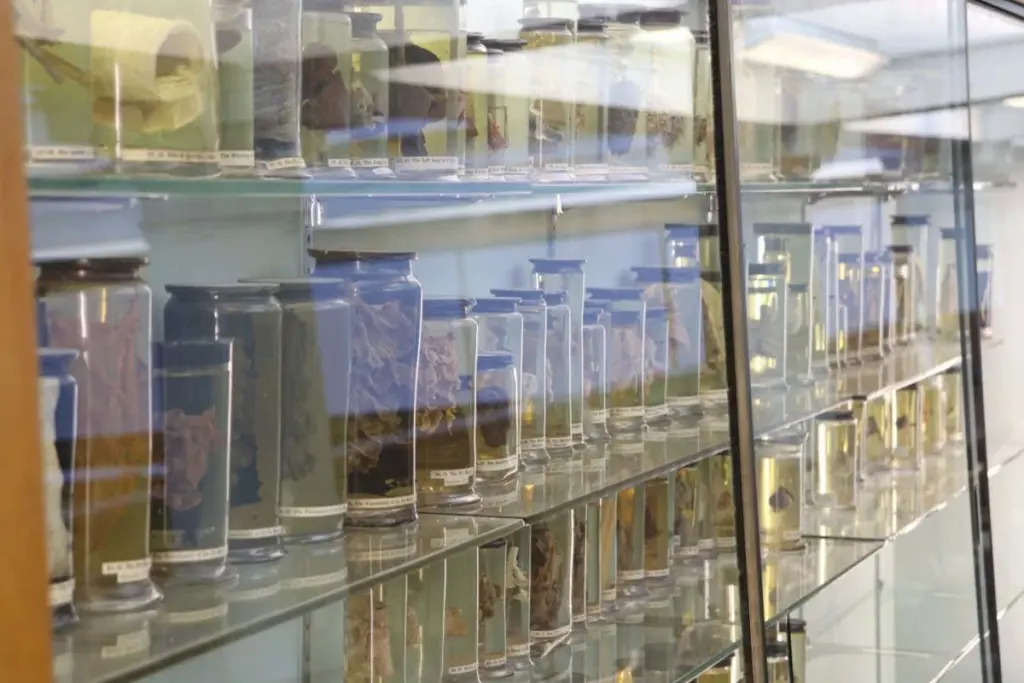
Since the early 1900s, many tissues in pathology collections have been preserved using formalin. This chemical agent helps protect RNA from rapid and complete degradation. Barnett and her colleagues initiated a search through European pathology collections for human specimens dating back further than the early 20th century, hoping to find those preserved well enough for RNA to have survived.
At the Hunterian Anatomy Museum at the University of Glasgow, UK, the research team located lung tissue samples. These samples, preserved in alcohol rather than formalin, originated from two individuals. One was a woman from London who died around the 1770s, and the second was a person of unknown sex who died in 1877. Both individuals had documented histories of severe respiratory illness.
Subsequently, the scientists proceeded to isolate both RNA and DNA from the lung tissue of both individuals. Barnett reported that the RNA recovered from both lungs was “extremely fragmented.” Most of these fragments averaged only about 20 to 30 nucleotides in length.
“To provide a clearer picture, RNA molecules within living cells typically exceed 1000 nucleotides in length,” she explained. “Consequently, our task involved piecing together information from numerous tiny fragments rather than working with long, intact strands.”
The researchers gradually managed to reconstruct the complete RNA genome of a rhinovirus from the 18th-century woman. Additionally, they found evidence of bacterial infections contributing to her respiratory disease, including pathogens such as Streptococcus pneumoniae, Haemophilus influenzae, and Moraxella catarrhalis.
The reconstructed historical RNA virus was then compared against a database maintained by the US National Institutes of Health. This database contains records of millions of viral genomes, including numerous rhinoviruses collected globally. The comparison indicated that the historical virus genome belongs to the human rhinovirus A group.
It represents an extinct lineage most closely related to the modern genotype known as A19. “By comparing it to present-day viruses, we estimate that this historical virus and modern A19 last shared a common ancestor sometime in the 1600s,” stated Barnett.
“The individual stories of these two people remain largely unknown, and we hope this study can contribute to their recognition,” she added.
Love Dalén from Stockholm University in Sweden commented, “This represents a truly significant discovery, as it demonstrates the feasibility of recovering RNA from wet collections that predate the widespread use of formalin.”
“This marks the initial phase of what is anticipated to be a substantial expansion in the study of RNA viruses. Many RNA viruses exhibit rapid evolution, meaning that examining them over timescales of several centuries will offer crucial insights into viral evolutionary processes,” he noted.