
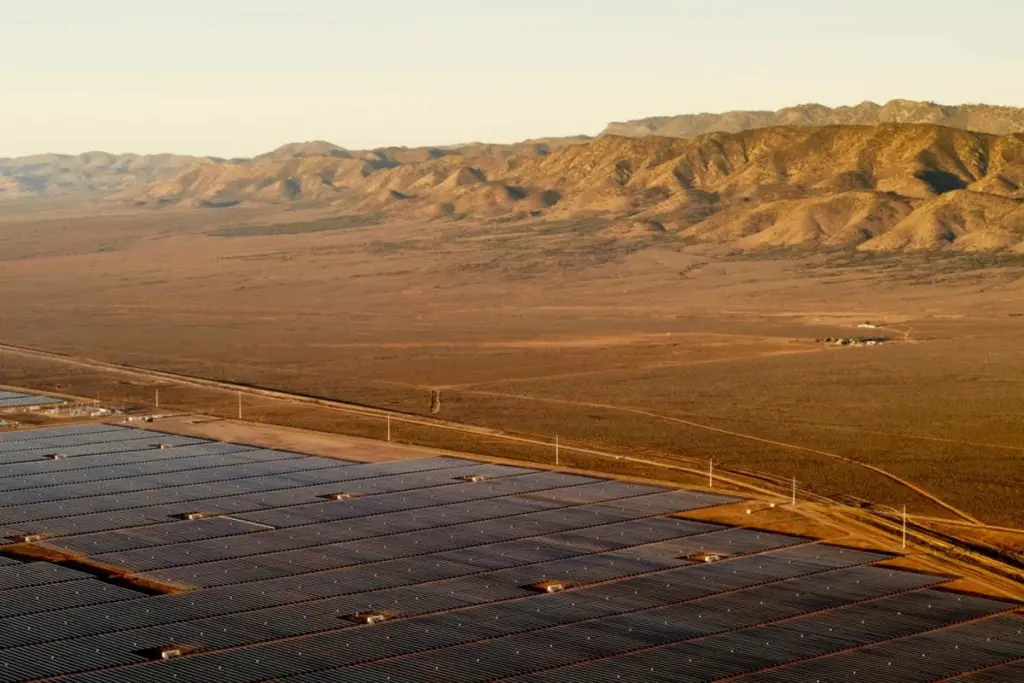
South Australia is nearing its objective of operating entirely on solar and wind energy. This transition has led to a one-third reduction in electricity prices over the past year, establishing the state as having the lowest rates in Australia. It now serves as a practical demonstration of the economic advantages achievable through widespread decarbonization of the electricity grid.
Tim Buckley, an independent energy analyst at the Sydney-based think-tank Climate Energy Finance, notes South Australia’s leadership in renewable energy adoption. He states, “South Australia is a world leader in terms of its renewable energy transition and with that comes risks, but now it is showcasing its successes. South Australian consumers are starting to really benefit from sustained, lower power prices.”
Renewables Dominance and Falling Wholesale Prices
During the final quarter of 2025, solar and wind energy accounted for 84 percent of South Australia’s electricity generation. This figure represents the highest proportion among major grids globally. The state has set a goal to achieve 100 percent renewable energy by the end of the following year.
This significant increase in renewable energy sources is directly contributing to a decrease in electricity costs. According to the Australian Energy Market Operator’s (AEMO) most recent report, the average wholesale electricity price in South Australia dropped by 30 percent in the last quarter of 2025 when compared to the same period a year prior. Consequently, the state shared the distinction of having the lowest electricity prices in Australia with Victoria, which ranks second nationally for wind and solar energy utilization.
Overcoming Past Criticisms and Price Volatility
This development offers welcome relief for the South Australian government, which had previously faced criticism for rising electricity prices attributed to its swift embrace of renewable energy. Previously, the state sometimes experienced significant price spikes during periods of low wind or sunshine. This necessitated reliance on costly natural gas for backup power, with gas generator owners charging premium rates due to the intermittent demand.
Buckley further explained that Australian gas prices saw a substantial 500 percent increase following Russia’s invasion of Ukraine, exacerbating previous challenges.
Mega-Batteries and Grid Stability
To counteract this price volatility, South Australia has deployed seven “mega-batteries,” each approximately the size of a football field. These batteries are recharged by nearby solar and wind farms on days with favorable weather conditions and then supply backup power during calmer, less sunny periods, thereby reducing dependence on gas generators. The integration of the two most recent battery installations in 2025 played a role in the observed price reductions.
The effectiveness of South Australia’s battery strategy has prompted other Australian states to invest in similar infrastructure. A recent report by Rystad Energy highlighted that “utility-scale batteries are no longer a complementary technology in Australia’s power system – they are actively displacing gas generation across multiple states.” This positions Australia as a “global proof point” for the successful implementation of this technology.
New Wind Farm Boosts Supply and Drives Down Costs
Another factor contributing to the decline in electricity prices is the operation of Goyder South, a large new wind farm in South Australia that commenced operations in October. This 412-megawatt facility is the state’s largest wind farm and is projected to boost its wind energy generation capacity by 20 percent. As Buckley explained, “Basic economics says that if you build more supply, then prices go down.”
Negative Pricing and Surplus Energy Management
The AEMO report indicated that wholesale electricity prices in South Australia were negative 48 percent of the time during the last quarter. This scenario occurred when the state generated more electricity than it consumed. To manage this surplus, prices were set to negative values, incentivizing electricity producers to temporarily reduce output, according to Buckley.
In November, South Australia established a new record by meeting 157 percent of its electricity demand solely through renewable energy at one point. On such occasions, excess energy is absorbed by the state’s batteries, exported to neighboring Victoria, or curtailed, which involves temporarily disconnecting wind and solar farms from the grid.
Household Energy Independence
Simultaneously, many South Australian households are reducing their reliance on grid electricity, with some becoming entirely self-sufficient. Over half of the state’s homes are now equipped with rooftop solar panels, providing power during daylight hours. Approximately 50,000 homes have also installed their own home batteries. These systems are charged by rooftop solar during the day and then supply power after sunset.
Following the Australian federal government’s introduction of a 30 percent discount on home batteries in July 2025, South Australia has seen the highest per capita installation rate of home batteries among all states and territories.
Future Expansion and 100% Renewable Target
In December, the state finalized agreements for the construction of two additional large wind farms. These projects are crucial for meeting its target of achieving 100 percent net renewable energy by the end of next year. Buckley expressed confidence in the state’s progress, stating, “I think the target is on track and these two new wind farms will be key enablers of that.”