
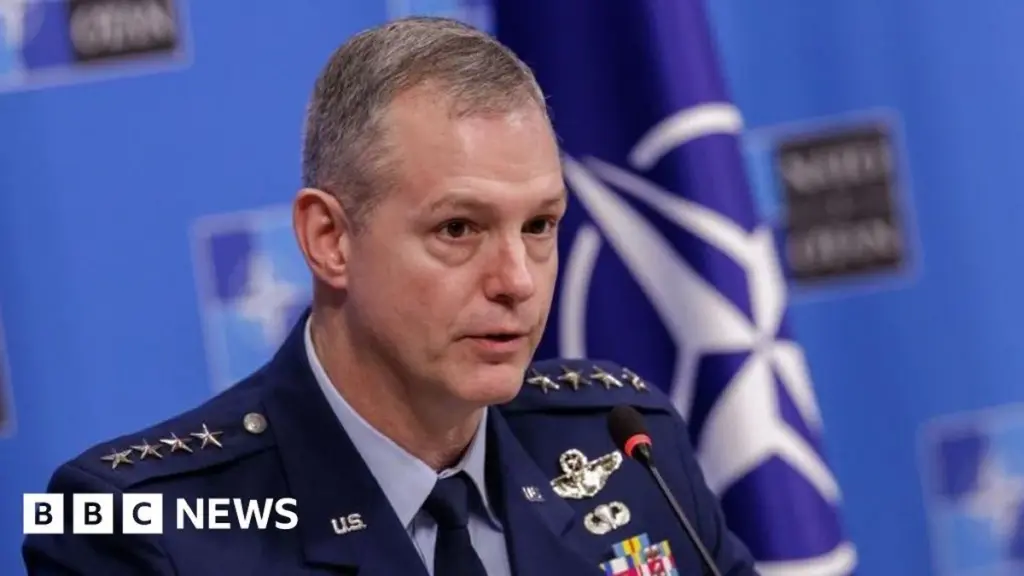
The United States and Russia have reached an agreement to re-establish high-level dialogue between their respective armed forces. This significant development follows a meeting of senior US and Russian military officers held in Abu Dhabi.
The discussions took place on the sidelines of broader talks concerning the ongoing conflict in Ukraine. According to a statement issued by US European Command, the renewed military-to-military contact is intended to ensure consistent communication as efforts continue towards achieving a lasting peace.
This agreement represents a notable shift in relations between the world’s two largest nuclear powers. It also comes at a time when former President Donald Trump had repeatedly expressed his desire to improve diplomatic ties between the two nations.
The announcement also coincided with reports suggesting that the US and Russia were engaged in negotiations regarding an extension of a nuclear arms reduction treaty, which was set to expire on Thursday. Such treaties have historically served as a framework for managing strategic weapons.
Historical Context of Military Communication
Throughout decades marked by periods of crisis and confrontation, the US and Russia have often maintained open channels of communication between their military branches. The primary objective of these channels has consistently been to prevent misunderstandings and de-escalate potential conflicts.
However, these direct military contacts were suspended in 2021, occurring shortly before Russia’s full-scale invasion of Ukraine commenced. Since that suspension, several incidents have led to heightened tensions, including Russian drones and aircraft entering NATO airspace, as well as US unmanned aircraft operating over Syria and in the Black Sea region.
Details of the Recent Agreement
The accord for resuming dialogue was finalized during recent meetings in the United Arab Emirates. The discussions involved US General Alexus Grynkewich, who holds the position of America’s and NATO’s top general in Europe, alongside senior Russian and Ukrainian military officials.
US European Command emphasized the importance of continued military engagement. “Maintaining dialogue between militaries,” the command stated, “is an important factor in global stability and peace, which can only be achieved through strength, and provides a means for increased transparency and de-escalation.”
The statement further elaborated that this established communication channel will “provide a consistent military-to-military contact as the parties continue to work towards a lasting peace.” The overarching aim, as outlined, is “to avoid miscalculation and to provide a means for avoiding unintended escalation by either side.”
While some level of contact between US, NATO, and Russian military officers has occurred in recent years, this latest announcement signifies the formal re-establishment of regular dialogue among senior commanders.
Nuclear Arms Treaty Expiry and Negotiations
On Thursday, Russia indicated its regret over the expiry of the New START treaty with the United States, while simultaneously affirming its readiness to engage in further discussions. The Kremlin has proposed extending the treaty.
Dmitry Peskov, a Kremlin spokesman, stated that Russia would participate in dialogue with the US if its proposal for an extension received a positive response. The news service Axios reported that negotiations had been ongoing over the preceding 24 hours in Abu Dhabi, with both nations reportedly nearing an agreement on the continued observation of key terms within the treaty.
The New START treaty, initially agreed upon in 2010, stipulated that both signatories would limit their deployed strategic nuclear warheads to no more than 1,550, with a maximum of 700 deployed bombers or missiles. The expiration of this treaty would leave both countries without a legal framework to restrain their nuclear ambitions for the first time in approximately fifty years.