
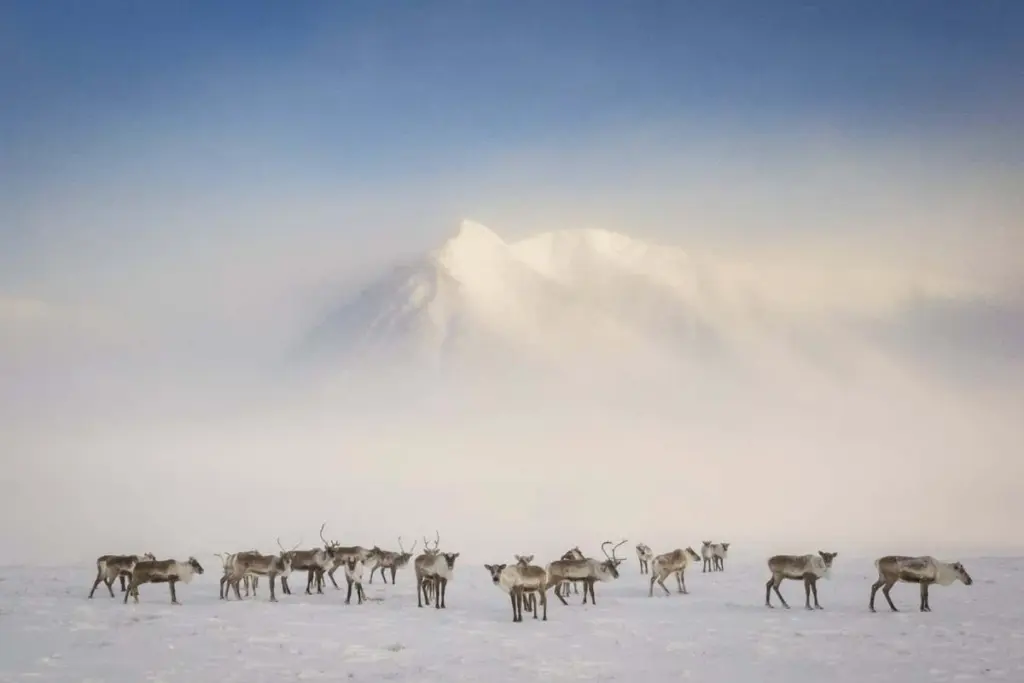
The Arctic, when considered from more southerly latitudes, often evokes a singular image: an immense white expanse populated by walruses and polar bears. Some picture penguins there, a misattribution highlighting the remoteness and alien nature of these extreme environments.
However, a compelling new book asserts that neglecting the Arctic carries significant risks, particularly given its crucial role in our planet’s accelerating warming trend. Journalist Neil Shea, in his debut work “Frostlines: A Journey Through Entangled Lives and Landscapes in a Warming Arctic,” synthesizes two decades of reporting, much of it for National Geographic.
This lyrical and deeply affecting narrative non-fiction piece introduces readers to the Arctic’s wonders. Shea effectively brings these landscapes to life for those unlikely to ever visit, while simultaneously constructing a persuasive argument for why we must direct our attention northward.
Encounters in the Ice
Shea opens “Frostlines” with a vivid account from his initial Arctic expedition in 2005. While camping on the sea ice of Canada’s Admiralty Inlet, he observed a remarkable gathering of narwhals. Adult males were seen interacting, possibly as a display of sexual dominance, amidst a flurry of marine and avian activity encompassing fish, birds, and other wildlife.
This spectacle, described as “all those lives converging, colliding… stories that could never fit into any magazine,” ignited Shea’s enduring fascination with the Arctic. Despite his initial reservations about the limitations of written narratives, he skillfully conveys his passion to the reader through vivid descriptions and remarkable wildlife encounters.
On Ellesmere Island, Shea describes forming a connection with a population of Arctic wolves that exhibit no fear of humans. He recounts one instance where a wolf even absconded with his inflatable pillow from his tent. Further south, in Alaska’s Kobuk Valley National Park, he camped alongside vast caribou herds and developed a sense of proximity to a brown bear.
Beyond Wilderness: The Human Element
While it would have been feasible to focus “Frostlines” solely on the Arctic’s wilderness and fauna, and Shea writes beautifully about both, such an approach would have undersold the region’s complexity. It would also have catered to our generalized, often simplistic, preconceptions of the Arctic.
Instead, Shea endeavors to present a more nuanced portrayal, even if it means confronting uncomfortable truths. The territory north of the Arctic Circle is not a uniform snowscape. It comprises eight modern nations and is home to 4 million inhabitants. Among them are approximately 400,000 Indigenous individuals, representing dozens of distinct tribal groups who speak numerous languages and dialects.
Through engaging profiles of the people he encounters, Shea vividly illustrates the realities of daily existence across this diverse region. He also addresses the increasingly severe challenges posed by an Arctic that is warming at a rate three to four times faster than the global average.
Witnessing Change
Some of Shea’s Inuit interviewees are keen to share the profound changes they have observed over mere decades and their efforts to protect their communities and traditional lifestyles. Others express a greater reluctance, even resentment, stemming from their experiences with numerous Westerners who have visited, inquired, documented, and then departed.
Shea notes the irony of people being “at the mercy of nature for survival” while camping on a frozen lake, with “no one want[ing] to talk about climate change.” Nevertheless, the impacts are already evident, disrupting the Arctic’s delicate ecosystems and exposing them to new threats.
The diminishing ice is facilitating increased maritime access to the Arctic, making it an area of strategic interest, as exemplified by former US President Donald Trump’s pronouncements regarding Greenland. Concurrently, geopolitical events, such as the war in Ukraine, have led to the closure of other regions.
“Frostlines” concludes with Shea at the Norway-Russia border, a location where migrants undertake perilous journeys in search of refuge, and where even reindeer face restrictions on movement.
An Interconnected World
As remote as the Arctic may appear, Shea demonstrates its integral connection to our familiar modern world. It is also a region increasingly imperiled by human activities. The link between our lives and the Arctic ice is more profound than we might realize.
The people and animals inhabiting the Arctic cannot afford to ignore the accelerating challenges they face. As Elle Hunt, a writer based in Norwich, UK, observes, the “worsening cracks” demand attention.