
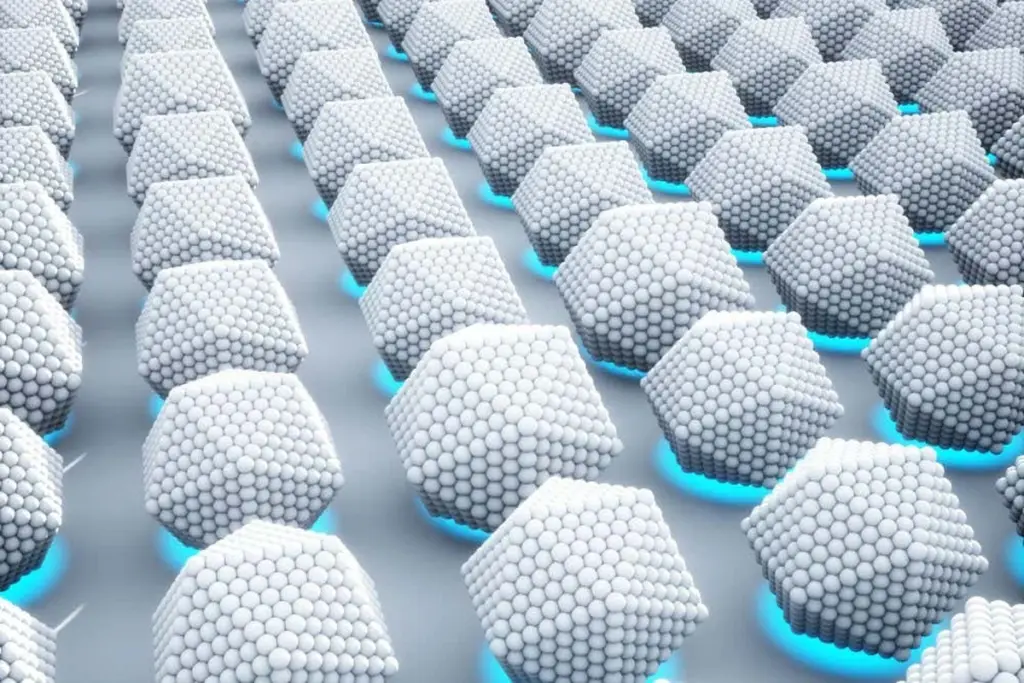
The development of an exceptionally large quantum simulator offers a promising avenue for exploring the intricate workings of exotic quantum materials. This advancement could significantly aid in optimizing these materials for future applications.
Quantum computers are poised to revolutionize computation by leveraging quantum phenomena to solve problems beyond the reach of even the most powerful conventional machines. Similarly, quantum simulators, by harnessing these same quantum principles, can provide researchers with the capability to accurately model materials and molecules that are currently poorly understood.
This is particularly relevant for materials like superconductors, known for their near-perfect electrical conductivity. Their remarkable properties stem from quantum effects that can be directly implemented and studied on quantum simulators, bypassing the complex mathematical translations required by traditional computing methods.
A team led by Michelle Simmons at Silicon Quantum Computing in Australia has now engineered what is recognized as the largest quantum simulator for quantum materials to date, a system they have named Quantum Twins. “The scale and controllability we have achieved with these simulators means we are now poised to tackle some very interesting problems,” Simmons stated. “We are designing new materials in previously unthought-of ways by literally building their analogues atom by atom.”
Building the Quantum Simulator
The researchers constructed multiple simulators by meticulously embedding phosphorus atoms within silicon chips. Each atom was configured to function as a quantum bit, or qubit, the fundamental unit of quantum computing and simulation. The team demonstrated a precise ability to arrange these qubits into various grid configurations, effectively emulating the atomic structures of real-world materials.
Each iteration of the Quantum Twins simulator featured a square grid comprising 15,000 qubits, a quantity exceeding that of any preceding quantum simulator. For context, similar qubit arrays have previously been realized using several thousand extremely cold atoms.
Controlling Electron Behavior
Through this intricate patterning process, complemented by the integration of electronic components into each chip, the researchers gained control over the properties of electrons within the chip. This capability closely mimics the control of electrons in the materials being simulated, which is crucial for understanding phenomena such as electrical current flow.
For instance, the researchers could precisely adjust the energy required to add an electron at any specific point within the grid. They also controlled the ease with which an electron could “hop” between adjacent points, providing granular insights into electron movement.
Simulating Material Transitions
Simmons noted that conventional computers encounter significant challenges when attempting to simulate large two-dimensional systems and certain complex electron properties. The Quantum Twins simulators, however, have demonstrated substantial promise in these areas.
To validate their system’s capabilities, the team simulated the transition between metallic (conducting) and insulating behaviors. This simulation was based on a well-known mathematical model that describes how impurities (“dirt”) within a material can influence its ability to conduct electricity.
Furthermore, the researchers measured the material’s “Hall coefficient” as a function of temperature. This metric quantifies the simulated material’s response when subjected to magnetic fields, offering a deeper understanding of its magnetic properties.
Probing Unconventional Superconductors and Beyond
Given the scale of the devices and the team’s sophisticated control over variables, Simmons suggested that Quantum Twins simulators are well-positioned to investigate unconventional superconductors next. While the electron-level mechanisms of conventional superconductors are relatively well-understood, their practical application is limited by the extreme cold or immense pressure they require.
Certain superconductors can operate under milder conditions. However, engineering materials that can superconduct at room temperature and ambient pressure necessitates a more profound microscopic understanding. This is precisely the kind of insight that quantum simulators are expected to provide in the future.
Beyond superconductivity, Simmons indicated that Quantum Twins could be employed to study interfaces between different metals. Such studies, along with investigations into molecules akin to polyacetylene, could have future implications for drug development or the creation of artificial photosynthesis devices.