
Elon Musk, a figure known for his demanding schedule and leadership of several multi-billion dollar enterprises, is at the center of significant corporate shifts. While his public persona has become increasingly polarized, the advancements brought about by Tesla, his electric vehicle company, and SpaceX, his aerospace venture, are undeniable, markedly pushing the boundaries of electric transportation and space exploration. Recent corporate maneuvers this week strongly suggest Musk is charting a new course for the future, one that may involve the strategic consolidation of his diverse companies.
Tesla, Musk’s automotive firm, recently announced a significant change in its production strategy. The manufacturing of its flagship Model S and Model X vehicles is being temporarily halted. This decision does not signal an end to Tesla’s vehicle production but rather a redirection of those specific factory lines. They are being reconfigured to produce Tesla’s Optimus humanoid robots. Concurrently, Tesla disclosed an investment of $2 billion in xAI, another of Musk’s ventures. This firm encompasses the social media platform X, along with its controversial AI chatbot, Grok.
These developments point towards a pivot in Tesla’s focus, emphasizing artificial intelligence (AI) driven initiatives. This shift aligns with a subsequent major announcement. Reports from Bloomberg and Reuters indicate that Musk is contemplating a merger of SpaceX with either Tesla or xAI, or potentially both. This strategic move is reportedly part of an initiative to take the space exploration company public this year.
Consolidating for AI’s Demands
The driving force behind this consolidation of Musk’s business empire appears to be a specific vision for the future of AI. Merve Hickok from the University of Michigan suggests that integrating xAI and SpaceX could lead to significant resource optimization, particularly concerning data flow, energy, and computing capabilities. Hickok also noted Musk’s past consideration of a merger with Tesla, specifically to leverage each company’s electric vehicles as distributed computing resources.
This strategy appears grounded in the computational needs of Tesla’s projected foray into humanoid robotics. Musk has stated his intention to produce one million units of the third-generation Optimus robot annually from the re-purposed Tesla factory. The development and operation of such robots, especially designed for complex interactions within human environments, necessitate substantial computing power for advanced AI models capable of processing vast amounts of data.
Addressing AI’s Energy and Infrastructure Challenges
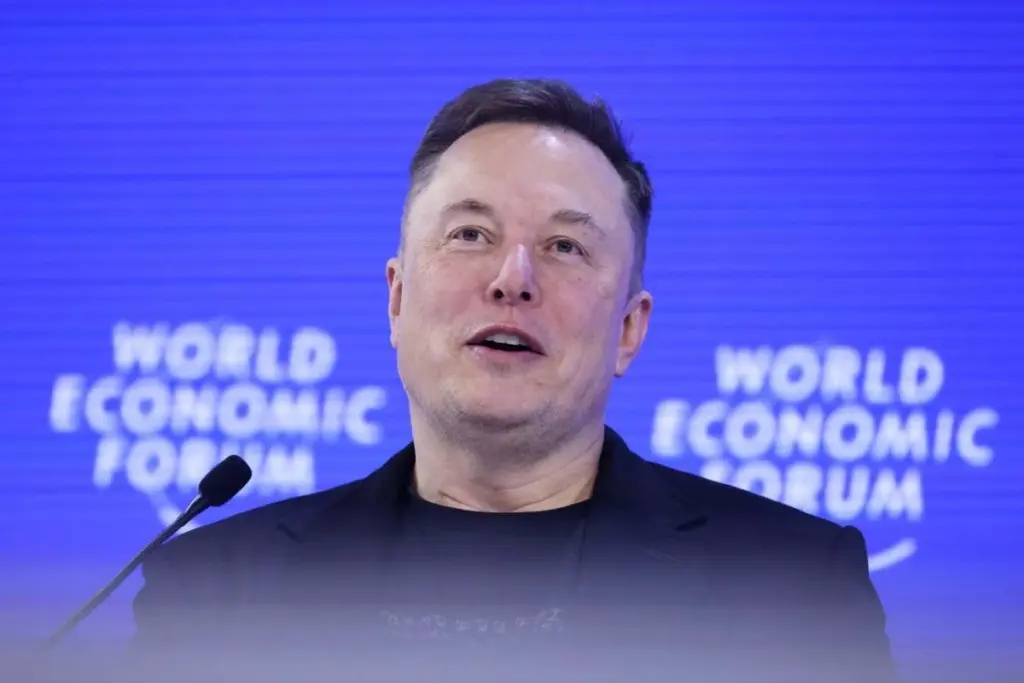
However, the expanding landscape of generative AI is already placing considerable strain on existing energy infrastructure. xAI faced scrutiny from the U.S. Environmental Protection Agency for exceeding legal power generation limits at its Colossus data center in Memphis, Tennessee. Musk has previously articulated a need to establish data centers in space. Speaking at the World Economic Forum in Davos, Switzerland, he deemed this concept a “no-brainer,” estimating the possibility of full-scale deployment within two to three years. It is worth noting that such proposals face considerable technical hurdles, including cooling and radiation protection, which are still subjects of ongoing research and development.
Overcoming these technical obstacles to place data centers in orbit inherently requires launch capabilities. SpaceX is a prominent and reliable provider of rocket launches for both commercial and government sectors. Furthermore, its Starlink internet service has provided extensive experience with satellite constellations and orbital operations.
Technology analyst Robert Scoble, associated with Unaligned, observed that SpaceX is actively deploying satellite networks, having already launched approximately 9,000 satellites primarily for internet distribution. He posits that while xAI is involved in distributing internet services and news, its core mission is developing novel AI models for applications ranging from vehicles and humanoid robots to broader aspects of daily life. Scoble believes the synergy between these two entities would be highly beneficial.
In essence, Musk appears to believe that by combining the strengths of SpaceX, Tesla, and xAI, he can establish a dominant position in the AI sector, one that would pose a significant challenge to competitors like OpenAI, Google, and Microsoft. None of these companies, nor Musk himself, provided comment when approached for their perspectives on these developments.
Alternative Perspectives and Financial Realities
Not all observers share this optimistic outlook. Edward Niedermeyer, author of “Ludicrous: The unvarnished story of Tesla motors,” suggests that with the exception of Tesla, which he perceives as moving in an unfavorable direction, the other companies lack the underlying economic stability to finance their growth. He characterizes Musk’s current actions as a “defensive” maneuver aimed at securing the future of these ventures and attracting a broader spectrum of investment from public markets.
Niedermeyer emphasizes the critical importance of public investment, particularly given the reported rapid consumption of capital by Musk’s companies. The substantial costs associated with training and operating advanced AI models are a challenge many AI firms are currently confronting. He notes the immense cash burn required for these operations. Therefore, Musk may be banking on consolidating his ventures into a single, accessible investment vehicle to make his overarching vision appealing enough to secure the necessary funding. Should this vision falter, or if the envisioned future does not materialize, these ambitious endeavors could face a significant downturn.