
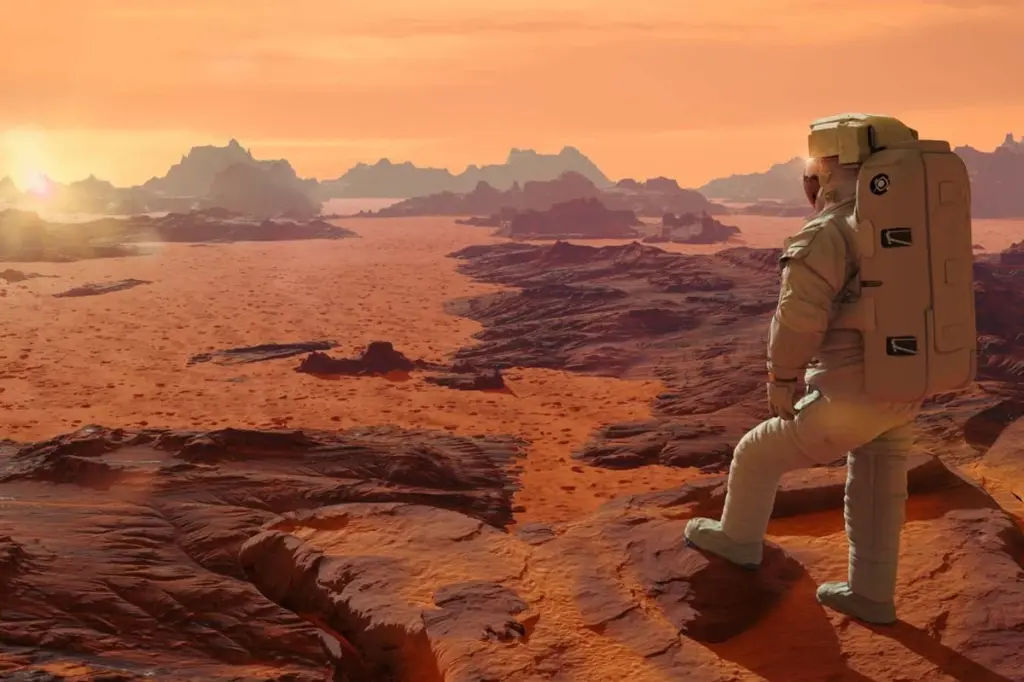
Embark on journeys to Mars, alternate 1939 London, or the distant future with this February’s selection of science fiction offerings. The lineup features diverse narratives, including two intriguing time-travel novels. One, titled “The Forest on the Edge of Time,” explores temporal displacement as a means to combat global warming. Another, “All We Have Is Time,” presents a time-traveler offering a unique form of romantic salvation to a woman burdened by immortality. For enthusiasts of the peculiar, a new entry into the fungal horror genre, “Pedro the Vast,” promises a chilling experience. Additionally, this collection invites readers to engage in debate about genre classification, featuring new works from Brandon Sanderson and Francis Spufford.
A Look Back: Curated Sci-Fi Favorites
Building upon a previous compilation, members of the New Scientist staff were once again invited to share their all-time favorite science fiction books. This expanded list encompasses a wide array of acclaimed authors and iconic works, ranging from Isaac Asimov and Ursula K. Le Guin to the universe of Star Wars. The intention is to present a comprehensive collection of beloved science fiction titles.
Featured Releases
The Forest on the Edge of Time by Jasmin Kirkbride
This novel is positioned by its publisher as climate fiction centered around time travel, presenting a compelling premise. The narrative follows Echo and Hazel, who are recruited by an undisclosed organization with the mission to alter history and avert a global climate catastrophe. Echo’s efforts are set in ancient Athens, while Hazel’s journey takes her to the desolate future as the last human, relying solely on technology. A unique bond forms between them through shared dreams, enabling them to decipher the steps necessary to ensure humanity’s survival.
Isles of the Emberdark by Brandon Sanderson
Set within the expansive Cosmere universe, this work can be broadly categorized as science fantasy. The story centers on Sixth of the Dusk, an individual tasked with trapping supernatural avian creatures known as Aviars. He comes to realize that his people must embrace modernization to avoid subjugation by extraterrestrial invaders, referred to as the “Ones Above.”
The Obake Code by Makana Yamamoto
Makana Yamamoto, author of “Hammajang Luck,” returns with the story of Malia, a hacker renowned as the greatest of all time. Life has become somewhat stagnant for Malia following the successful Atlas heist. Her routine is disrupted when she encounters significant trouble with a dangerous syndicate operating on Kepler Space Station.
Loss Protocol by Paul McAuley
Marc Winters, a wildlife ranger stationed on a remote island, dedicates himself to preserving the natural environment amidst the challenges of climate change. His work takes an unexpected turn when he uncovers a cult that believes the world can be salvaged through “collective dreams fueled by psychotropic mushrooms.” The cult also believes Winters possesses crucial information for their objectives.
The Universe Box by Michael Swanwick
This publication offers a new collection of speculative short stories from Michael Swanwick, a recipient of five Hugo Awards. The diverse narratives include a tale about a scientist on the run due to the perilous implications of her research in integrating human intelligence with sentient artificial intelligence. Another story features an aging veteran who acquires a virtual reality robot leopard.
All We Have Is Time by Amy Tordoff
The narrative centers on an immortal woman experiencing profound loneliness and grief, stemming from the passing of everyone she has loved over many decades. Her life changes when she encounters a time-traveler in 1605 London with whom she forms a romantic connection. The publisher draws a comparison to Kaliane Bradley’s novel, “The Ministry of Time,” a connection that immediately captures interest.
Nonesuch by Francis Spufford
Francis Spufford, an acclaimed literary author, presents this work, which his publisher categorizes as fantasy. However, its inclusion of time travel elements suggests a strong leaning towards science fiction. The story unfolds in an alternate version of 1939 London and follows Iris, an ambitious City worker who discovers the malleability of time and the potential to alter history. Iris finds herself contending not only with the perils of the Blitz but also with the presence of a time-traveling fascist.
Love and Other Brain Experiments by Hannah Brohm
This novel is recommended for readers who appreciate romantic narratives and STEM-themed romance, similar to the style of Ali Hazelwood. Hannah Brohm’s debut work focuses on Frances Silberstein, a neuroscientist. She is compelled to confront her ex-partner at a significant conference, leading her to enter into a fake dating arrangement with her “infuriatingly attractive” rival, Lewis North. The publisher aptly frames the situation: “for any scientist worth their salt, faking data is out of the question. But fake dating?”
The Rainseekers by Matthew Kressel
Sakunja Salazar, once a celebrated interviewer on Earth, undertakes a journey to Mars. By the time of her arrival, she has fallen into a state of alcoholism and obscurity. Her path intersects with a magazine editor who requests her involvement in a documentary project centered on an expedition aiming to be the first humans to witness rainfall on the Red Planet. The prospect of a Mars-related narrative holds particular appeal.
Notable Science Fiction in January 2026
The beginning of 2026 sees the release of a new science fiction novel from prominent author Peter F. Hamilton. Concurrently, Booker Prize winner George Saunders marks his entry into speculative fiction with his latest book, “Vigil.”
Red Star Rebels by Amie Kaufman
Mars serves as the backdrop for this story, which follows Cleo, a stowaway, and Hunter, a young man from a privileged background. Stranded on the planet, they must contend with a gang of mercenaries intent on causing widespread destruction. This book is classified as young adult fiction, targeting teenagers. While YA is not always the primary focus, the limited output of teen-focused sci-fi, especially compared to “romantasy” aimed at younger audiences, makes this a noteworthy inclusion.
Pedro the Vast by Simón López Trujillo (translated by Robin Myers)
A desolate region of Chile is the setting for a narrative involving a severe fungal disease afflicting workers on a eucalyptus farm. Pedro is one of the survivors, and his resilience attracts the attention of both a visiting foreign mycologist and a local priest. The publisher suggests that this novel will resonate with fans of Jeff Vandermeer, whose work, particularly “Annihilation,” has garnered significant praise.