
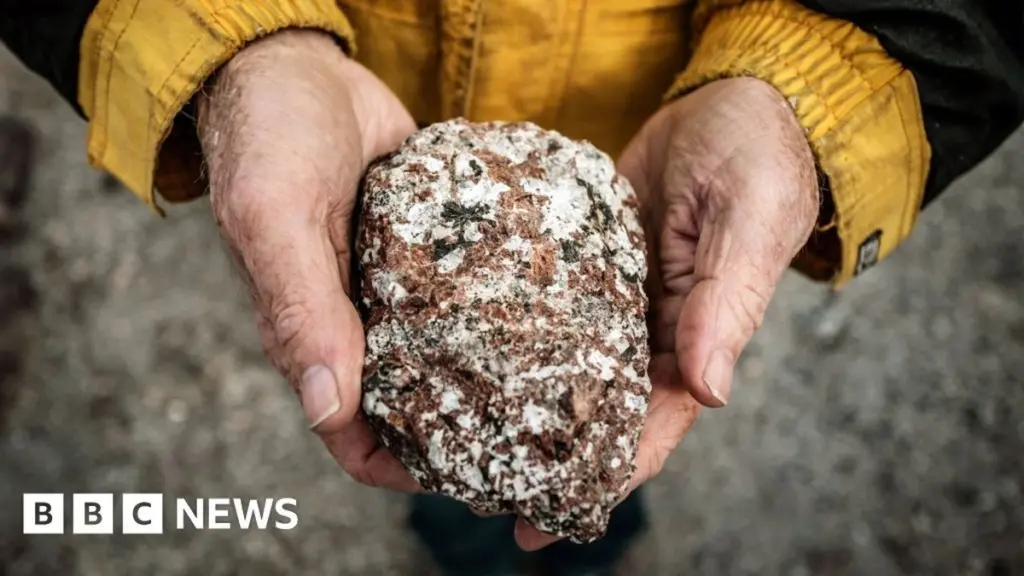
Donald Trump has openly expressed his desire for Greenland. He recently stated that a framework for a future deal has been established, which he claims includes rights to rare earth minerals, alongside addressing defense on the island.
Unveiling Greenland’s Mineral Wealth
Greenland is widely believed to possess substantial reserves of oil and natural gas. The island is also considered a significant repository for raw materials essential for electronics, green energy technologies, and various strategic and military applications. Securing American access to these resources has been a stated priority.
According to the 2023 Geological Survey of Denmark and Greenland, Greenland is home to 25 out of the 34 minerals identified as “critical raw materials” by the European Commission. These include key substances like graphite, niobium, and titanium.
Senator Ted Cruz, a Republican from Texas, highlighted Greenland’s importance beyond defense, noting its “vast reserves of rare earth elements” during a Senate hearing last year concerning the island’s potential acquisition. This underscores the strategic value many see in the island’s geological assets.
Strategic Ambitions and Resource Access
Trump has articulated his interest in Greenland primarily for security reasons, countering perceived rising Russian and Chinese influence in the region. He told reporters at the World Economic Forum in Davos that his focus is on security, not solely on resource exploitation. He also pointed out the significant challenges of Arctic exploration, including the need to excavate through ice, suggesting it’s not an endeavor many would undertake.
However, access to Greenland’s natural resources has remained a persistent undercurrent for the administration. The administration places a strong emphasis on the U.S. economy within its geopolitical strategy and has prioritized addressing China’s dominance in the rare earths industry.
Steven Lamy, a professor of international relations at the University of Southern California, suggests that Trump’s interest in controlling Greenland is “primarily about access to those resources, and blocking China’s access.”
Deepening Ties and Evolving Opportunities
Even before Trump’s second term, the United States was strengthening its ties with Greenland. This included reopening its consulate in the capital, Nuuk, in 2020, a move seen as a response to the expanding military presence of Russia and China in the Arctic.
Since Trump’s return to office, allies have publicly discussed Greenland’s commercial potential. As global temperatures rise, sea routes are becoming more accessible, creating new opportunities for exploration in fisheries and other natural resources. Particular attention is given to energy and critical minerals, which are considered priorities by the current administration due to their defense-related applications.
Mike Waltz, the current U.S. Ambassador to the United Nations and formerly Trump’s national security adviser, spoke to U.S. troops stationed in Greenland about the island’s significance. He emphasized its importance for shipping lanes, energy, fisheries, and the broader mission of national security, including monitoring space and adversaries, ensuring the safety of the American people.
Louisiana Governor Jeff Landry recently described Trump as a “business president” who views Greenland as representing “a more robust trading opportunity.”
Investment and International Collaboration
During the summer, the Trump administration signaled its support for an American company’s mining project in Greenland, allocating $120 million in financing from the U.S. Export-Import Bank. This initiative followed similar agreements the administration had made with Australia and Japan, as well as private entities, to secure U.S. access to the supply and production of rare earths.
Dr. Patrick Schröder, a senior research fellow at Chatham House, indicated that the scale of Greenland’s critical mineral reserves could significantly alter the landscape for the U.S., potentially reducing its dependence on China. This aligns with a key objective of the current administration.
Challenges and Potential of Extraction
Critics of Trump’s interest in Greenland question the necessity of U.S. control for accessing the island’s resources. Analysts also caution that extracting these resources presents considerable difficulties.
Among the obstacles cited by Lamy are the high costs associated with mining in Greenland, the impact of severe weather conditions, a lack of developed infrastructure, and a limited labor force. Despite exploration permits being granted for 100 blocks on the island, only two mines are currently in operation.
Mikkel Runge Olesen, a senior researcher at the Danish Institute for International Studies, noted that Greenland has long sought to attract investment in its extractive industries without much success, as the business case has often been less than compelling. He acknowledged the vast mineral quantities but stressed the substantial cost of their extraction.
However, Prof. Andrew Shepherd, director of the Centre for Polar Observation and Modelling, pointed out that progressively melting ice layers are facilitating the exploration process. This thawing exposes rock suitable for potential mining and generates river runoff. Shepherd elaborated that conducting fieldwork has historically been challenging due to the energy required to reach remote regions. The melting ice, he explained, offers the prospect of hydropower in newly exposed areas, presenting an intriguing scenario.
Jennifer Spence, director of the Arctic Initiative at the Harvard Kennedy School, described the situation concerning mining in Greenland as still being in its nascent stages, emphasizing its “potential.”
Spence believes that Greenland’s strategic location for shipping and its deposits of rare earths are the primary factors attracting Trump’s attention. She contrasted this by stating that while Trump’s rationale may stem from national security imperatives, her own belief is that the interest is more economically driven.