
Our universe, vast and seemingly eternal, is on a trajectory towards an inevitable conclusion. Every component, from the cities we inhabit and the planets we call home, to our solar system, the stars we observe, and indeed every star in existence, is destined for a final end. This ultimate finale is not an immediate concern, but a certainty that lies in the distant future.
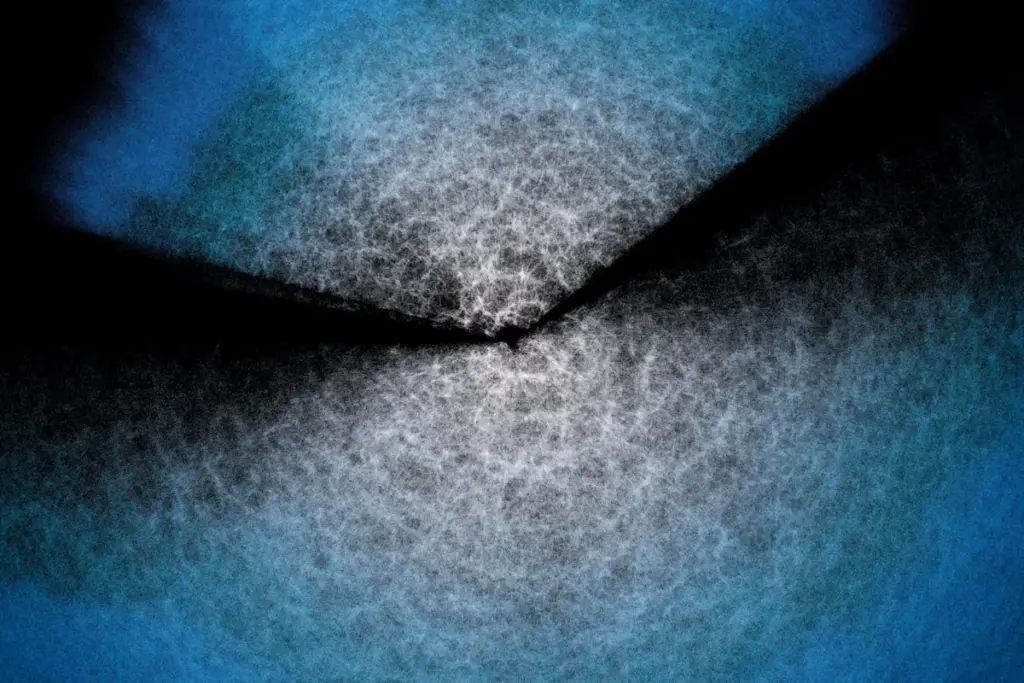
What awaits at the universe’s conclusion? One prevailing idea suggests that the universe’s relentless expansion will eventually decelerate, only to reverse its course. This cosmic U-turn would undo the growth initiated by the Big Bang, causing all matter and energy to converge into an infinitesimally small point. From this collapse, a new explosion could emerge, a cyclical rebirth. This concept, known as cyclic cosmology or the Big Bounce, possesses a history as dynamic as its subject matter. It enjoyed a period of popularity in the mid-20th century before falling into disfavor, only to potentially resurface today. This resurgence is fueled by novel data gathered from the most extensive three-dimensional map of the universe ever compiled, thanks to the Dark Energy Spectroscopic Instrument (DESI).
Cyclic cosmology, like many grand cosmological hypotheses, has appealed to its proponents largely for its inherent elegance. The cyclical nature of the universe inherently bypasses the perplexing questions about the Big Bang’s origin or what preceded it. These nearly unanswerable inquiries are effectively resolved by the theory itself, offering a satisfying symmetry. Catherine Heymans, the Astronomer Royal for Scotland, articulated this sentiment, describing it as a pleasing concept: “It really gels with me that the universe sort of is created in a big bang, it expands, it slows down, gravity pulls it back in on itself, there’s a big crunch, there’s another big bang and it expands… This just makes me very happy.”
Adam Riess, a Nobel laureate recognized for his foundational work on dark energy, highlighted another compelling aspect: the idea that our current epoch is not a unique one. In a cyclic universe, the improbable circumstance of life and consciousness existing to contemplate these matters becomes less of an anomaly. He noted, “We like it because it tells us that this is not a special time that we live in or the one-shot universe.” While the notion of repeated favorable conditions for life across multiple cosmic cycles might diminish the uniqueness of our present moment, this is a personal consideration rather than a physical law.
For a considerable duration, cyclic cosmology lost traction. A significant factor was the evidence, including Riess’s own discoveries, indicating that the universe’s expansion is accelerating. Such rapid expansion made a subsequent contraction and collapse seem improbable, as gravity appeared insufficient to counter the influence of dark energy. “Unfortunately, all of the measurements that we make tell us that there just isn’t enough mass in the universe to pull it back together,” Heymans stated. “At the moment, the evidence is pointing towards a very cold and sad and empty death for our universe.” This alternative scenario, known as the heat death, is currently the most widely accepted prediction for the universe’s ultimate fate.
Beyond the accelerating expansion, cyclic cosmology faced other challenges. These primarily concerned the mechanisms by which matter, energy, and entropy might be conserved or dissipated during the transition between cosmic cycles. The second law of thermodynamics presents a significant hurdle. This fundamental law posits that entropy, or disorder, within a closed system like the universe cannot decrease. In an expanding universe, a continuous, slow increase in entropy is readily accommodated. However, a contracting universe would imply a decrease in entropy, contradicting the second law. Proposed solutions often involve \”kicking the can\” to the subsequent cycle, wherein entropy continues to rise overall if each cycle is larger than the last. Nevertheless, extrapolating far enough into the past or future inevitably leads back to the original quandary—a Big Bang origin and an eventual heat death, albeit via a more convoluted, step-by-step progression.
An alternative approach to the entropy problem was popularized in the 2010s by the renowned theoretical physicist Roger Penrose. His model, termed conformal cyclic cosmology, posits a universe that appears to expand indefinitely until its very end. In this scenario, as the cosmos expands and distances between objects grow, matter eventually decays into constituent particles, leaving behind only photons adrift in the void. This gradual dissolution is not controversial. Penrose’s more provocative proposition is that the extreme emptiness and uniformity of spacetime at the conclusion of one aeon are mathematically indistinguishable from the initial conditions of a new aeon. This functional equivalence, supported by complex calculations, suggests that a new, expanding universe can originate from the cooled remnants of the preceding one.
This theory remains a niche concept, posing considerable difficulties for empirical testing, bordering on the impossible. While Penrose has identified potential avenues for observation, the broader cosmological community has largely found these proposals unconvincing. Yet, the theory has not been definitively disproven. Its ability to circumvent the entropy problem prevents its outright dismissal, despite widespread skepticism. Consequently, practical applications for modeling our observable universe remain elusive.
DESI’s contribution has been significant. Its extensive cosmic map indicates that dark energy, previously thought to possess perpetually increasing strength, appears to be diminishing. This suggests a slowing of the universe’s outward acceleration. As Heymans clarified, this does not imply a reversal and contraction of the universe; it is still expanding, merely at a reduced rate. Nevertheless, this finding represents a profound shift in our understanding of dark energy and may herald a new era of theoretical exploration into our cosmos’s ultimate fate.
Within this evolving landscape, cyclic cosmologies are experiencing a resurgence. Heymans observed, “What could be causing dark energy to change could mean that in another 10 billion years’ time, dark energy weakens so much that it does reverse and it does pull everything back in on itself, which would be lovely.”
A considerable barrier to definitive conclusions is our limited comprehension of a substantial portion of the universe. Dark energy constitutes nearly 70 percent of all matter and energy, dictating the universe’s ultimate destiny, yet its fundamental nature and workings remain unknown. On cosmological timescales, our understanding is nascent. Riess and his colleagues identified dark energy less than 30 years ago. “Without understanding the nature of the dark energy that’s driving the present acceleration, it’s very difficult to extrapolate it into the future. Will it weaken?” Riess questioned. “I would say all bets are off about the future.” While the prevailing scientific consensus still favors a cold and empty end to the universe, for the first time in a century, the Big Bounce theory warrants serious consideration as a plausible, albeit long-shot, possibility.