
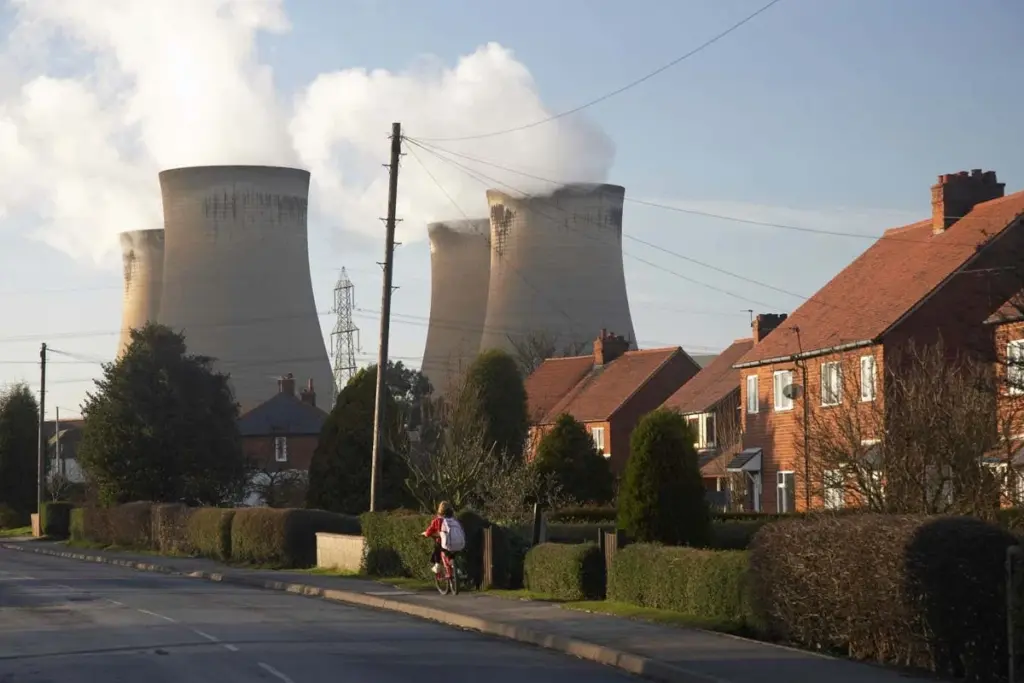
Illustrations frequently depict a future where carbon dioxide levels and global temperatures decline by the century’s end. The proposed mechanism involves harvesting plants, utilizing them for energy generation, and subsequently capturing and storing the released CO2. This approach, known as bioenergy with carbon capture and storage, or BECCS, is now revealing itself as a significant miscalculation.
Currently, BECCS is not being implemented on the scale deemed necessary. Its rollout is hindered by prohibitive costs. Furthermore, attempting large-scale deployment would have devastating consequences for biodiversity. Perhaps most critically, the technology fundamentally fails to deliver on its promise. Instead of reducing CO2 emissions, it appears to increase them, particularly within the relevant timeframes.
Origins and Theoretical Underpinnings
The concept of BECCS was initially articulated in 2001 by Swedish researchers. Their focus was on potential revenue streams for paper mills through carbon credits. By 2005, several climate modelers adopted this theoretical idea. They integrated it into scenarios designed to illustrate how global temperatures could potentially decrease after exceeding the 1.5°C threshold.
The fifth report of the Intergovernmental Panel on Climate Change (IPCC) in 2014 highlighted climate models that assumed substantial carbon removal capabilities through BECCS. Consequently, a technology that was essentially nonexistent became an “official solution” positioned to address global climate challenges.
Early Implementations and Setbacks
For a period, BECCS seemed poised to become a reality. In 2015, the UK’s Drax energy company announced its intention to convert a large coal-fired power plant to operate on wood pellets, with plans for concurrent CO2 capture and storage.
However, a decade later, the Drax plant now utilizes wood pellets but has not implemented any carbon capture. Reports indicate that the company has consequently postponed its carbon capture plans. This development marks a significant blow to what was considered a flagship project for BECCS, leaving it in a precarious state.
A spokesperson for Drax acknowledged that while BECCS remains a potential option for the site, its realization is now projected for the much more distant future than originally anticipated.
Global Adoption Challenges and Economic Realities
While a few smaller projects are being planned worldwide, it is evident that BECCS is not gaining traction as envisioned a decade ago. A primary reason for this stagnation is the substantial government subsidies required for its implementation. Experts emphasize the exceptionally high cost associated with this technology.
The lack of widespread adoption of a technology intended to mitigate climate change may appear counterproductive. However, it is, in fact, a positive outcome given its functional limitations. The technology does not deliver the necessary results within the critical timeframes.
Tim Searchinger of Princeton University suggests that while some limited negative emissions might be theoretically achievable, the benefits are marginal and come with multi-decade delays. To aid policymakers, Searchinger and his colleagues have developed a computer model that analyzes carbon flows. This model indicates that BECCS could require 150 years to achieve any net removal of CO2 from the atmosphere. Moreover, for its initial decades, the process could be more detrimental than burning natural gas without carbon capture. The projected cost increase for electricity is also significant, potentially tripling current rates.
Inherent Inefficiencies and Environmental Concerns
At its core, BECCS converts CO2 stored in forests into a form that can be stored elsewhere, such as underground geological formations. However, this conversion process results in substantial CO2 leakage into the atmosphere.
A considerable portion of forest carbon never reaches the power plants. For instance, root systems are often left to decompose, and other vegetation is destroyed during the harvesting process. This released carbon then contributes to atmospheric CO2 levels.
Furthermore, burning wood generates twice the amount of carbon per unit of energy compared to burning natural gas. Lower operating temperatures also reduce the efficiency of energy conversion into electricity. The carbon capture process itself is energy-intensive. This necessitates that the power plants burn additional wood solely to power the capture equipment, which, even then, is only estimated to capture about 85 percent of the emitted CO2.
Undermining Existing Climate Solutions
A more subtle, yet significant, issue arises from the impact of BECCS on existing carbon sinks. Some proponents argue that using wood for BECCS is acceptable if carbon removal does not exceed a forest’s natural uptake rate. However, climate projections often rely on the assumption that many forests will absorb additional carbon due to increased atmospheric CO2 levels, a phenomenon known as CO2 fertilization.
What is perceived by some as sustainable harvesting in the context of BECCS can, in reality, dismantle a climate solution that is already factored into future projections. These concerns are particularly pertinent to slow-growing tree species. Many BECCS scenarios, however, envision the use of fast-growing energy crops such as grasses.
While such crops might offer modest benefits if abundant unused farmland were available, the global reality is that rainforests continue to be cleared for agricultural land to produce food. Expanding land clearing further would invariably lead to catastrophic consequences for biodiversity.
Prioritizing Emission Reduction
Without BECCS, the exact methods for reducing atmospheric CO2 levels might remain unclear. Nevertheless, the immediate priority must be to halt the increase in these emissions. The focus should instead be on accelerating the transition to renewable energy sources like wind and solar power.