
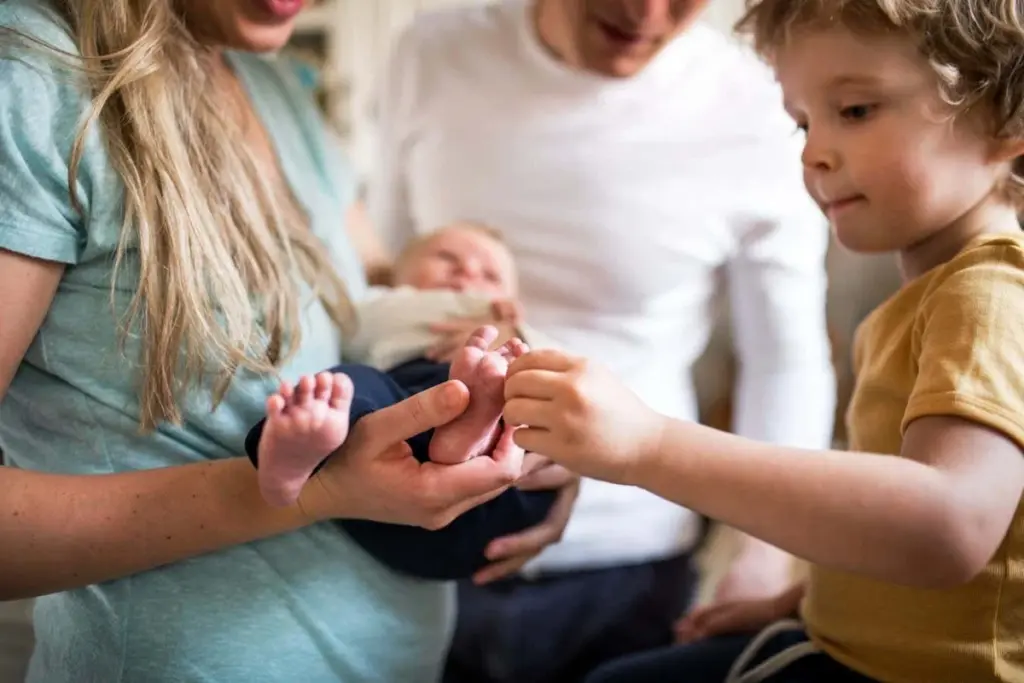
A comprehensive analysis involving over 10 million siblings has revealed a surprising connection between birth order and an individual’s susceptibility to more than 150 health conditions. The findings suggest that whether one is born first or second may shape the likelihood of developing a range of ailments, from autism and anxiety to hay fever.
For over a century, birth order has been a subject of scientific fascination, with researchers attempting to link it to personality traits and intelligence. However, many earlier studies faced criticism for selective data use or inadequate control of confounding variables.
A significant study conducted in 2015 by Julia Rohrer at Leipzig University in Germany addressed these limitations. This research analyzed data from 20,000 children, accounting for potential biases. It concluded that birth order had a negligible impact on personality and only a minor association with IQ, showing a difference of approximately 1 to 2.5 IQ points between oldest and youngest siblings.
Exploring Health Associations: A New Approach
The recent analysis, spearheaded by Benjamin Kramer at the University of Chicago, adopted a different perspective, focusing specifically on the probability of developing various medical conditions. The researchers initially compared 1.6 million sibling pairs. To mitigate confounding factors, such as how parents might treat children differently based on their birth order, they matched firstborns from one family with second-borns from another, aligning them by sex, birth year, parental age, and the age gap between siblings.
Additionally, the study examined genetically related siblings from 5.1 million families. This multifaceted approach allowed for a robust investigation into the relationship between birth position and health outcomes.
Key Findings: Firstborns vs. Second-Borns
Across 418 examined medical conditions, a substantial 150 demonstrated a discernible association with birth order. Of these, 79 conditions were found to be more prevalent in firstborns, while 71 were more commonly observed in those born second.
The strongest links for firstborns included several neurodevelopmental conditions, such as autism, tics, Tourette syndrome, and childhood psychosis. They also exhibited a higher risk for acne, allergies, hay fever, and anxiety disorders.
Conversely, individuals born second demonstrated an increased risk for conditions like substance abuse, shingles, biliary tract disease (including gallstones), gastritis (inflammation of the stomach lining), and migraines.
Interpreting the Associations: Nuance and Caution
Dr. Rohrer, who led the 2015 study, described the new analysis as highly rigorous. However, she cautioned that the observed associations are modest. For instance, firstborns appear to have a 3.6 percent relative increase in the risk of depression. She emphasized that these results do not support deterministic conclusions.
Dr. Rohrer added, “We will observe each person only in one birth-order position. We will never know how their life would have played out differently in another position.” This highlights the inherent limitations in definitively proving causality.
Potential Mechanisms: Explaining the Differences
The research team explored several potential explanations for these associations. For allergies and hay fever, the “friendly foe” hypothesis was considered. This theory suggests that later-born children experience greater exposure to microbes from older siblings in early life, fostering enhanced immune tolerance.
This hypothesis is supported by the observation that the link between birth order and allergies weakened as the age gap between siblings increased. A similar pattern was noted for substance abuse, where the elevated risk in second-borns diminished with wider age gaps.
The authors linked this to research indicating a higher propensity for risk-taking behavior in later-born children. However, Dr. Rohrer pointed out that much of this evidence has been questioned. She suggested an alternative explanation: later-born individuals might be overrepresented in professions that expose them more frequently to environments where drug use is common.
Biological and Environmental Factors for Autism
The study also proposed that the higher prevalence of autism in firstborns might stem from a combination of biological and environmental factors. Some research suggests that a mother’s immune system may react more intensely during first pregnancies, potentially influencing fetal brain development.
Another consideration is potential selection bias within families. Parents who already have a child diagnosed with autism may choose to limit further childbearing. Consequently, families that do proceed to have another child after an autism diagnosis might represent a specific, unacknowledged factor.
Dr. Rohrer introduced “diagnostic substitution” as another possible interpretation. She explained, “ADHD and autism diagnoses are partially dependent on psychometrically assessed intelligence – the same [autistic] behavior may be diagnosed as intellectual disability when combined with reduced intelligence, but as ADHD when combined with average intelligence.” Because firstborns tend to have slightly higher IQs, they may be more likely to receive one diagnosis, while later-borns might receive another, even with similar symptoms.
Considering Sibling Sex and Family Structure
Ray Blanchard of the University of Toronto suggested that the study’s findings might differ if sibling sex or the presence of only children were explicitly accounted for. He noted his research indicates that older brothers slightly increase the likelihood of homosexuality in younger boys.
Blanchard theorized this could be due to mothers developing antibodies to male-specific proteins during first pregnancies. These antibodies might subtly alter the immune system, influencing sexual orientation in later-born sons. “These obvious distinctions have proven very important in research on birth order and sexual orientation,” Blanchard stated, advocating for the inclusion of sibling sex order in future birth order research.