
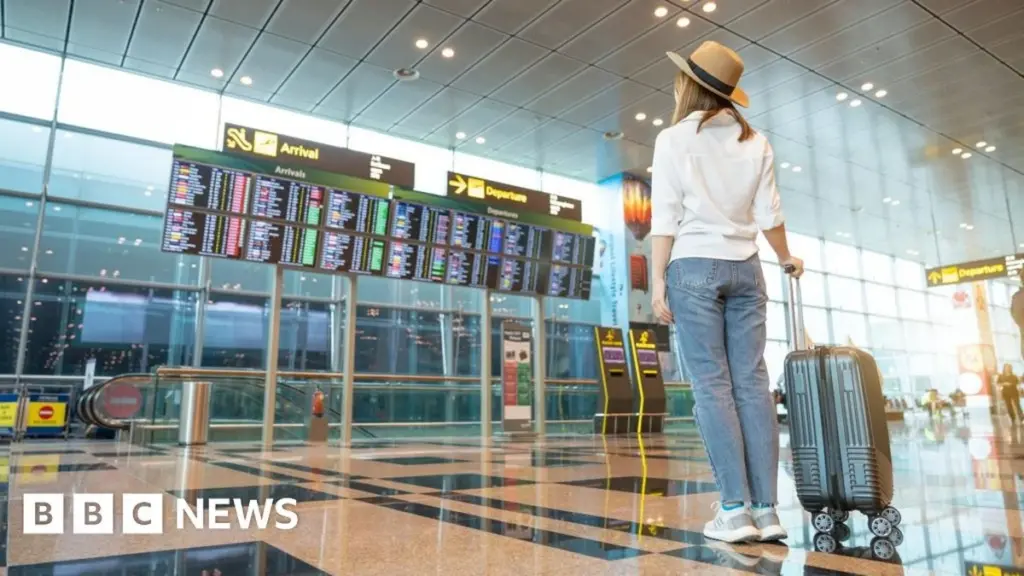
European airports are bracing for potential jet fuel shortages within a mere three weeks unless the critical Strait of Hormuz reopens, according to a stark warning from the continent’s airport trade body. The Persian Gulf serves as a vital artery for aviation fuel, supplying approximately half of Europe’s total imports.
Airports Council International (ACI) Europe has voiced mounting apprehension among its members regarding the availability of jet fuel. This concern is amplified by the approaching summer tourist season, a period typically marked by elevated air travel demand.
The organization highlighted that smaller airports are particularly susceptible to the ramifications of a supply disruption. Olivier Jankovec, director-general of ACI Europe, articulated these fears in a letter addressed to the European Commissioners for energy and tourism.
Potential Supply Crunch and Economic Repercussions
“A supply crunch would severely disrupt airport operations and air connectivity – with the risk of harsh economic impacts for the communities affected, and for Europe,” Jankovec stated. He underscored the urgency, warning that “At this stage, we understand that if the passage through the Strait of Hormuz does not resume in any significant and stable way within the next three weeks, a systemic jet fuel shortage is set to become a reality for the EU.”
The global aviation sector is already witnessing the effects of these concerns. Several airlines worldwide have proactively reduced flights and increased passenger fares in response to potential fuel scarcity.
The financial implications are tangible. Last week, the benchmark European jet fuel price surged to an unprecedented high of $1,838 (£1,387) per tonne. This stands in stark contrast to the $831 per tonne recorded before the onset of recent geopolitical events.
ACI Europe’s Calls for Intervention
Jankovec implored the European Union to take decisive action, asserting that “relying on market forces and adaptation alone is not an option.” He also pointed to a perceived deficiency in EU-wide assessment and monitoring of jet fuel production and its current availability.
ACI Europe advocates for a collective approach to purchasing jet fuel by the EU. Furthermore, the organization has petitioned for a temporary suspension of restrictions and regulations pertaining to the import of jet fuel.
The letter, dated April 9th and initially reported by the Financial Times, also suggested that this situation presents an opportune moment to strengthen support for the production and affordability of sustainable aviation fuel (SAF). The report indicated that “The price of conventional jet fuel is likely to remain at higher levels in the medium to long-term.”
Vulnerability of Small Airports and Broader Impacts
Jankovec further elaborated on the precarious situation faced by smaller airports. Those serving fewer than one million passengers annually are already contending with viability challenges, he noted, “without even accounting for the impact of jet fuel shortages.” He cautioned that the ongoing crisis could exacerbate the fragility of these airports, posing a threat to local communities and potentially undermining European cohesion.
The significance of air travel to the European economy is substantial. It currently contributes €851 billion (£741 billion) annually to the EU’s GDP and provides employment for 14 million individuals.