
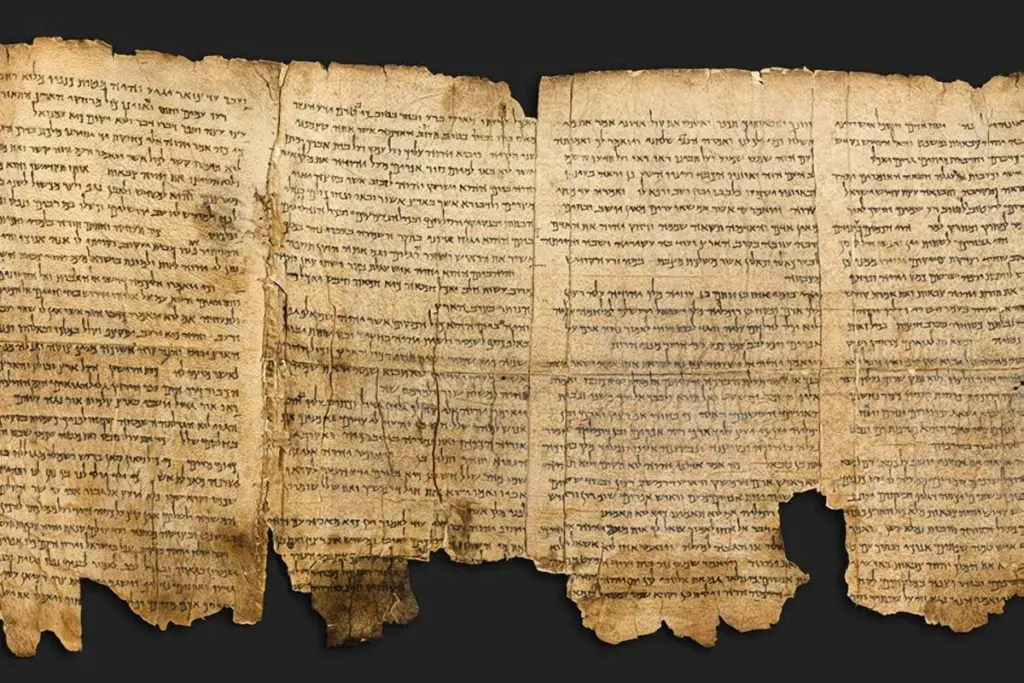
Recent findings, integrating artificial intelligence with modern radiocarbon dating, indicate that some of the Dead Sea Scrolls may predate previous estimations by as much as 100 years. This potential revision could fundamentally alter current understandings of how these ancient texts were created and circulated.
Mladen Popović of the University of Groningen in the Netherlands stated that a select few scrolls, including those believed to contain the biblical books of Daniel and Ecclesiastes, might even be contemporary copies made during the lifetimes of their original authors. He clarified that this does not imply they were written by the authors themselves, but emphasized that the study represents a significant initial step in reassessing literacy levels in ancient Judea, which now appears to have been more developed prior to its period of political independence from imperial powers.
Discovery and Traditional Dating
The Dead Sea Scrolls were first discovered by shepherds in a cave near the Dead Sea’s northwestern shore in 1947. Subsequent archaeological expeditions in the region uncovered approximately a thousand fragmented manuscripts. These were found in 11 caves and several adjacent locations. The collection includes the earliest known versions of certain Old Testament books, alongside other ancient Jewish literature.
Scholars historically theorized that the scrolls were concealed to safeguard them from the Romans, who famously destroyed the Jewish Temple in Jerusalem in 70 AD. Based on the characteristics of the letterforms in the texts, predominantly written in Hebrew or Aramaic, the scrolls were generally dated from as early as 150 BC. Preceding dating attempts relied on comparisons with administrative manuscripts from other sites that had been dated by hand, spanning the 5th and 4th centuries BC, and extending into the 1st and 2nd centuries AD. However, these comparisons lacked direct correlation with the specific time period of the scrolls themselves.
Shifting Perspectives with Radiocarbon Dating
This prevailing view began to change in the 1990s. Radiocarbon dating conducted on a limited number of scroll fragments suggested a broader age range, spanning approximately 500 years and commencing in the 3rd century BC. This revelation was met with both surprise and skepticism from scholars specializing in handwriting analysis.
Popović acknowledges the limitations inherent in both methodologies. Early radiocarbon dating, he noted, might have been compromised by contamination issues, and its restricted scope prevented a representative assessment of the entire collection. Handwriting analysis, conversely, remains susceptible to human error.
While modern radiocarbon dating techniques have significantly reduced the risks of contamination and offer more precise date ranges, they are also inherently destructive. The process requires extracting samples, which inevitably causes damage to these ancient artifacts.
A Novel Hybrid Approach
Popović and his research team have now adopted a novel strategy that seeks to combine the strengths of both dating methods. Initially, the researchers subjected 27 manuscripts from the Dead Sea Scrolls, chosen to represent a variety of discernible writing styles, to radiocarbon dating. Subsequently, they developed and trained an artificial intelligence system to correlate specific handwriting styles with the established dates derived from 24 of these analyzed scrolls.
To validate the AI’s learning capabilities, the researchers applied it to the three remaining manuscripts. The AI’s estimations closely aligned with the radiocarbon dating results, demonstrating an ability to determine dates with an accuracy of approximately 30 years.
Implications of the New Dating
The research team then deployed the AI to analyze 135 of the nearly 1000 Dead Sea Scrolls. Their findings suggest that many of these texts are older than previously assumed. Specifically, an early script style identified as Hasmonaean may have originated around 200 BC, a full century earlier than scholarly consensus held. Similarly, the later Herodian style appears to date back 80 years beyond earlier expectations. This suggests a period of overlap between the two styles for several decades, a notion that contradicts traditional assumptions.
Travis Williams of Tusculum University in Tennessee described the initial outcomes as “groundbreaking.” He posited that if this trend of earlier dating continues across the remaining scrolls, it could necessitate a significant reassessment of how writings and literacy were perceived in that era. This reassessment would encompass not only the complex political landscape of a Judea navigating liberation but also the dynamics within religious hierarchies, as literate individuals might have become less reliant on leaders for interpretations.
Williams further highlighted that the practice of authors reproducing recent texts—within a generation of their original composition—appears “almost unfathomable” when compared to other examples of ancient literature.
Brent Nongbri from MF Norwegian School of Theology, Religion and Society in Oslo expressed his impressiveness with the new radiocarbon dates, even independently of the AI component. He noted his surprise that a third of the newly dated scrolls did not correspond with previous analyses based solely on handwriting. Nongbri concluded that the established narratives regarding the history of this community are partly contingent on the chronology of the scrolls, implying that certain aspects of this history may require revision.