
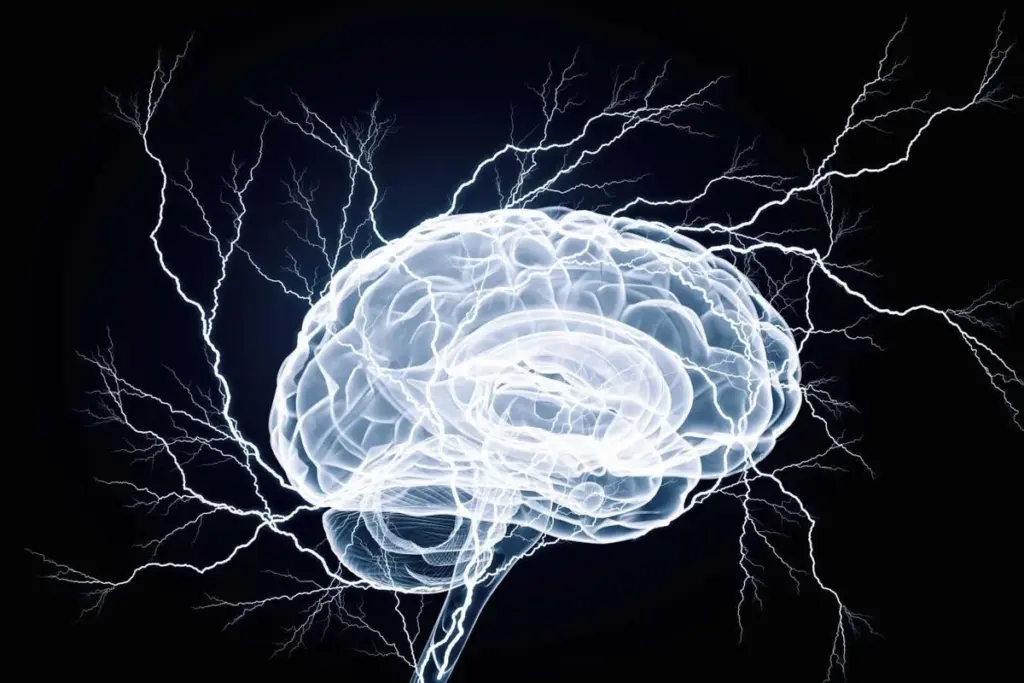
Migraines represent a significant health challenge, with approximately one-third of individuals experiencing this condition unresponsive to current treatment options. However, new research suggests that leveraging the brain’s intrinsic waste removal mechanism could pave the way for an innovative therapeutic avenue. A medication, typically prescribed for hypertension, has demonstrated efficacy in enhancing this system’s capacity to clear a specific chemical compound from the brains of mice. This compound is recognized as a potent trigger for migraine pain. Consequently, the treated mice exhibited a reduction in facial pain, a symptom that affects roughly 60 percent of migraine sufferers during an attack.
Globally, migraines impact about 1 in 7 people. Common symptoms include pain, pressure, or throbbing sensations in the cheeks, jaw, forehead, or behind the eyes. These discomforts can be aggravated by even the slightest touch. Adriana Della Pietra from the University of Iowa, who presented findings at the Oxford Glymphatic and Brain Clearance Symposium, noted that for some individuals, “Simply brushing their hair can be painful.”
Current Migraine Management and Its Limitations
Established treatments for migraines typically involve analgesics such as triptans. These medications are believed to mitigate inflammation and reduce the concentration of calcitonin gene-related peptide (CGRP), a key neurotransmitter implicated in migraine pathogenesis and the focus of current advanced therapies. However, a considerable number of patients do not find relief with prescribed drugs. Valentina Mosienko of the University of Bristol, who was not involved in this particular study, commented on the severe impact, stating, “Quite often, people are living through hell that can last for days. Quite often, they can’t do everyday tasks.”
Prazosin’s Unexpected Role in Pain Relief
In prior investigations, researchers observed that prazosin, a pharmaceutical approved for high blood pressure management, effectively alleviated facial pain in mice resulting from traumatic brain injuries. Such injuries compromise the brain’s glymphatic system, its dedicated waste disposal network. Prazosin, in this context, was found to improve the flow of waste fluids from brain cells through this system. Intriguingly, some of the migraine-affected mice used as controls also appeared to experience benefits.
Investigating Prazosin’s Impact on Migraine Models
To further explore this observation, the research team administered prazosin through the drinking water of one group of mice over a six-week period. A control group received only regular water. Following this, migraines were intentionally induced in all rodents through CGRP injections. The efficacy of the treatment was then assessed.
Approximately thirty minutes after the CGRP injection, researchers gently prodded the mice’s foreheads using plastic filaments of progressively increasing thickness. While none of these filaments are typically painful, their presence becomes more noticeable as they thicken. The study revealed a significant difference: mice that had consumed prazosin could tolerate much thicker filaments without flinching compared to the control group. Della Pietra indicated that the prazosin-treated mice reacted comparably to those not injected with CGRP.
Glymphatic System Modulation and Future Hopes
Subsequent analysis indicated that prazosin effectively reversed the glymphatic system impairment caused by CGRP. The researchers hypothesize that this reversal likely enhanced the clearance of CGRP and other pain-signaling molecules. Della Pietra stated that the drug “probably enhanced its clearance and that of other molecules that transmit pain signals.”
The research team now aims to ascertain whether similar effects can be observed in human subjects. “If it works in humans, that would be fantastic,” remarked Mosienko. She also highlighted a significant advantage: “The drug is already in use, so we know it’s safe for use.”