
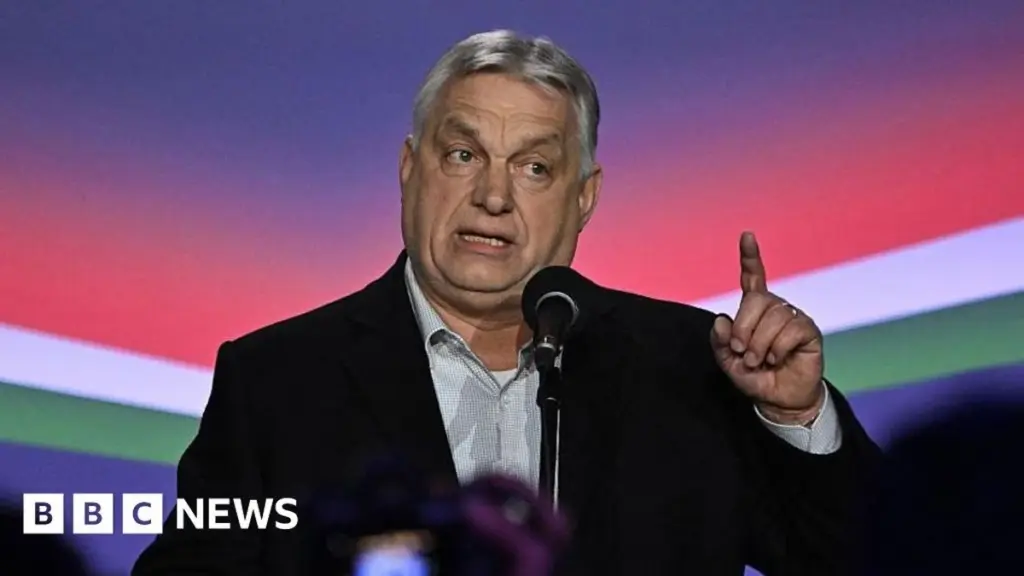
Hungarian Prime Minister Viktor Orban has convened an emergency session of the National Defence Council following the discovery of explosives near a key pipeline that delivers Russian gas to Hungary. This development arises amidst a backdrop of electoral pressure and heightened geopolitical tensions.
Discovery and Location
The explosives were found in a border region of neighboring Serbia. This discovery occurred shortly before crucial elections, a period during which Orban’s party has been trailing in opinion polls.
Opposition’s Accusations
Opposition leader Peter Magyar has characterized Orban’s actions as “panic-mongering,” suggesting the narrative was orchestrated by “Russian advisers.” This comes just days after security analysts had voiced concerns about the potential for a “false flag” operation, which might be unjustly attributed to Ukraine.
Hungary’s Energy Policy and Russian Relations
As an ally of Russian President Vladimir Putin, Orban has consistently resisted European Union directives urging a cessation of Russian energy imports. This stance has persisted since the full-scale invasion of Ukraine began.
Speculation of Staged Operations
In recent weeks, Hungarian security experts have put forward the possibility of a carefully orchestrated incident. Such an event, whether occurring on Hungarian or Serbian soil, could be designed to generate public sympathy for Orban, potentially aiding his Fidesz party in securing electoral victory. Alternatively, it could serve as a pretext for Orban to declare a state of emergency, leading to the postponement or cancellation of the vote.
Serbian President’s Confirmation
Serbian President Alexander Vucic, a close political ally of Orban, officially informed the Hungarian leader of the discovery on Sunday morning. Vucic indicated that Serbian military units located two rucksacks laden with explosives and detonators. These were found near the village of Tresnjevac, within the Kanjiza district, approximately 20 kilometers (12 miles) from the point where the TurkStream pipeline enters Hungary.
“Our units discovered an explosive with devastating power,” Vucic stated via an Instagram post. “I assured Prime Minister Orban that we would provide continuous updates on the investigation.”
Pipeline’s Significance
The TurkStream pipeline is a vital artery for Hungary’s energy supply, facilitating the delivery of between five and eight billion cubic meters of Russian gas annually. Both Hungary and Slovakia rely on this pipeline for their Russian gas needs.
Implications for Orban’s Government
Balint Pasztor, president of the Vojvodina Hungarian Association and another key associate of Orban, commented on Facebook, stating, “If the investigation confirms that Hungary’s supply lines, rather than something else, were the primary target, then it becomes even more evident: this terrorist attack was intended to destabilize Viktor Orban.”
Fidesz Electoral Campaign Stance
Hostility towards Ukraine has been a central theme in the Fidesz party’s election campaign. At campaign rallies, Orban has asserted to his supporters that Hungary’s relatively low heating and fuel costs are solely attributable to inexpensive Russian oil and gas. These commodities reach Hungary via pipeline, with oil transiting through Ukraine and gas flowing through the Balkans.
Orban’s Allegations Against Kyiv and Brussels
Orban alleges a conspiracy between “Kyiv-Brussels-Berlin” aimed at preventing Hungary from accessing affordable Russian fuel. He contends that this coalition seeks to install his “puppet” opponent, Peter Magyar, as prime minister in the upcoming election. Orban further posits that a government led by Magyar would draw Hungary into a conflict with Russia, escalating European tensions.
Dispute Over Oil Supply
The Hungarian Prime Minister has previously accused Ukrainian President Volodymyr Zelensky of imposing an “oil blockade” on Hungary. This accusation stems from the cessation of Russian oil transit through the Druzhba pipeline, which crosses Ukrainian territory, since the end of January. Ukraine, however, attributes the interruption to damage sustained during a Russian attack, with repairs anticipated by mid-April.
Official Statements and Expert Warnings
As of now, there have been no official accusations directly linking Ukraine to the pipeline incident. However, a well-informed Serbian source indicated to the BBC that official allegations could emerge as early as Monday. This is when Serbian authorities are expected to release the initial findings of their investigation. Earlier, on April 2, Hungarian security expert Andras Racz posted on Facebook, warning of the potential for a “fake attack” on the TurkStream pipeline to be staged within Serbia. Racz also predicted that the discovered explosives would be identified as Ukrainian, allowing Orban to once again assign blame to Kyiv.
Counter-Intelligence Perspective
Former senior Hungarian counter-intelligence officer, Peter Buda, conveyed to the BBC that there was prior, credible information regarding such an operation, including details about its potential location and timing. Buda stated, “It is evident that Ukraine’s interests are not jeopardized here. An operation of this nature would benefit Orban in the lead-up to the election by influencing public sentiment in his favor.”
Government’s Position
The Hungarian government maintains that the threat is genuine. Hungarian Foreign Minister Peter Szijjarto wrote on Facebook, “In the past few days and weeks, we have witnessed a series of events. The Ukrainians initiated an oil blockade against us. Subsequently, they attempted to implement a comprehensive energy blockade by launching numerous drones at the TurkStream pipeline while it was still within Russian territory. Today’s incident, where Serbian colleagues discovered explosives capable of demolishing the pipeline, is the latest in this pattern.”
Opposition’s Rejection of the Narrative
Opposition leader Peter Magyar has accused Orban, in conjunction with the Serbian president, of fabricating the latest incident. Magyar declared, “He will not be able to halt next Sunday’s election. He will not prevent millions of Hungarians from bringing an end to the most corrupt two decades in our nation’s history.”