
Researchers have identified a single compound that demonstrates inhibitory activity against a wide array of common viruses in laboratory settings. This includes coronaviruses, respiratory syncytial virus (RSV), norovirus, and viruses responsible for influenza and hepatitis. The drug is slated for clinical testing next year, sparking optimism that it could eventually be administered at home to alleviate symptoms or prevent infections during future viral outbreaks.
Daniel Haders, co-founder of Model Medicines, the California-based company spearheading its development, stated, “As far as we can tell, this is the first drug that’s ever demonstrated activity across all these viral families.” He envisions a future where, if approved, the pill could be taken by individuals experiencing flu-like symptoms without a definitive diagnosis, whether it be influenza, COVID-19, RSV, or another pathogen.
From Cancer Treatment to Viral Inhibitor
The compound originally emerged as ERA-923, a breast cancer treatment developed in the early 2000s. However, its development was discontinued after clinical trials revealed minimal therapeutic benefit. Subsequently, an artificial intelligence drug-discovery platform, engineered by Haders and his collaborators, identified that the previously abandoned medication might possess a capability to inhibit various viruses through an unrelated mechanism.
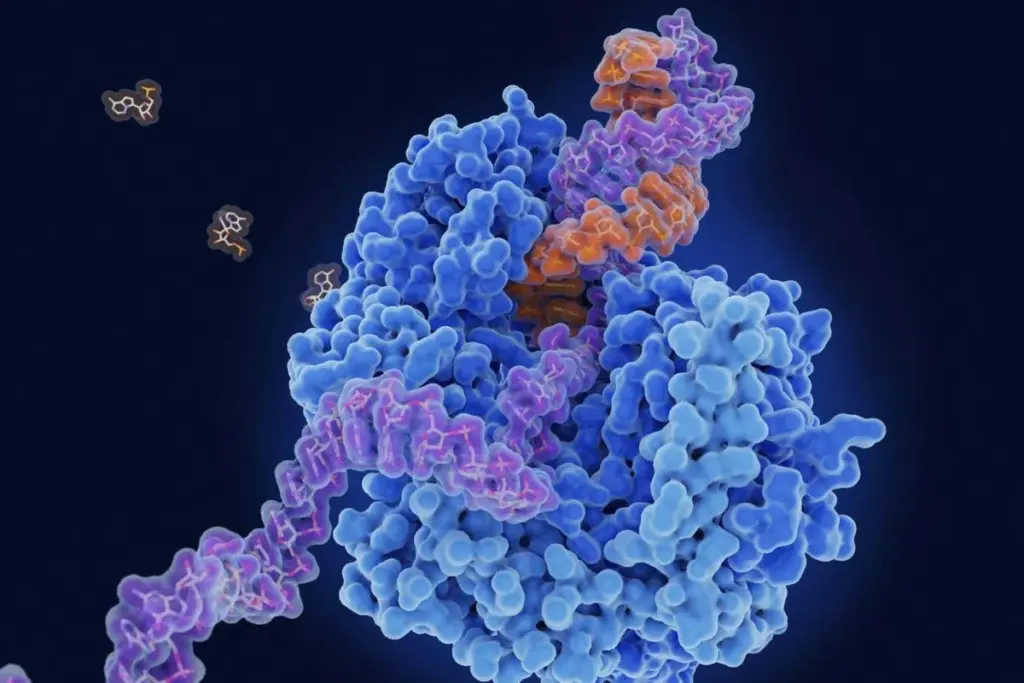
The AI platform was specifically designed to pinpoint drugs capable of blocking a viral enzyme known as RNA-dependent RNA polymerase. This enzyme is crucial for viral replication, enabling viruses to duplicate their genetic material. The AI focused on identifying drugs that could bind to a conserved section of this enzyme, dubbed the Thumb-1 domain, a site found to be common across numerous viral species. Haders explained the objective: “We wanted to find a biological chokepoint – a place where a single drug against a single target could solve dozens of diseases.”
By analyzing vast datasets from historical scientific literature and patent filings, the AI identified ERA-923 as a strong candidate for effectively binding to the Thumb-1 domain, thereby disrupting viral replication. Haders drew an analogy to the expansive data assimilation performed by platforms like OpenAI and Anthropic, stating, “Like how OpenAI and Anthropic have downloaded all digital human knowledge, we’ve done the same thing for all of chemistry, biology and clinical pharmacology.” He noted that while he has utilized computational methods in drug design for two decades, current AI tools represent a significant leap forward, being “a million times better.”
Laboratory Validation and Pre-Clinical Results
To assess the AI’s prediction, researchers experimentally tested the drug, now designated MDL-001, against a panel of viruses in infected cell cultures. The results indicated that MDL-001 effectively inhibited influenza A and B viruses. It also demonstrated activity against several coronaviruses responsible for common colds and COVID-19, RSV (which presents flu-like symptoms and can be particularly severe in infants), norovirus (commonly known as the winter vomiting bug), and hepatitis B, C, and D, all of which can lead to liver damage.
Further investigations in animal models showed that MDL-001 aided in treating COVID-19 in mice. The treatment led to reduced viral loads in the lungs and mitigated weight loss associated with the illness. Similar efficacy was observed in mice infected with hepatitis B and C. Haders is scheduled to present these findings at the Congress of the European Society of Clinical Microbiology and Infectious Diseases in Munich, Germany, in mid-April.
Expert Opinions and Next Steps
Peter White, from the University of New South Wales in Australia, has expressed some skepticism. He points to other drugs targeting the Thumb-1 domain that have shown efficacy only against hepatitis C, not a broader spectrum of viruses. Model Medicines, however, asserts that MDL-001 employs a distinct binding mechanism that accounts for its activity across multiple viral types.
Daniel Rawle of the QIMR Berghofer Medical Research Institute in Brisbane, Australia, also commented, noting that “most antivirals that work in vitro fail in vivo.” These observations highlight the complex challenges in translating laboratory findings into effective human treatments.
Advancing to Clinical Trials
Model Medicines is currently preparing for a clinical trial for MDL-001, with an anticipated start in early next year. The primary objective of this initial trial will be to ascertain the drug’s safety. Past trials involving patients with breast cancer indicated that MDL-001 has a profile of minimal side effects.
Currently, viral illnesses represent a significant global health and economic burden, often necessitating extended absences from work due to personal or family sickness. Haders suggested that the ability to rapidly treat these conditions with a short course of a versatile antiviral pill administered at home would be transformative. He further posited that MDL-001 could prove invaluable in managing future pandemics caused by novel coronaviruses or influenza strains.