
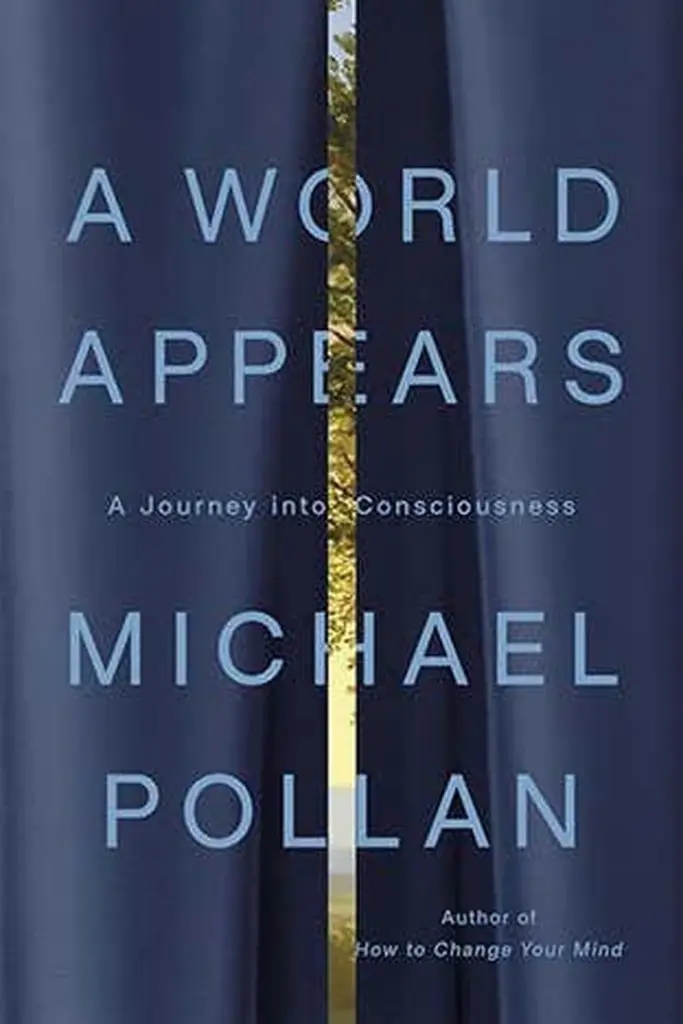
Author Michael Pollan, known for his best-selling explorations of plants, food, and psychedelics in works like “The Omnivore’s Dilemma” and “How to Change Your Mind,” now turns his attention to the complex subject of consciousness. His newest book, “A World Appears: A Journey into Consciousness,” delves into the research of scientists and philosophers while incorporating literary viewpoints. In a conversation with New Scientist, Pollan discussed the merits of authoring a book where one possesses less knowledge upon completion than at its outset.
Defining the Undefinable: What is Consciousness?
Kicking off the discussion with a notably challenging question, a New Scientist interviewer asked Pollan for a definition of consciousness. Pollan offered a straightforward starting point: subjective experience. He elaborated that while humans possess subjective experience, inanimate objects like toasters do not. He further suggested that the inclusion of “subjective” might be redundant, as the very act of experience implies an awareness of experiencing it.
He also highlighted a definition borrowed from philosopher Thomas Nagel. Nagel’s seminal 1974 essay, “What Is It Like to Be a Bat?,” posed the question of whether there is an experience of being a bat, despite their fundamental differences from humans. Pollan adapted this inquiry, proposing that if it is demonstrably “like something” to be any given species or individual, then that entity is conscious.
The Biological Roots of Awareness
Pollan discussed the long-held assumption that consciousness resides within the cortex, the most recent evolutionary addition to the brain. However, he stated he was persuaded by the work of researchers Antonio Damasio, Mark Solms, and Anil Seth. Their findings suggest that consciousness originates with feelings, such as hunger or an itch, and therefore emerges from the upper brainstem. This perspective carries significant implications, indicating that consciousness is inherently an embodied phenomenon. Such consciousness, Pollan explained, necessitates a body possessing vulnerability and a capacity for feelings that directly contribute to survival.
Challenges in Scientific Inquiry
The conversation shifted to the difficulties science faces in making substantial progress on understanding consciousness. Pollan observed that the physical sciences have been structured to exclusively address objective, third-person, and quantifiable phenomena. Consciousness, by its nature, is a first-person, qualitative experience. He traced this methodological constraint back to Galileo, who proposed a division separating subjective matters, which were then relegated to the domain of the church. Pollan clarified that Galileo did not dismiss subjective or qualitative aspects but deemed them too risky to pursue amidst religious scrutiny. This historical approach, he contended, has led to methods that may prove inadequate for studying consciousness.
Furthermore, Pollan noted that studying consciousness inherently requires an internal perspective. He referenced “The Blind Spot,” a book that influenced him, which posits that science itself is a product of human consciousness. The selection of research problems and methodologies for measurement, he argued, are all shaped by our conscious awareness and its inherent biases.
Consequently, Pollan suggested the need for a new scientific paradigm, one capable of integrating the first-person perspective. He mentioned Integrated Information Theory as one attempt within consciousness studies to achieve this. This theory begins with subjective experience, defined by five axioms, and then searches for structures that might support such an experience. While finding the theory not entirely convincing, Pollan acknowledged its innovative approach.
Exploring Plant Intelligence and Sentience
Pollan expressed an openness to the concept of plant consciousness. He drew a distinction between sentience and consciousness. Sentience, in his view, is the capacity to perceive one’s environment, recognize the positive or negative valence of changes, and respond accordingly. This constitutes a fundamental level of awareness but does not imply self-awareness. Pollan firmly believes plants possess this form of sentience.
He recounted spending considerable time investigating the field of “plant neurobiology,” a term used somewhat playfully. The discoveries in this area are remarkable, Pollan stated, noting that plants possess around 20 senses, far exceeding the human five or six. Plants can navigate mazes and react to stimuli, such as the sound of a caterpillar consuming a leaf, by producing toxins. They also communicate with nearby plants about predators and exhibit kin recognition, sharing soil resources only with related plants while avoiding unrelated ones. This indicates an ability to identify both kin and themselves.
Perhaps the most surprising observation, Pollan shared, is plants’ response to anesthetics identical to those used on humans. A Venus flytrap, when administered such anesthetics, will cease to react to approaching flies. He pondered what consciousness, or at least awareness, a plant might lose when subjected to anesthesia, noting that it would no longer be aware of a fly entering its trap. This observation, he found, was profoundly suggestive.
Artificial Intelligence and the Absence of Feeling
Pollan conveyed a degree of confidence that current forms of artificial intelligence are unlikely to achieve consciousness. He specified that this assessment pertains to AI on the near horizon, such as large language models and systems projected within the next decade. While computers can simulate thought processes, they cannot replicate genuine feelings. Feelings, he explained, transcend mere information, possessing a qualitative dimension deeply rooted in a vulnerable physical form.
He introduced Kingson Man, a figure profiled in his book, who is developing a computer designed to experience vulnerability. Man is outfitting the machine with tearable skin embedded with sensors. Pollan recalled asking Man if he believed these simulated feelings would be “real,” to which Man admitted uncertainty.
The Profound Influence of Prior Work
Pollan emphasized the profound impact his earlier research on plants and psychedelics had on his investigation into consciousness. His interest in plants dates back to his initial book, driven by a personal affection for flora and a genuine curiosity about their sentience. This pursuit was also spurred by a psychedelic experience in his Connecticut garden, where he felt a distinct sense of the plants’ awareness. He described a particularly vivid moment with tall plume poppies that seemed to reciprocate his gaze with “total benevolence.”
He addressed the challenge of interpreting such psychedelic insights, questioning their inherent value. Citing William James’s perspective on mystical experiences, Pollan stated that these insights should be treated as hypotheses, prompting a search for corroborating or refuting evidence through other epistemological avenues. This approach guided him down his research path.
Christof Koch’s transformative psychedelic experience, detailed in the book, is also mentioned. Koch, initially focused on the brain as the epicenter of consciousness, reportedly experienced consciousness “outside of the brain.” When asked about this shift in perspective, Koch attributed it to the profound reality of the experience. Pollan noted his surprise at the number of scientists now engaging with psychedelics and finding them beneficial in various research contexts.
On a broader level, psychedelics prompted Pollan to contemplate consciousness. He described them as agents that “smudge the windshield of experience,” revealing the underlying mediation of reality by consciousness. This realization, he found, became an all-consuming obsession.
Introspection and the Nature of Thought
Pollan recounted an intriguing episode in his book where his thoughts were tracked by psychologist Russell Hurlburt. He admitted to a degree of defensiveness upon Hurlburt’s suggestion that he might not possess a high volume of thoughts. Pollan felt many of his thoughts remained unarticulated but could be brought forth with minimal effort, describing them as “premonitions” on the verge of expression.
Hurlburt’s interpretation suggested a profound “hollowness” that Pollan was attempting to fill with contextual information. Pollan countered that he experiences rumination and ample thought during meditation, leading to a defensive reaction. Nevertheless, he acknowledged the experiment’s uniqueness.
He elaborated on Hurlburt’s long-term research, which has revealed significant variations in how individuals think. The assumption that the term “thought” describes a uniform phenomenon across all people is inaccurate. Hurlburt’s work identifies distinct thinking styles, including those who think in fully formed words, those who rely on images, and those who experience “unsymbolized thoughts.” The prevalence of purely verbal thinkers, Pollan noted, is considerably lower than commonly believed.
Navigating the Landscape of Awareness
The discussion touched upon whether contemplating consciousness could simultaneously enhance and detract from one’s awareness. Pollan referenced Alison Gopnik’s distinction between “spotlight consciousness,” characterized by narrow, intense focus, and “lantern consciousness,” which represents a broader, exploratory awareness. Pollan admitted to often engaging in spotlight consciousness.
He described significant frustration in his quest for solutions to the problem of consciousness. His wife, an artist, advised that embracing uncertainty and “not knowing” could be a valuable approach. Pollan, initially a journalist accustomed to seeking answers, found this difficult to accept. However, his encounter with Zen teacher Joan Halifax and a period of reflection in a cave led him to realize the validity of this perspective.
He recognized that while the “problem” of consciousness existed, so did the direct “experience” of it. An overemphasis on the problem, he concluded, could impede the experience. Pollan asserted that it is possible to become “more conscious,” emphasizing an urgency in this pursuit as consciousness is increasingly under threat. He described consciousness as a precious, private space for thought that is being relinquished to corporations, necessitating its defense.
Pollan concluded by stating that despite a potential reduction in scientific understanding of consciousness by the reader upon finishing the book, they would likely gain something of greater importance. He suggested that the value lies not solely in definitive answers but in the journey of exploration itself.
The Value of the Quest
When questioned about the value of pursuing an understanding of consciousness, especially if complete comprehension remains elusive, Pollan responded that the quest itself provides the learning. Referencing William James, he expressed a sense of awe at the intricate nature of the human mind. The process, he hopes, leads to a deeper appreciation for something often taken for granted, ultimately making the reader “more conscious than before.”