
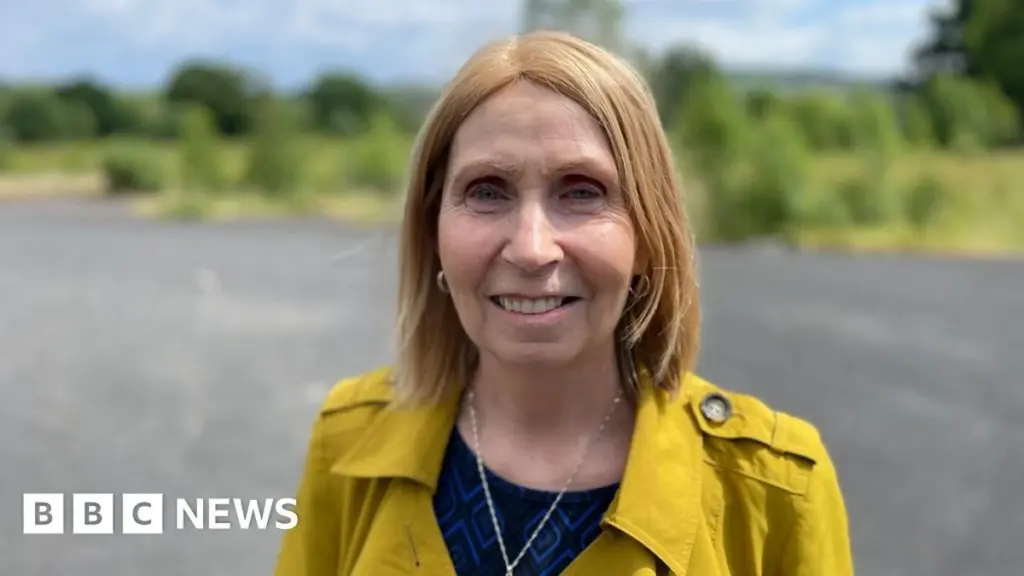
Linda Ervine, an advocate for the Irish language from Belfast, and academic Colin Harvey are among seven individuals selected by Irish President Catherine Connolly to serve on the Council of State. This council’s constitutional role is to provide counsel to the President.
Ervine’s background includes growing up in a working-class Protestant family in east Belfast. She now manages the first Irish language center established in a loyalist community. Harvey is recognized as a Professor of Human Rights Law within the School of Law at Queen’s University Belfast.
Her contributions to the promotion of the Irish language are notable. Ervine founded Scoil na Seolta, which is recognized as the pioneering integrated school for instructing through the Irish language. Her dedication earned her an MBE in 2021. Subsequently, in 2023, Queen’s University Belfast bestowed upon her an honorary doctorate. Further recognition followed last year with her induction as a member of the Royal Irish Academy and an honorary degree from Trinity College in June 2025. The Open University awarded her another honorary degree in October 2025.
Professor Harvey’s professional standing extends beyond academia. He holds a professorship in Human Rights Law at Queen’s University Belfast. Additionally, he serves as a Commissioner on the Irish Human Rights and Equality Commission and is a member of the Scientific Committee for the EU Fundamental Rights Agency. His prior experience includes two terms as a commissioner on the NI Human Rights Commission and membership on the NI Higher Education Council.
Other Appointees to the Council of State
President Connolly has also appointed five other individuals to the Council of State. These are Fionnuala Ní Aoláin, Kathleen Lynch, Donncha O’Connell, Conor O’Mahony, and Ciarán Ó hÓgartaigh.
Professor Fionnuala Ní Aoláin is an expert in international law and human rights, currently holding a professorship at Queen’s University Belfast School of Law. Her academic career includes visiting positions at prestigious institutions such as Harvard Law School, Yale University, Princeton University, and the Geneva Academy in Switzerland.
Kathleen Lynch is a sociologist and Professor of Equality Studies (Emerita) at University College Dublin (UCD). At UCD, she also previously held a Senior Lectureship in Education. Her service includes a tenure as a member of the Irish Human Rights and Equality Commission.
Conor O’Mahony serves as Professor of Law and Dean of the School of Law at University College Cork. His academic work and teaching are focused on constitutional law and children’s rights.
Ciarán Ó hÓgartaigh is the former president of the University of Galway, the same county that President Connolly hails from.
Donncha O’Connell holds the position of Established Professor of Law at the University of Galway. He completed two terms as a Commissioner of the Law Reform Commission. His involvement also extends to being a member of the Commission on the Future of Policing in Ireland and a board member of the Legal Aid Board.
Understanding the Council of State
The Council of State is convened to offer advice to the President, specifically when such counsel is requested. This advisory capacity can include matters such as determining whether a legislative bill should be presented to the Supreme Court for a constitutionality review.
The membership of the Council of State comprises three categories. The first consists of seven individuals appointed directly by the President. The second category includes former presidents, former Taoisigh (Irish prime ministers), and former Chief Justices. The third group comprises individuals currently holding specific governmental offices. These positions include the Taoiseach (Prime Minister), Tánaiste (Deputy Prime Minister), Chief Justice, President of the Court of Appeal, President of the High Court, Ceann Comhairle (Chair of Dáil Éireann, the lower house of the Irish parliament), Cathaoirleach of the Seanad (Chair of the upper house of parliament), and the Attorney General.
The Irish Constitution outlines specific circumstances under which the President is mandated to consult with the Council of State.