
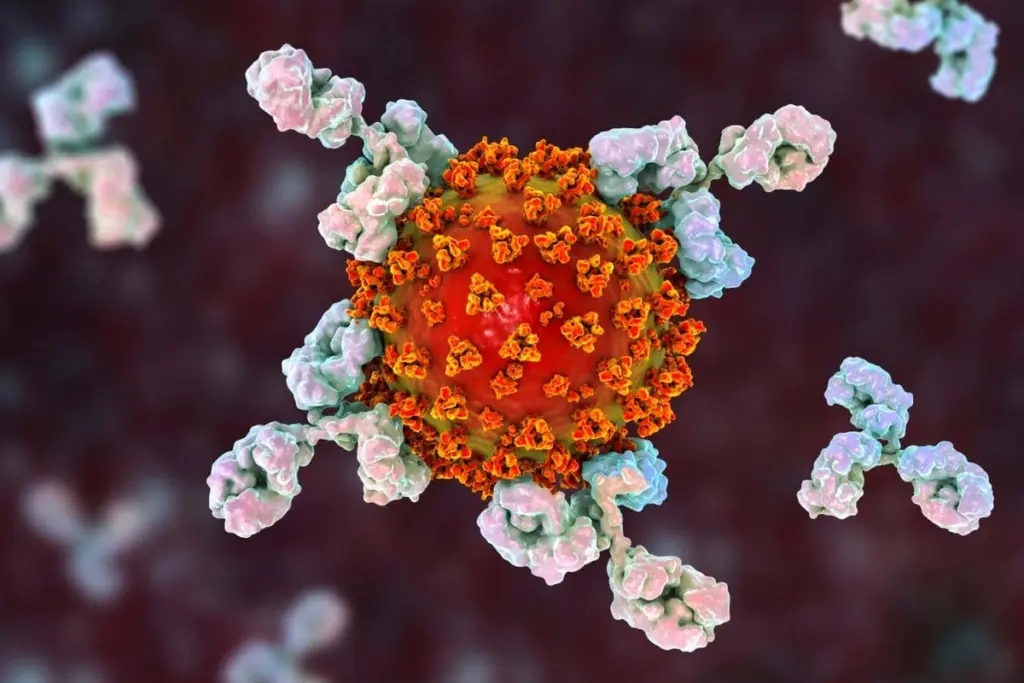
A growing body of evidence suggests that the persistent symptoms associated with long COVID may stem from the immune system mistakenly attacking the body’s own healthy tissues. This concept, known as autoimmunity, appears to be a contributing factor in a significant number of cases, particularly those where pain is a primary complaint.
These findings, emerging from four distinct studies, could pave the way for much-needed treatments. Currently, there are no approved therapies for long COVID available in either the UK or the US. “We need to remove the autoantibodies from patients and observe if their symptoms resolve,” stated Niels Eijkelkamp of Utrecht University in the Netherlands, highlighting the investigative approach needed.
While most individuals infected with SARS-CoV-2 recover within days, a subset experiences symptoms that can linger for months, or even years. The spectrum of these post-infection effects is broad, commonly including profound fatigue, persistent pain, cognitive difficulties often referred to as “brain fog,” and post-exertional malaise, a condition where even minor physical activity results in extreme exhaustion.
Researchers have posited several potential mechanisms behind long COVID. These include the continued presence of SARS-CoV-2 within the body and disruptions to the gut microbiome. It is understood that any given individual experiencing long COVID might be affected by one or a combination of these factors, which could account for the diverse range of symptoms and the challenges in developing universally effective treatments.
The Autoimmune Hypothesis in Long COVID
A prominent theory under investigation is the role of autoimmunity, specifically involving antibodies that mistakenly target the body’s own cells. Antibodies are designed to identify and bind to foreign invaders like pathogens, marking them for destruction. However, in autoimmune conditions, the immune system malfunctions, producing autoantibodies that attach to the body’s own tissues, leading to damage.
Early Indicators and New Research
An initial indication that autoantibodies might play a role in long COVID emerged in 2023. Researchers utilized a blood filtering technique called apheresis on individuals with long COVID. This process was linked to reduced autoantibody levels and symptom improvement. However, the broad nature of the filtration meant it was challenging to pinpoint which specific filtered substances were responsible.
More recently, Eijkelkamp and his team have presented findings that strengthen the link between autoantibodies and certain long COVID symptoms. Their research, initiated in 2022, involved 34 individuals diagnosed with long COVID and 15 control subjects who had contracted SARS-CoV-2 but did not develop persistent symptoms. The study concentrated on a common class of antibodies known as immunoglobulin G (IgG) found in the participants’ blood. These collected IgGs were then administered to mice.
When IgGs from individuals with long COVID were introduced into the mice, the animals exhibited increased sensitivity to touch, even light contact, and experienced heightened pain responses. They also reacted more rapidly to hot surfaces. According to Eijkelkamp, this increased pain sensitivity mirrors the experiences of some individuals suffering from long COVID.
Further reinforcing these observations, the team replicated the experiment in 2024. Using IgGs from 19 participants who continued to experience long COVID, they observed similar outcomes. Charles Nicaise of the University of Namur in Belgium, who contributed to another of the studies, noted, “There is a persistence of these autoantibodies in the bodies of the patients.”
Supporting Evidence from Multiple Studies
These findings are consistent with the results of three other research papers, although none have yet undergone peer review.
The first study, led by Akiko Iwasaki at Yale University and released in July 2024, similarly reported elevated autoantibody levels in individuals with long COVID. Notably, those with neurological symptoms showed autoantibodies targeting proteins within the nervous system. When these autoantibodies were transferred to mice, the animals displayed heightened sensitivity to touch and pain, and experienced difficulties with balance and coordination, mirroring the dizziness sometimes reported by long COVID patients.
Two additional studies were published in November 2025. The first found that injecting IgGs from individuals experiencing long COVID-related pain, fatigue, or both into mice led to a reduced density of nerve fibers in the skin, indicating potential nerve damage. The antibodies associated with pain also rendered the mice hypersensitive to touch and cold.
Finally, Nicaise and his colleagues conducted research where mice injected with IgGs from long COVID patients became more sensitive to touch. Post-dissection analysis revealed that these IgGs had accumulated in the dorsal root ganglia, which are clusters of neurons near the spinal cord responsible for transmitting sensory information to the brain. The IgGs were found concentrated around neurons involved in pain and proprioception—the body’s awareness of its position and movement—potentially explaining dizziness and vertigo.
Pathways to Potential Treatments
Translating these findings into effective treatments requires several crucial steps. The immediate priority is to identify which specific IgG antibodies, out of millions of types, are responsible for triggering the symptoms. Iwasaki’s team has already identified two such antibodies that target the MED20 and USP5 proteins.
Furthermore, it is essential to determine if removing these autoantibodies or blocking their activity effectively alleviates symptoms. Brent Appelman from Amsterdam University Medical Centre, who was part of Eijkelkamp’s research group, is investigating the effects of filtering out these autoantibodies, while leaving other blood components intact. Eijkelkamp emphasized that while apheresis can offer temporary relief, it is not a permanent solution, requiring repeated treatments every few months. “This is a perfect proof of concept,” he noted, “but the ultimate goal should be the development of a drug.”
Journal reference: Cell Reports Medicine DOI: 10.1016/j.xcrm.2026.102693