
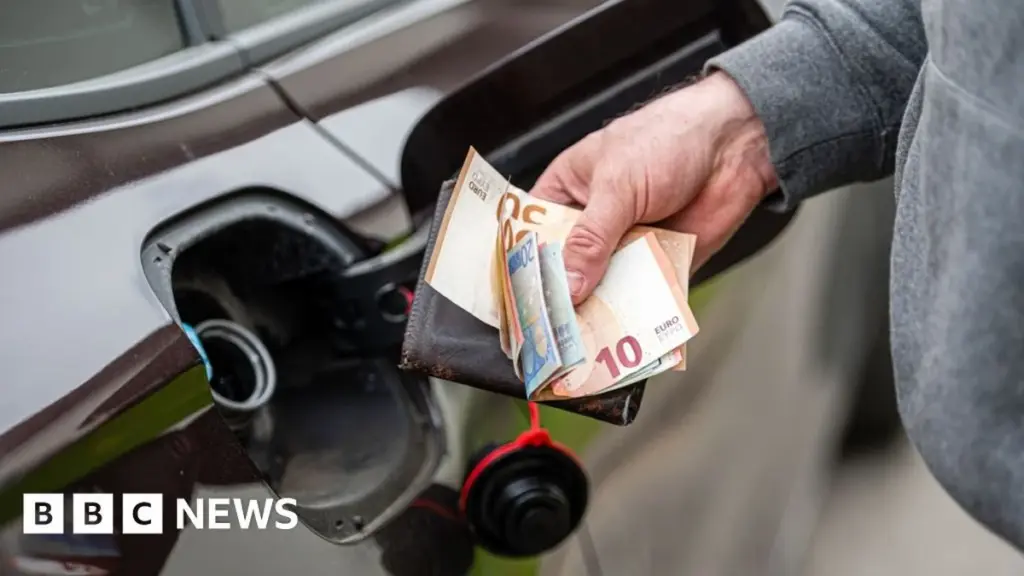
The Irish government has recently initiated measures to cushion the economic impact on its population, a concern amplified by the conflict in Iran. These initial steps include reductions in petrol and diesel taxes, supplemented by a €150 benefit payment for approximately 470,000 of the nation’s lowest-income households.
This support package, totaling just under €250 million, represents a modest sum when contrasted with the estimated €12 billion allocated during the preceding energy crisis. Government ministers have highlighted the specific targeting of this aid, while simultaneously indicating a readiness to provide further assistance should the situation escalate.
“To put it bluntly, nobody knows what the situation will be in a month from now,” stated the Taoiseach (Prime Minister) Micheál Martin. “We must remain flexible in our response.” He further elaborated that Ireland’s economy is entering this period of uncertainty from a position of relative strength.
The country continues to benefit from a fiscal advantage derived from US technology and pharmaceutical firms, which channel a significant portion of their global tax liabilities through Ireland. This has facilitated a government budget surplus, thereby enhancing its capacity to support both households and businesses.
Official data indicates that Ireland’s domestic economy experienced nearly 5% growth in 2025, with employment figures reaching an all-time high. While such a performance is not anticipated for the current year, two recent forecasts suggest that a severe economic downturn can be averted, albeit with notable caveats.
Economic Forecasts and Scenarios
The nation’s Central Bank has outlined a baseline scenario assuming a relatively swift resolution to the conflict and the restoration of supply chains. Under these conditions, economic growth is projected to decelerate to below 3% for the year. Inflation is expected to climb from an average of 2.1% in 2025 to nearly 3% this year. Should the conflict persist, the bank anticipates growth could fall closer to 2%, with inflation exceeding 4%, thereby impacting living standards.
Crucially, the Central Bank notes that these projections are “partial” and “could be accompanied by other negative developments.” This implies that a range of external economic shocks not incorporated into their models could significantly alter the outlook.
A similar assessment comes from the Economic and Social Research Institute (ESRI), a prominent think tank. The ESRI also foresees rising inflation and slowing growth, acknowledging a substantial degree of uncertainty regarding the magnitude of these shifts. The ESRI has also cautioned that escalating inflation could exacerbate Ireland’s persistent challenge in meeting its housing construction targets.
“One of the risks we see in terms of housing outlook really is that if these energy price spikes feed through into construction inflation that could really weigh on housing output,” commented ESRI researcher Conor O’Toole, underscoring the potential ripple effects on the construction sector.