
As an individual who readily admits to a distinct lack of a green thumb – a gardener by circumstance, not by skill – I find myself uniquely positioned to review David George Haskell’s “How Flowers Made Our World.” My personal history with flora is one of unintentional devastation; I have, with surprising efficiency, managed to kill even remarkably resilient specimens, a cactus included. This perspective, that of someone incapable of coaxing a bloom to life, perhaps strangely, allows for a clear appreciation of Haskell’s profound understanding and evident passion for flowering plants, a passion that permeates every page of his latest work.
David George Haskell, a biologist at Emory University, brings a deep well of knowledge to the subject. His previous book, “Sounds Wild and Broken,” explored the natural symphony of animal songs and the threats they face. In “How Flowers Made Our World,” Haskell challenges a common Western perception of flowers as merely decorative and fragile. He argues that this view is fundamentally flawed, viewing them as “weak and merely ornamental” and certainly not as forces of power or influence.
This prevalent, often subconscious, categorization leads to flowers being associated with the feminine. Haskell points out the irony that many men might shy away from alcoholic beverages garnished with flowers, opting instead for traditional “manly” beers, which are, paradoxically, derived from flowering plants themselves.
Flowers as World-Building Agents
Haskell’s central thesis is that flowers are, in reality, “world changers.” Their evolution and diversification, which occurred during the late dinosaur era, dramatically reshaped ecosystems. This evolutionary leap paved the way for the development of an astonishing array of new traits in other organisms. Essential elements of our planet, from the lushness of rainforests and the industriousness of honeybees to the vastness of savannahs, the vibrancy of meadows, and indeed, the very existence of our own species, are inextricably linked to flowers, either directly based upon them or dependent on them for their continued survival.
To illustrate this profound interdependence, Haskell dedicates eight of the book’s nine chapters to examining different facets of floral biology and their ecological significance. Each chapter is thoughtfully centered around a specific flower, offering a tangible entry point into complex ecological narratives.
Early Blooms and Evolutionary Dominance
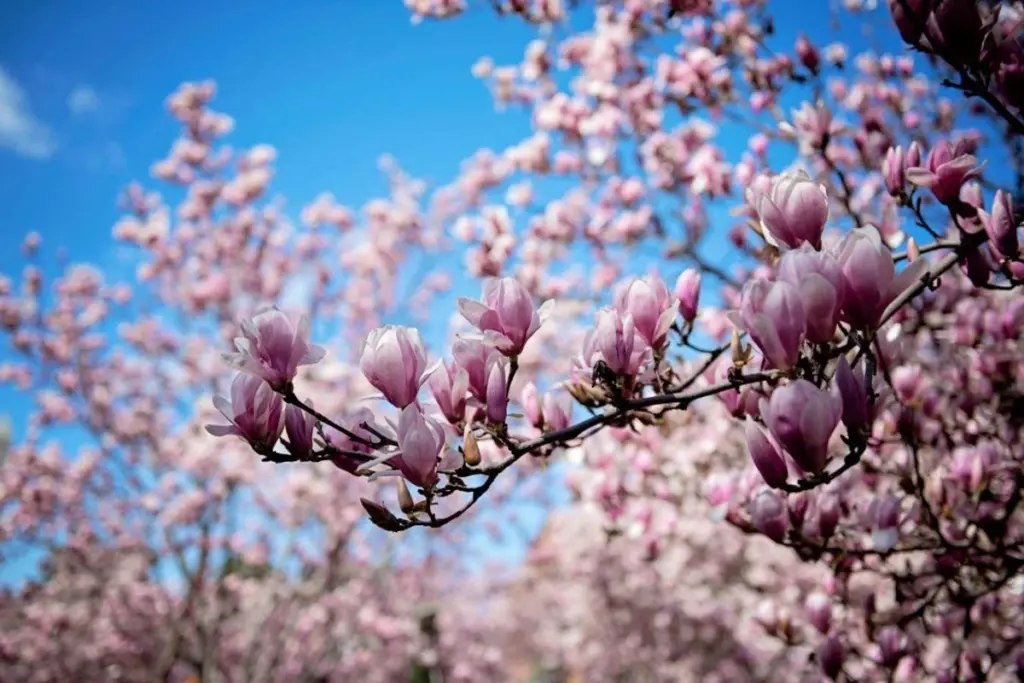
The book opens with the magnolia, a fitting choice given that its floral structure has remained remarkably unchanged for approximately 100 million years, providing a window into the earliest flowering plants, also known as angiosperms. Haskell adeptly navigates the long-standing scientific debate surrounding their precise emergence, confirming their appearance during the dinosaur era and their subsequent rapid ascent to ecological dominance.
With the rise of angiosperms, many established plant groups were relegated to the periphery of ecosystems. This shift meant that the majority of what we commonly recognize as trees are, in fact, flowering plants. Similarly, all grasses fall under this category. As Haskell aptly puts it, “The Earth is a floral planet.”
Adaptability and Interconnectedness
From the ancient marvel of the magnolia, the narrative transitions to the goatsbeard, showcasing the remarkable speed and creativity with which flowering plants can evolve. Haskell posits that a key mechanism behind this adaptability lies in the repeated duplication of genomic segments. This process generated a substantial reservoir of genetic material, affording angiosperms ample opportunity to develop a wide spectrum of new characteristics.
Orchids, in turn, serve as a prime example of how flowering plants forge intricate relationships with other life forms, including insects, birds, and fungi. The humble seagrass, meanwhile, demonstrates that flowering plants can themselves function as complete ecosystems, creating vital habitats for wildlife and actively reshaping their surrounding environments.
Humanity’s Floral Connection
The latter half of the book shifts focus to the intrinsic connection between humanity and flowering plants. Haskell utilizes the rose to explore the vast range of fragrances produced by flowers and their crucial role in human relationships, alongside their significance in the perfume industry. He also touches upon Linnaeus’s foundational work in species classification, noting that his studies of tea plants were instrumental. Crucially, Haskell underscores that our primary cereal crops, such as wheat and maize, are botanically grasses possessing flowers. Without these nutritious flowering plants, sustaining the immense global population would be an insurmountable challenge.
While Haskell’s enthusiasm for highlighting the significance of flowering plants is commendable, there are instances where his advocacy might slightly overstate the case. He paints a picture of a pre-angiosperm world as comparatively dull, lacking in vibrant colors beyond green and offering few alluring scents. While there is no doubt that flowers introduced a significant sensory dimension to the planet, visual signaling itself likely predates flowers, originating with the earliest complex animals in the Cambrian period. Our understanding of the colors of these ancient marine organisms, however, remains limited.
Similarly, chemical communication is a fundamental aspect of life, particularly pervasive, though not fully understood, within the marine environment. Such nuances, however, do not detract from Haskell’s essential message. He is undeniably correct in emphasizing the critical importance of flowering plants and the urgent need to preserve their biodiversity. His concluding chapters thoughtfully address contemporary trends such as wildflower-friendly gardens and rewilding initiatives, while also contemplating potential future scenarios for floral life.
A Meditative Exploration, Not a Narrative Drive
My primary reservation regarding the book pertains to its structure, a matter of personal preference. “How Flowers Made Our World” lacks a cohesive overarching narrative. Haskell presents a compelling argument – essentially, “flowers are vital and fascinating” – through a series of interconnected essays, each exploring a distinct aspect of floral life. Readers should not anticipate a gripping storyline or a tightly structured argument designed to propel them through the text. Instead, the intended experience is one of immersion in Haskell’s rich and often lyrical prose.
I suspect Haskell may have drawn inspiration from Marcel Proust’s “In Search of Lost Time,” where a seemingly simple madeleine triggers a profound journey into memory. Likewise, Haskell aims to evoke an appreciation for tens of millions of years of evolutionary history within the delicate petals and intricate stamens of a magnolia. His writing style, perhaps better described as an invitation to contemplation rather than a direct exposition, may not resonate with all readers. While I personally favor a more direct argumentative approach or a driving narrative, Haskell’s method is exploratory and deeply engaging. The book itself is a testament to extensive research, brimming with insightful observations and vivid descriptions, presenting a commendable and highly recommendable exploration of its subject.
Further Reading on Non-Animal Life
The following three books offer additional perspectives on the fascinating world of plant and fungal life:
Thus Spoke the Plant by Monica Gagliano
Gagliano posits that plants possess capabilities we often overlook, such as the ability to “hear” the sounds of caterpillars feeding, and even to learn and remember. She suggests their operational timeframe differs significantly from ours, making their actions less apparent without careful observation.
Finding the Mother Tree by Suzanne Simard
Suzanne Simard’s research has been pivotal in the scientific community’s cautious acceptance of the “wood wide web,” a complex network of roots and fungi enabling communication between trees. While still not fully understood, this concept owes much to Simard’s pioneering work.
Entangled Life by Merlin Sheldrake
Sheldrake delves into the world of fungi, a distinct kingdom separate from plants and animals, and arguably the least understood group of organisms on Earth. Despite this lack of comprehensive understanding, fungi play a fundamental role in human life, from their use in producing foods like cheese and bread to their capacity for inducing altered states of consciousness.