
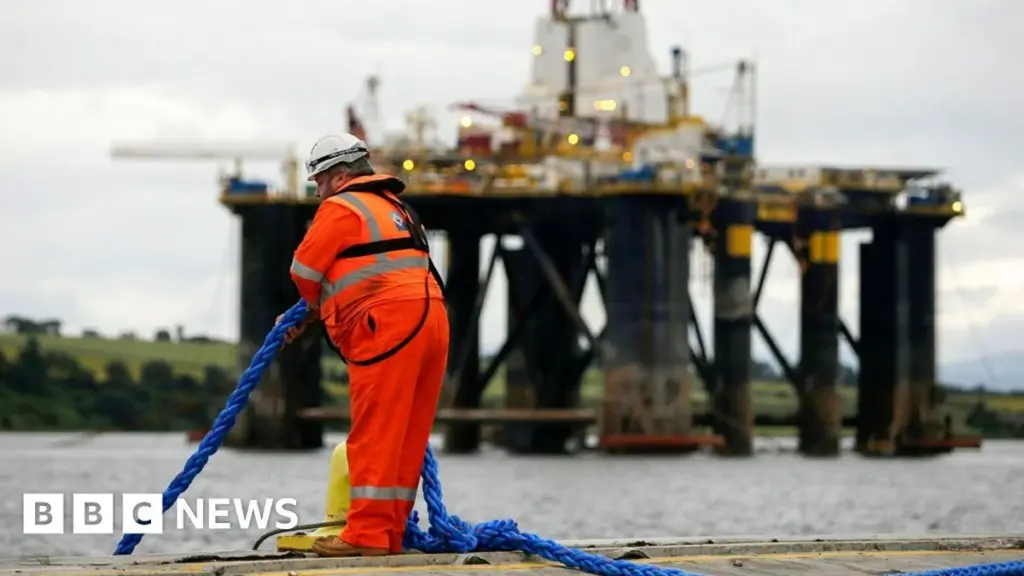
The UK’s offshore energy sector has issued a stark warning, asserting that the nation “urgently” requires increased domestic oil and gas production. Offshore Energies UK (OEUK) has called upon the government to actively support exploration activities in the North Sea. This plea comes amid growing concerns that a lack of significant home-grown output could lead to an over-reliance on imports during a period marked by heightened global instability.
The urgency for domestic production has been amplified by recent global events. Oil and gas prices have experienced sharp increases since the commencement of the US-Israel conflict and Iran’s actions effectively closing the Strait of Hormuz, a crucial artery for international crude oil shipments. This volatile geopolitical landscape underscores the vulnerability associated with depending on foreign energy supplies.
The current Labour government has implemented a ban on new licenses for oil and gas fields in the North Sea. A government spokesperson articulated the administration’s stance, suggesting that the issuance of exploration permits would not enhance the nation’s energy security nor lead to a reduction in consumer bills. The spokesperson further elaborated that oil and gas, irrespective of its origin, is traded on global markets. These international markets dictate prices for British consumers, effectively rendering the UK a “price taker” rather than a determinant of energy costs.
Energy Secretary Ed Miliband recently communicated to the BBC that the ongoing crisis, which has seen oil prices surge by over 30%, highlights the imperative for “home-grown, clean power that we control.” This sentiment points towards a desire for greater energy autonomy through renewable sources.
However, OEUK contends that the energy landscape is not a rigid dichotomy of renewables versus fossil fuels. The industry body’s report, released on Tuesday, emphasizes that oil and gas continue to fulfill approximately 75% of the UK’s energy requirements. Furthermore, it projects that these resources will still account for roughly one-fifth of the nation’s demand by the year 2050. This projection suggests that fossil fuels will remain a significant component of the UK’s energy mix for at least the next three decades.
The report also highlights a concerning trend: demand is escalating while domestic production is diminishing. This widening gap leaves the public susceptible to sudden and substantial price fluctuations in the energy market. OEUK chief executive David Whitehouse elaborated on these vulnerabilities, stating, “Recent events have shown how quickly energy markets can tighten and how easily cargoes can be diverted away from the UK when other buyers bid higher.” He stressed the critical need for “greater supplies of secure, domestically produced energy including oil and gas,” characterizing them as essential for the UK’s energy system and economy for decades to come.
Industry Proposals for Government Action
In light of these challenges, OEUK is advocating for a fundamental review of the government’s policy on offshore oil and gas exploration licenses. The industry group specifically requests a reassessment following last year’s prohibition on new ventures. Currently, the regulatory framework restricts developers to increasing production only within existing licensed fields or areas immediately adjacent to them. This limitation is intended to maintain the economic viability of ongoing operations.
Another key demand from OEUK concerns the Energy Profits Levy (EPL), commonly referred to as the windfall tax. The organization is calling for the tax to be abolished in 2026, four years ahead of its scheduled end. OEUK proposes replacing the EPL with an “Oil and Gas Price Mechanism.” This alternative would implement a 35% tax rate specifically when oil and gas prices exceed a predetermined threshold. Under the current windfall tax regime, energy companies face a tax rate of 78%.
The industry believes that these policy changes, particularly the proposed tax adjustments and the lifting of the exploration ban, could stimulate significant new investment. OEUK estimates that these measures could unlock approximately £50 billion in new investment within the UK’s oil and gas sector.
Opposition and Counterarguments
The Conservative Party is slated to leverage its Opposition Day debate in parliament to advocate for the termination of both the EPL and the ban on new oil and gas licenses. Additionally, the party is pushing for government approval of two new Scottish oil and gas fields, Rosebank and Jackdaw. These projects faced a judicial setback last year when a court blocked their development.
The ruling by the Court of Session in Edinburgh followed a legal challenge mounted by environmental campaigners, Uplift and Greenpeace. The court’s written judgment indicated that the developers had not adequately assessed the potential environmental impact of these fields, mandating a fresh approval process. Claire Coutinho, shadow secretary of state for energy security, described the potential abandonment of domestic gas resources as “madness in normal times” and “sheer lunacy” during a gas supply shortage, underscoring the perceived strategic importance of these resources for heating millions of homes.
However, research conducted by the University of Oxford presents a counterpoint to the industry’s claims. Their findings dispute the notion that significantly increasing domestic oil and gas extraction would lead to a substantial reduction in UK energy bills. The researchers concluded that even with maximized North Sea extraction and the direct redistribution of revenues to households, the resulting cost savings would be considerably smaller than those anticipated from a more accelerated transition to renewable energy sources.
Mel Evans, head of climate at Greenpeace UK, voiced skepticism regarding the industry’s motivations. Evans suggested that the oil and gas sector has “billions of reasons” to seek tax reductions and expanded drilling permits. She argued that such measures would not reduce energy bills or petrol prices for consumers but would instead maximize the industry’s revenue potential during periods of high oil prices, often referred to as “oil wars,” when fossil fuel companies can achieve substantial profits.