
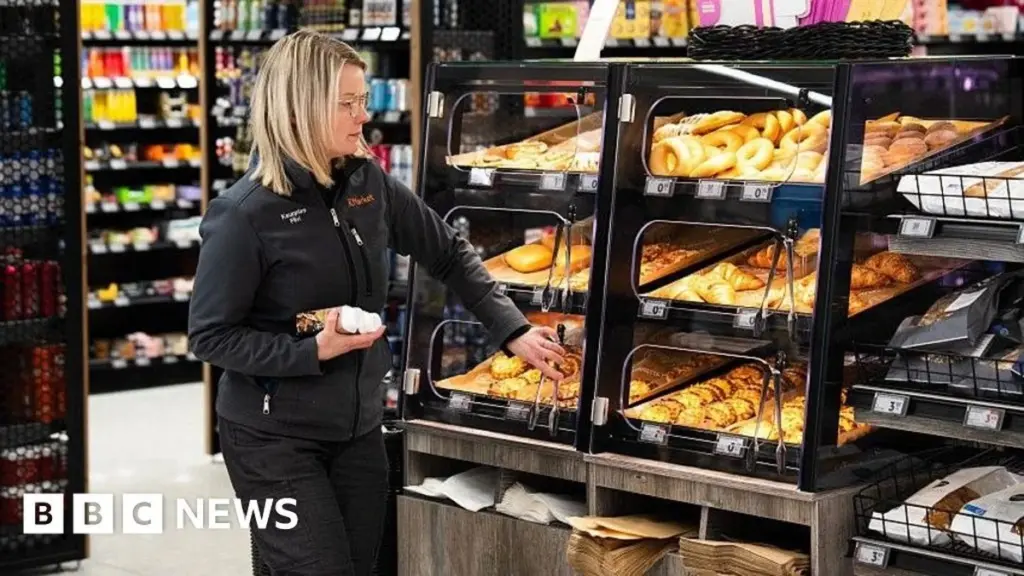
In the event of facing aggression, Finland’s citizens are prepared to act, though not always in conventional military roles. Janne Ahtoniemi, who manages risk at the nationwide supermarket chain S Group, illustrates this point. His preparedness stems directly from his work, and in scenarios of invasion or significant cyber attacks, S Group has a detailed strategy to aid the nation. This involves ensuring that Finland’s population of approximately 5.6 million people maintains adequate food supplies.
Across the country, other businesses critical to national infrastructure, such as defense contractors, transportation firms, and cybersecurity companies, similarly possess comprehensive contingency plans. These preparations address potential conflicts with other nations as well as challenges like natural disasters.
Decades of Preparedness and Comprehensive Security
“Finland’s robust security of supply is built upon decades of consistent preparedness and training,” Ahtoniemi explains. “Companies recognize this perspective and their individual contributions to it. Consequently, both individuals and corporations are ready to invest in security of supply.” This approach aligns with the long-standing “total defence” strategy adopted by all four Nordic nations—Finland, Sweden, Norway, and Denmark. This strategy mandates close collaboration between military and civilian sectors in national planning.
Following Russia’s invasion of Ukraine in 2022, Finland significantly amplified this concept, increasing commercial involvement and renaming it “comprehensive security.” This intensified focus is understandable, given Finland’s extensive 1,340-kilometer (830-mile) border with Russia. The Finnish government formalized this new policy last year through “The Security Strategy for Society,” a document described as the principal guide for comprehensive security within the nation.
Critical businesses actively participate in “preparedness committees,” which include representatives from both local and central government bodies. These committees engage in national training exercises to prepare for a wide array of potential crises. Preparations extend beyond conventional warfare to encompass nationwide cyber attacks, disruptions to essential services like food and water, and threats to the financial system.
Ahtoniemi notes that “participating in the exercises represents a substantial time investment for organizations.” His company also collaborates with the National Emergency Supply Organisation. Rival supermarket group Kesko shares this commitment. Jyrki Tomminen, an executive at Kesko, states, “We aim to contribute to ensuring Finnish society can function daily, irrespective of circumstances.” He adds, “Companies develop preparedness for various disruption scenarios, utilizing collaborative contingency plans and exercises.”
Strategic Reserves and Individual Responsibility
Both S Group, Kesko, and other food-related businesses are legally mandated to maintain strategic reserves of vital commodities, including flour, sugar, and cooking oils. These reserves are stored in specialized warehouses or underground bunkers equipped with backup power generators. This ensures a buffer against supply chain disruptions.
Beyond corporate efforts, every adult in Finland is expected to contribute to national defence, according to Tom Woolmore, an expert on security in Northern European countries. He emphasizes that this is “not theoretical; it is very much put into practice.” Professor Frank Martella, a philosophy instructor at Aalto University in Helsinki, exemplifies this. While an academic, he also serves as a navy reservist, liable for service during national emergencies. Martella points out that his potential role might not be in the navy; instead, he could be assigned tasks leveraging skills and experience gained over two decades, illustrating a flexible approach to national service based on evolving needs.
Trust and Safety as Foundational Values
Dr. Jennifer De Paola, a psychologist at Helsinki University, attributes the willingness of Finnish companies and citizens to participate in national preparedness to two key factors: trust in the government and a deep-seated cultural value for feeling safe. Her research with children aged 10 to 12 revealed that happiness for them was strongly associated with feeling secure, while unhappiness stemmed from feeling unsafe. This emphasis on safety persists into adulthood, leading Finns to highly value trustworthiness.
“We place a much greater trust in our institutions than people do in other countries,” De Paola observes. “This encompasses our governments, ministries, and political figures, contributing to Finland’s low levels of corruption.” Professor Martella further notes that Finland’s high degree of societal equality plays a significant role. He suggests that “the more equal a society is, the more people trust one another.” Woolmore concurs that these values are fundamental to Finland’s national resilience.
Despite high levels of trust, Finns also understand the necessity of discretion when required. Ahtoniemi of S Group considers details of the company’s wartime plans to be “confidential information” and declines to elaborate. Similarly, a spokesperson for Kesko stated that “in line with our standard practice, we do not elaborate further on our contingency planning,” adhering to a policy of not disclosing specific details of their preparedness measures.