
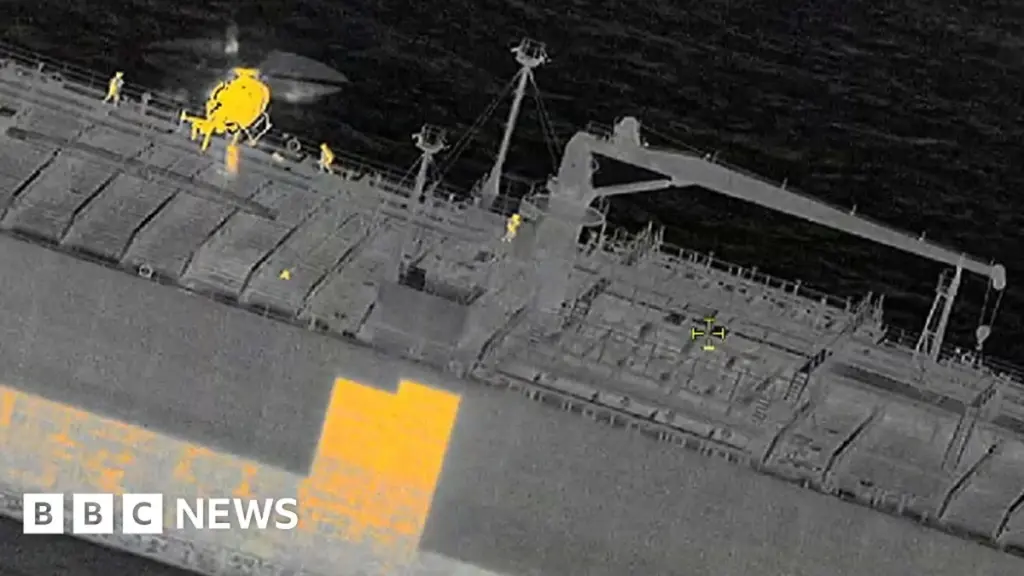
A court in Sweden has ordered the detention of the Russian captain of a vessel suspected of operating as part of Moscow’s shadow fleet. The ship was allegedly sailing under a false flag, a tactic often employed to circumvent international sanctions.
The captain, whose identity has not been publicly disclosed, appeared before a court in Ystad. His arrest occurred on Friday, carried out by the Swedish Prosecution Authority on grounds of suspected use of forged documents.
Coast guard personnel boarded the tanker, identified as the Sea Owl One, while it was within Swedish territorial waters. At the time of the boarding, the vessel was flying a Comoran flag, which authorities suspected might be illegitimate.
The Sea Owl One, a tanker measuring 228 meters (748 feet) in length, is listed among vessels that have been subjected to European Union sanctions. Such measures target Russia’s energy sector following its invasion of Ukraine.
Moscow has reportedly utilized a network of tankers, often with obscured ownership or insurance details, to bypass Western sanctions imposed on its oil exports. This strategy aims to maintain revenue streams necessary for its economic activities.
According to the Swedish coast guard, the Sea Owl One had been en route from Santos, Brazil, to Primorsk, located on Russia’s Baltic coast. The tanker had been recognized for transporting oil between Russia and Brazil in recent years.
The Swedish Prosecution Authority confirmed to the BBC that the 55-year-old captain had been detained. A spokesperson indicated that while the exact duration of his custody was unclear, such detentions typically last for a period of 14 days.
Prosecutors had previously stated their intention to conduct further questioning of the captain. The coast guard’s intervention took place on Thursday evening, south of Trelleborg, a town situated at Sweden’s southernmost tip.
The coast guard agency stated that its action was prompted by the suspicion that the ship was not officially registered in the ship register of the Comoros, an island nation in Africa. This potential lack of registration would constitute a violation of international maritime law.
The crew’s suspicions were further intensified when the captain presented documents that were believed to be inauthentic. This discrepancy contributed to the decision to detain the captain and impound the vessel.
The Russian embassy in Sweden reported that out of the 24 sailors aboard the Sea Owl One, 10, including the captain, were Russian nationals. The remaining crew members were identified as being from Indonesia.
The embassy stated on Saturday that it was closely monitoring the developing situation. The BBC has reached out to the embassy for additional commentary regarding the incident.
This is the second instance within a week that Swedish authorities have seized a vessel suspected of being a component of Russia’s shadow fleet. These actions highlight ongoing efforts to enforce sanctions and monitor maritime activities.
On March 6, the coast guard took control of the Caffa, a cargo ship flying a Guinean flag. This vessel was also seized on similar suspicions; it was sailing from Casablanca, Morocco, to St. Petersburg.
The Caffa was suspected of transporting stolen Ukrainian grain. It is currently anchored off the coast of Trelleborg, awaiting further investigation by authorities.
France has also been proactive in seizing tankers believed to be part of Russia’s shadow fleet. Notable seizures include the Grinch in the Mediterranean Sea in January and the Boracay in the Atlantic Ocean in October.
Western nations implemented sanctions targeting Russia’s oil exports following its full-scale invasion of Ukraine in 2022. These sanctions aim to disrupt a significant revenue stream used to finance the ongoing conflict.
Beyond evading sanctions by transporting Russian oil internationally, Moscow’s shadow fleet has faced accusations of other illicit activities. These include “spoofing,” which involves misrepresenting vessel location data, as well as alleged sabotage of undersea cables and the launching of drones.