
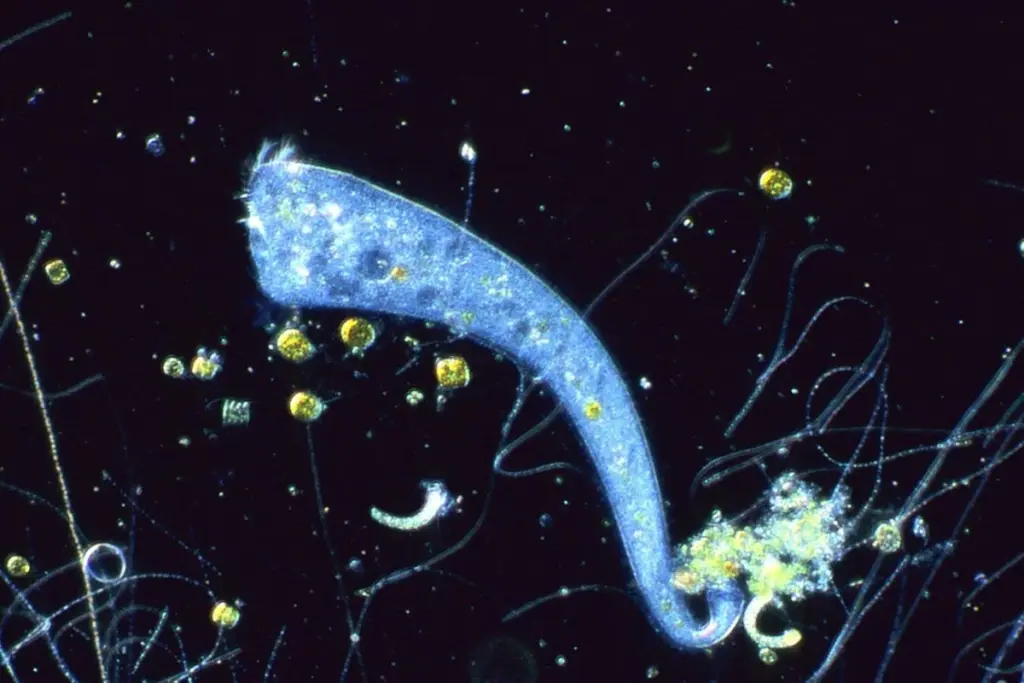
A seemingly basic unicellular organism, devoid of a brain or neurons, has demonstrated an advanced capacity for learning. This finding challenges conventional understanding of cognitive processes, suggesting that complex learning mechanisms may exist in much simpler life forms than previously assumed.
Habituation: A Widespread Learning Form
The most fundamental form of learning, known as habituation, involves a gradual reduction in response to a recurring, non-threatening stimulus. This phenomenon, observed across the animal kingdom, extends even to plants. Researchers have also documented habituation in certain protists, single-celled organisms possessing complex eukaryotic cells akin to those in animals, land plants, and fungi. Notable examples include the trumpet-shaped protist *Stentor coeruleus* and the slime mold *Physarum polycephalum*.
Associative Learning: Connecting Stimuli
A more sophisticated type of learning involves establishing connections between disparate stimuli or events, enabling an organism to predict causal links. Ivan Pavlov’s classic experiments famously illustrated this with dogs, where the association of a bell’s sound with food led to salivation upon hearing the bell alone.
Stentor’s Capacity for Associative Learning
Recent research by Sam Gershman at Harvard University and his colleagues has employed conditioning experiments similar to Pavlov’s to demonstrate that *Stentor* also appears capable of associative learning. These organisms inhabit ponds and propel themselves using rows of hair-like cilia that run along their sides. *Stentor*, reaching up to 2 millimeters in length, represent large entities within the single-celled domain. They possess a posterior anchor, the holdfast, for attachment to surfaces, and a trumpet-like structure at their anterior end for feeding.
“When attached, their primary activity is filter feeding. If disturbed, they rapidly contract into a spherical shape. During this contracted state, feeding is impossible, making it ecologically beneficial to suppress such responses unless absolutely necessary,” explained Gershman. His team leveraged this behavior to investigate the learning potential of *Stentor*.
Experimental Findings
Initially, researchers applied strong taps to the bottom of Petri dishes containing groups of *Stentor* cells. Most organisms responded with swift contraction. However, as the taps were repeated every 45 seconds for a total of 60 instances, the frequency of contractions decreased, indicating habituation to the stimulus.
Subsequently, the *Stentor* cultures were subjected to a weak tap, which typically elicits fewer contractions, occurring one second before a strong tap. This pair of taps was administered every 45 seconds, a duration approximating the time it takes for *Stentor* to re-extend after contracting.
Over ten such trial sequences, the probability of the organisms contracting immediately after the weak tap initially increased before declining. Gershman noted, “We observed a distinct peak in the contraction rate before it began to fall. This pattern is absent when the weak tap is presented in isolation.”
Implications and Evolutionary Significance
The researchers interpret these results as evidence that *Stentor* has successfully associated the weak tap with the subsequent strong tap, marking it as the first protist known to achieve associative learning. “This raises questions about whether seemingly simple organisms possess cognitive faculties traditionally attributed to more complex, multicellular organisms with brains,” Gershman remarked.
This discovery also suggests an ancient evolutionary origin for associative learning, predating the emergence of multicellular nervous systems by hundreds of millions of years. Further evidence might be found in the capacity of human neurons to learn from inputs without necessarily altering synapses, the connections between neurons, which is the conventionally understood mechanism of learning.
“It is remarkable that a single cell can perform such intricate tasks that we previously believed required a brain, neurons, and learned behaviors,” commented Shashank Shekhar of Emory University in Atlanta, Georgia. Shekhar’s own research has demonstrated *Stentor*’s ability to form temporary aggregations for more efficient feeding.
Shekhar posits that other unicellular organisms may also be capable of associative learning. “My intuition is that if it exists in one instance, it is likely to be widespread,” he stated.
Mechanisms of Memory in Stentor
The capacity for learning implies the existence of memory storage. While the precise mechanisms in *Stentor* remain unknown, Gershman hypothesizes that it involves receptors sensitive to touch. These receptors, upon activation, allow calcium ions to enter the cell, altering its internal voltage and triggering contraction. He suggests that repeated stimuli might modify these receptors, acting as a molecular switch that inhibits contraction.