
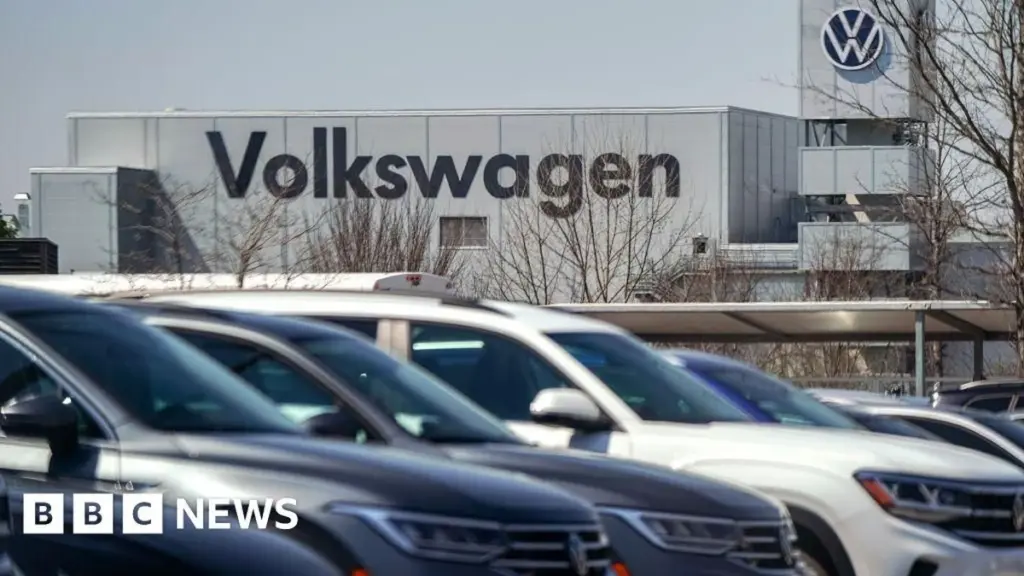
Volkswagen has announced plans to reduce its workforce by approximately 50,000 positions within Germany by the year 2030. This substantial cutback follows a significant drop in profits, reaching their lowest point since 2016.
According to Chief Executive Oliver Blume, the job reductions will be implemented across the entire Volkswagen Group, impacting brands such as Audi and Porsche. These measures are a direct consequence of a challenging financial period for Europe’s largest automaker.
Financial Performance and Contributing Factors
In 2025, the company reported a post-tax profit decrease of roughly 44%. Several key factors contributed to this downturn. Volkswagen cited the imposition of U.S. import tariffs, intensified competition originating from China, and considerable restructuring expenses associated with the transition to electric vehicles as primary drivers of the reduced profitability.
While the company anticipates a recovery in the upcoming year, its finance chief emphasized the necessity of maintaining a stringent focus on cost reduction. “In total, around 50,000 jobs are due to be cut by 2030 across the Volkswagen Group in Germany,” Blume stated in a letter to shareholders within the firm’s annual report.
He further elaborated on the evolving market landscape, noting, “We are operating in a fundamentally different environment.”
Previous Agreements and Market Pressures
This latest announcement builds upon a pre-existing agreement reached with labor unions. That deal, struck earlier, stipulated a reduction of over 35,000 jobs across Germany by 2030, aimed at achieving savings of approximately €15 billion (£12.4 billion). The initiative was designed to be executed in a “socially responsible manner.”
Similar to other German automotive manufacturers, Volkswagen has faced significant headwinds due to a faltering demand for its vehicles in China, a market that had previously been a strong revenue generator. Simultaneously, European markets have seen an influx of competitive offerings from Chinese automotive brands.
Impact of Trade Policies and Future Outlook
Adding to these market challenges, the decision by then-U.S. President Donald Trump to implement a 25% tariff on imported vehicles has further complicated the operating conditions for Volkswagen.
The company’s annual figures revealed a net profit after tax decline from €12.4 billion (£10.7 billion; $14.4 billion) to €6.9 billion (£6.1bn; $8bn) in the preceding year. Looking ahead to 2026, Volkswagen projects a core profit margin ranging between 4% and 5.5%. This projection suggests a potential for an even lower margin than the 4.6% recorded in the current year.
Volkswagen’s finance boss, Arno Antlitz, cautioned that the group’s current profit margin is “not sufficient in the long run.” He reiterated the imperative for continued and rigorous cost-cutting measures. “We can only realize this if we continue to rigorously reduce costs,” Antlitz stated. “That is what we will focus on in the coming months.”