
Global warming has intensified, now progressing at double the pace seen in prior decades. This accelerated warming suggests that significant climate-related disasters may occur sooner than previously anticipated.
Prior to 2013-2014, the Earth’s temperature was rising at approximately 0.18°C per decade. Data analyzed by Stefan Rahmstorf from the University of Potsdam, Germany, and his colleagues indicates a subsequent increase to a warming rate of about 0.36°C per decade.
If this elevated warming trend persists, the world could surpass the Paris Agreement’s target of limiting global temperature rise to 1.5°C above pre-industrial levels by as early as 2028. This timeline is even sooner than projected by other research efforts.
“Every tenth of a degree matters and makes the impact of global warming worse in terms of extreme weather events, in terms of ecosystem impacts, also the risk of crossing tipping points,” Rahmstorf stated. He added, “The world, apart from the US, is trying to halt global warming, reduce it, and that’s why the fact that it’s now actually doing the opposite, accelerating, is of great concern.”
Following a series of record-breaking hot years, climate scientists extensively debated in 2023 whether global warming was indeed speeding up. However, natural climate variations, such as the El Niño phenomenon which contributed to additional warming in 2023 and 2024, complicated efforts to definitively link the faster temperature increase to climate change rather than cyclical weather patterns.
Rahmstorf’s study represents the first to identify a statistically significant acceleration attributable to climate change, establishing this connection with 98% confidence.
The research team examined five distinct global temperature datasets, some of which registered higher temperature increases. An analysis of data from the European Centre for Medium-Range Weather Forecasts suggests that global warming could reach 1.5°C above pre-industrial levels within the current year, calculated over a 20-year average.
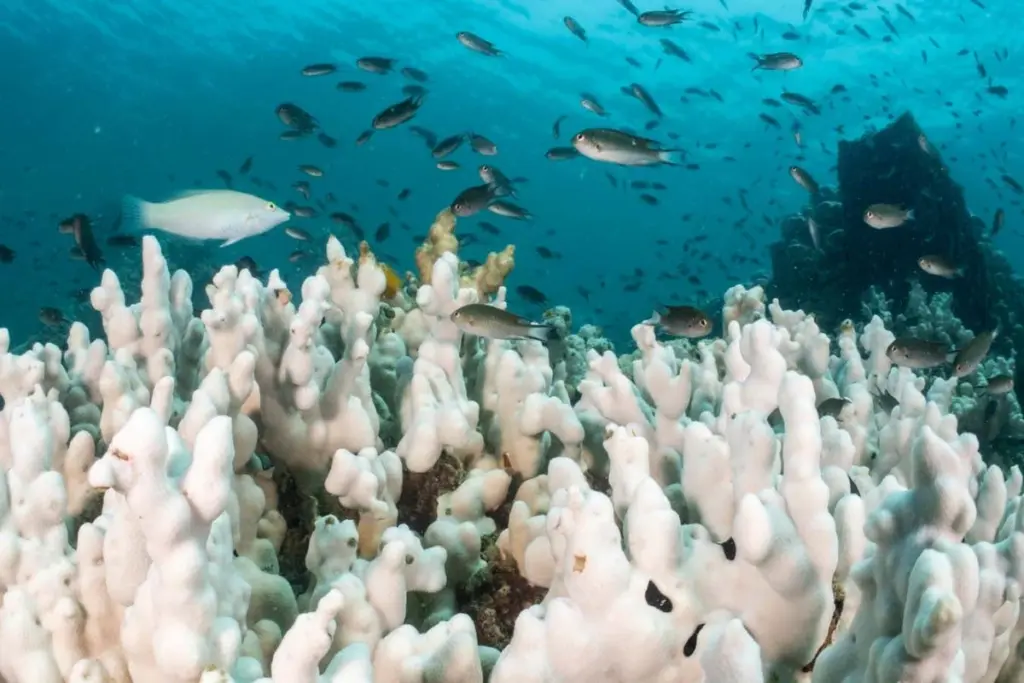
The consequences of such warming are already apparent, with warm-water coral reefs beginning to perish. Exceeding the 1.5°C threshold escalates the risk of triggering other critical tipping points. These include the irreversible melting of the Greenland and West Antarctic ice sheets, and the widespread dieback of the Amazon rainforest.
Many scientists attribute the recent acceleration in global heating primarily to regulatory measures implemented in 2020 that curtailed sulfur dioxide emissions from shipping. While sulfur dioxide is detrimental to human health, it also formed an aerosol haze that reflected sunlight, thereby exerting a cooling effect on the planet.
With this sunlight now less obstructed, the rate of warming may decrease, although Rahmstorf noted the uncertainty surrounding this prospect. He further explained that the ongoing transition away from fossil fuels will continue to reduce air pollution, which has been masking higher temperatures.
“There will be further aerosol reductions, [but] probably not as rapid as those shipping emissions were reduced,” he commented. “It’s quite possible that the warming rate will be lower in the next decade.”
In addition to accounting for El Niño’s influence, the study’s authors also estimated the impact of volcanic eruptions, which similarly generate sun-blocking aerosols, and increased solar radiation during periods of high sunspot activity. After mathematically removing these factors, two distinct curve models were fitted to the global temperature data. Both models revealed an acceleration in warming, though the timing of this acceleration differed between them.
However, Zeke Hausfather of Berkeley Earth in California suggested that the researchers might not have fully eliminated the temperature effects of El Niño, volcanic events, and sunspot cycles. This could potentially lead to a slight overestimation of the extent to which global warming has accelerated. Despite this possibility, Hausfather acknowledged the study provides compelling evidence that warming has indeed quickened.
“The broader takeaway is that we have strong evidence for acceleration even if we don’t know precisely how much the rate of warming has increased as of yet,” Hausfather remarked. “We will need to wait a few more years to get more data.”
Journal reference: Geophysical Research Letters DOI: 10.1029/2025GL118804