
The escalating conflict in the Middle East presents a significant challenge for Ukraine, potentially hindering its ability to secure crucial air defense missiles, according to President Volodymyr Zelensky. He expressed concerns that Ukraine’s allies might become preoccupied with the new crisis, diverting their attention and resources away from supporting Kyiv’s defense against Russia’s full-scale invasion.
Zelensky directly addressed the potential impact, stating, “We could find ourselves having difficulty obtaining missiles and weapons to defend our skies.” He elaborated that Western powers, particularly the United States and its allies in the Middle East, might prioritize their own immediate defense needs, such as the deployment of Patriot missile systems.
When questioned about the possibility of the US and the European Union overlooking Ukraine’s defense requirements due to their focus on the Middle East, Zelensky acknowledged it as a “risk.” However, he conveyed hope that the current situation involving Iran would remain a contained operation rather than devolve into a protracted war, drawing on Ukraine’s own harrowing experience with prolonged conflict.
For an extended period, Ukraine has been accustomed to being at the forefront of global attention. This was particularly evident recently with international leaders gathering in Kyiv to mark the somber fourth anniversary of Russia’s all-out invasion. Yet, in the days that followed, a noticeable shift in focus away from Ukraine has been felt within the nation’s capital.
Some observers in Kyiv have remarked on the stark difference in reactions to drone strikes in the Gulf region compared to those experienced in Ukraine, where such events might evoke little more than indifference. The more profound concern among Ukrainians, however, revolves around the potential implications of the ongoing fighting in the Middle East for their own security and support.
President Zelensky’s recent statements underscore this pervasive uncertainty. On one hand, he voiced apprehension regarding the risk of Ukraine’s defense against Russia becoming a neglected conflict. This concern is compounded by existing doubts about the scheduled talks between the US and Russia.
Furthermore, Zelensky is keenly aware that the substantial quantities of air defense interceptor missiles being deployed by countries in the Gulf could trigger a global shortage. Such a scenario would inevitably lead to increased costs and greater difficulty in procuring these vital weapons.
This was a tangible reality last summer, following the attacks on Iran’s nuclear facilities by Israel and the US. Zelensky recalled that “Israel was under Iranian attack then, and missile delivery programs for us were slowed down.” He fears a repetition of these disruptions.
In contrast to Zelensky’s concerns, former President Trump, on the platform Truth Social, asserted that the US possessed an “unlimited supply” of arms. He also used the post to criticize Zelensky, referring to him as “PT Barnum” and suggesting that the Ukrainian leader had deceived President Joe Biden into providing extensive US weaponry without adequate compensation.
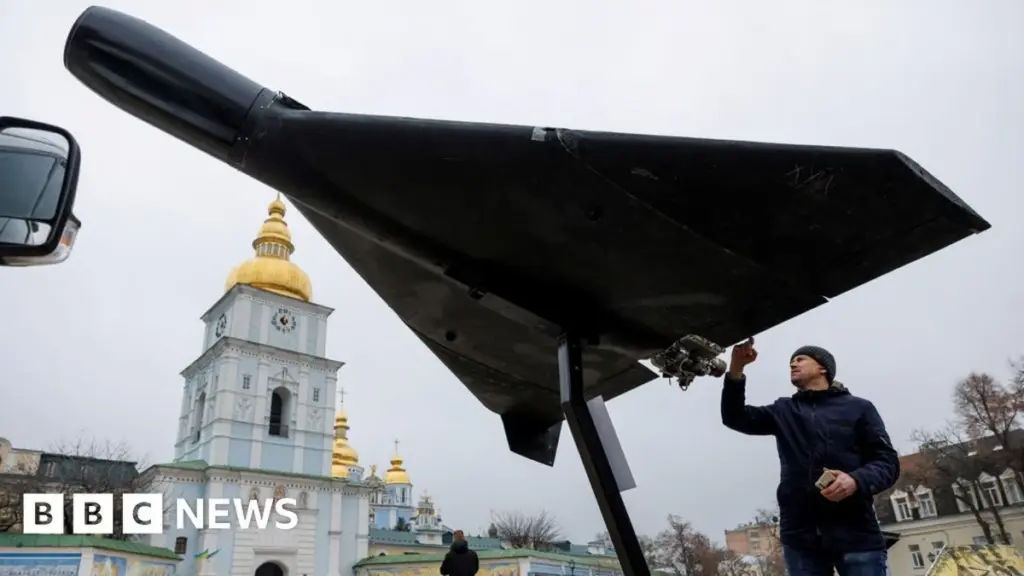
Despite these complexities, Zelensky has sought to identify potential positive outcomes. Iran has supplied Russia with tens of thousands of Shahed drones, which have been instrumental in nightly attacks on Ukraine. Zelensky believes that such support may cease, stating, “I think attacking Iranian military targets was a good decision.” He elaborated that “The Iranians produce a lot of weapons for Russia, especially drones and missiles, although I don’t think they’ll be able to do that anymore.”
However, defense analysts note that Russia has since developed its own domestic production capabilities for Shahed-style drones, adapting Iranian designs for use against Ukrainian cities.
Ukraine might also experience diplomatic and financial benefits if it could offer support to Gulf partners through its drone technology and expertise. Zelensky acknowledged that this scenario would likely require a prerequisite ceasefire from Russia.
Ukraine’s president also views Vladimir Putin’s reluctance to directly support Iran as an indicator of the Russian president’s diminished influence. Zelensky stated, “He talks, but doesn’t act, demonstrating that he is a weak ally of the Iranians. Just as he was with Bashar Assad’s Syria.”
This perspective was echoed by Oleksandr Merezhko, the chairman of Ukraine’s parliamentary foreign relations committee. Merezhko suggested that by publicly supporting the US action against Iran, Ukraine could strengthen its standing with the White House. He articulated, “The US does not view us as allies, but as partners. This gives us a chance to show that we are allies. We are fighting against the same coalition – Iran and Russia.”
Merezhko further argued that Moscow’s influence with the US has waned because it can no longer claim leverage over Tehran and its nuclear program. “Iran does not have this leverage anymore, so it has become less useful in the eyes of Trump,” the Member of Parliament observed.
Other analysts express skepticism regarding Russia’s involvement. They point out the absence of a formal defense pact between Russia and Iran, and no stated commitment from Russia to assist Iran in the event of a US attack. Some suggest that Putin is deliberately maintaining a distance from the conflict, aside from offering Russia’s services as a mediator to Gulf leaders.
John Lough, head of foreign policy at the New Eurasian Strategies Centre, commented, “Putin’s priority is to preserve the relationship with Trump and to use it to help him out of the quagmire he has blundered into in Ukraine.” He added, “In return for not standing in Trump’s way in Iran, he can reasonably expect Washington to put more pressure on Ukraine to accept his terms for peace.”
Russia could also benefit from sustained high global oil prices, which would bolster its war economy. The US-based Institute for the Study of War think tank noted, “Sustained high oil prices could keep Russia economically afloat and allow Russia to fund its war in Ukraine in the medium term.”
However, the institute also cautioned, “It is unlikely, however, that Iran can successfully and indefinitely impose a blockade on the Strait of Hormuz long enough for Russia to reap long-term benefits from the current surge in oil prices.” This uncertainty contributes to the hopes of Ukrainian policymakers for a swift de-escalation in the Middle East.
Perhaps the most significant concern in Kyiv is the potential for the Middle East conflict to exacerbate war weariness regarding Ukraine. One diplomat described the prevailing mood in the capital as grim, despite the changing season. “There is a lot of exhaustion,” the diplomat stated. “The mood is almost brooding. There is a deep sense of betrayal from the Americans, and less trust in the Europeans. And now all this distraction. It’s not great.”