
The European Commission has informed its member states that they are permitted to allocate existing European Union funding towards the provision of safe abortion services. This directive follows a successful citizens’ initiative that garnered 1.1 million signatures, aiming to support women who lack access to safe and legal termination procedures.
The group behind this initiative, known as “My Voice, My Choice,” has celebrated the Commission’s decision as a significant advancement for women’s rights across Europe and a tangible political commitment to their welfare.
However, the Commission has not established a new financial mechanism specifically designed to assist women residing in European regions where abortions are not provided. Such a mechanism would have aimed to facilitate their travel to areas where these services are available.
Health Policy and Funding Allocation
While health policy remains a national prerogative within the EU, the Commission has proposed the utilization of the existing “European Social Fund Plus.” This approach allows individual member states the discretion to determine how these funds are deployed.
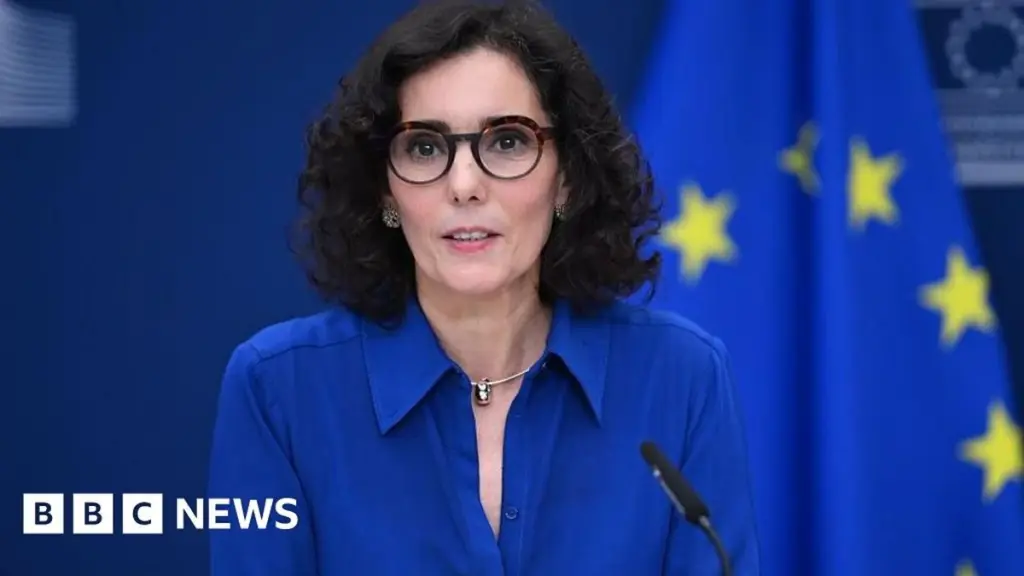
Hadjia Lahbib, the European Commissioner for Equality, highlighted statistics on Thursday, stating that approximately 500,000 unsafe abortions occur annually across Europe. She emphasized that “safety and freedom must never depend on your postcode and income.”
Regional Disparities in Abortion Access
Abortion is legally accessible in the majority of EU member states. Nevertheless, certain countries, such as Malta and Poland, enforce near-total bans on the procedure. In Italy, despite abortion being legal since 1978, access to safe termination services varies considerably from one region to another.
These disparities necessitate that women frequently undertake travel, either within their own country or to another EU member state, to obtain safe abortion procedures.
Campaigners’ Response and Future Implications
Campaigners have acknowledged that no new legal framework was created to specifically fund safe abortions. Despite this, Nika Kovač, a co-ordinator for My Voice, My Choice, indicated that the Commission had nevertheless outlined a “concrete pathway” for future healthcare provisions.
Opposition and Criticisms of the Decision
Anti-abortion advocacy groups have expressed their disapproval of the Commission’s decision. They argue that the move contradicts established Christian values. The Dutch Reformed party, SGP, conveyed its disappointment, with Member of the European Parliament Bert-Jan Ruissen lamenting that the Commission had succumbed to the “massive campaign and lobbying” efforts of My Voice, My Choice.
Furthermore, the Polish legal advocacy organization Ordo Iuris has raised concerns regarding the entities that comprise My Voice, My Choice, noting that many of these organizations have received EU funding.
Commission’s Justification for Fund Utilization
The European Commission has stated that while the fund has not previously been utilized for safe abortions, its existing availability means there is no need to await future budget negotiations. This suggests that the funds are immediately accessible for such purposes.
In practice, the existing fund could potentially cover the transportation, accommodation, and medical costs, including scans, for a woman traveling to another member state for a termination. Similarly, the fund could support a woman within her own country who needs to travel to a different region for necessary medical procedures.
Call for Clearer Guidelines
Nika Kovač has urged the European Commission to issue explicit instructions to member states, detailing how they are empowered to utilize the EU funds for these services.
Background of European Citizens’ Initiatives
European Citizens’ Initiatives were introduced by the EU approximately 14 years ago. Their purpose is to empower citizens to prompt the EU’s executive body, the Commission, to propose legislative action. This requires campaigners to gather a minimum of one million signatures from citizens residing in at least seven different member states.