
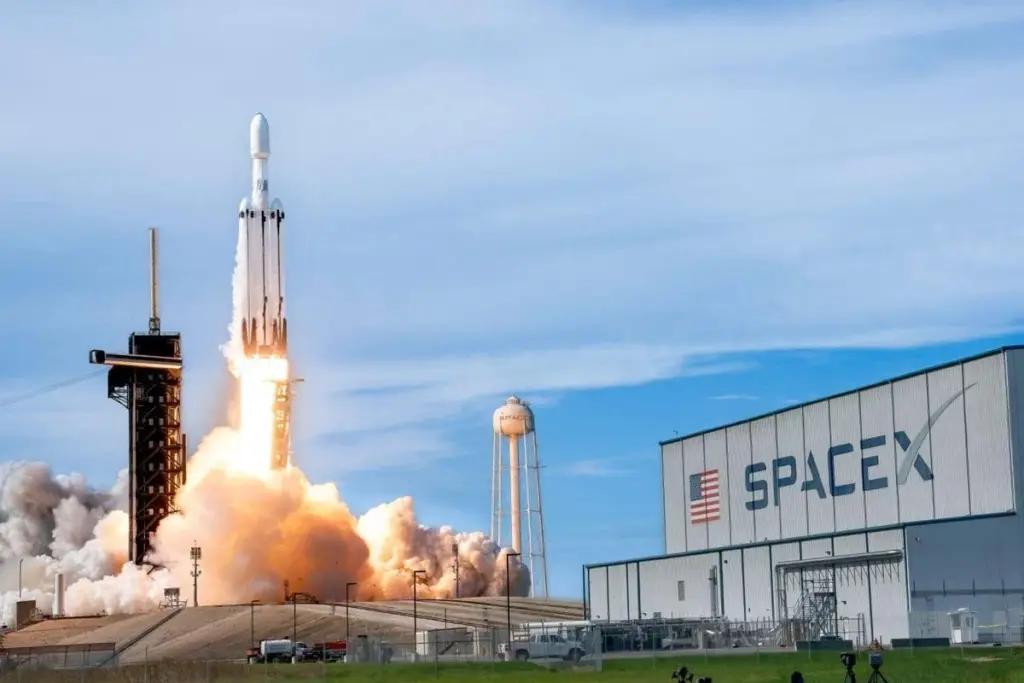
A SpaceX proposal to deploy a massive constellation of one million satellites is drawing urgent attention from astronomers concerned about its potential environmental repercussions as an approval deadline looms. The company submitted its application to the U.S. Federal Communications Commission (FCC) on January 30th. SpaceX CEO Elon Musk stated the intention behind this ambitious project is to create orbital data centers for artificial intelligence.
Should this proposal be approved, the number of satellites in orbit would dramatically exceed current levels. As of today, Earth’s orbit hosts approximately 14,500 active satellites. Current FCC regulations do not mandate an assessment of the environmental impact associated with launching such a large number of satellites. This includes evaluating potential effects on Earth’s atmosphere and alterations to the night sky.
Ruskin Hartley, CEO of DarkSky International, expressed significant apprehension. “We are deeply concerned,” he stated. “While we are not opposed to satellites, we believe their deployment must be managed responsibly.”
Following the submission of satellite applications, the FCC typically opens a public comment period. In SpaceX’s case, this window opened less than a week after the proposal was filed, a notably rapid process compared to the several months usually allocated for other applications. The deadline for public comments is set for March 6th. After this period, the FCC may take months to deliberate on whether to approve all, some, or none of SpaceX’s proposed satellites.
To date, over 350 comments have been submitted. Many astronomers have voiced concerns regarding the potential impacts on astronomical observation and Earth’s atmosphere. Samantha Lawler, from the University of Regina in Canada, described the prospect of a million satellites as “completely terrifying.”
Uncertainty Surrounds Satellite Specifications and Impact
SpaceX has not disclosed extensive details about the planned satellites, such as their precise size or operational altitude. This lack of information has made it difficult for astronomers like Lawler to accurately forecast the constellation’s overall impact. “We are scrambling to gather the information we need to formally submit comments to the FCC,” Lawler commented.
In a scenario projected by Lawler, tens of thousands of satellites could become visible to the naked eye throughout the night. Furthermore, many more would obstruct the views of telescopes, both on Earth and in space. The continuous operation of such a large constellation would necessitate regular replenishment. If these roughly million satellites require replacement approximately every five years, mirroring SpaceX’s Starlink satellites, it could mean that, on average, a new satellite would be launched and another would re-enter Earth’s atmosphere every three minutes. This rate contrasts sharply with the current situation, where only a few satellites re-enter the atmosphere daily.
Atmospheric Pollution and Regulatory Gaps
The continuous re-entry and burning up of these satellites could significantly harm Earth’s atmosphere. As satellites and rockets disintegrate, they release aluminum oxide, also known as alumina. This substance is known to deplete ozone. Lawler highlighted the potential scale of this issue: “We’re talking teragrams [1 trillion grams] of alumina,” she noted. “This would lead to massive ozone depletion and could potentially alter stratospheric temperatures.”
A key factor contributing to the current situation is that U.S. space activities are exempt from the National Environmental Policy Act (NEPA). This exemption means the FCC is not presently required to assess the environmental impact of any satellite application, regardless of its magnitude. Kevin Bell of the Free Information Group in Washington D.C. indicated that significant concerns raised during the public comment period can prompt closer examination of an application, but it remains uncertain if this will occur in SpaceX’s case.
“Ideally, the FCC would conduct such a study,” Bell remarked. However, he also pointed out that “they don’t necessarily possess the in-house scientific expertise to evaluate atmospheric impacts.”
Neither the FCC nor SpaceX responded to requests for comment.