
A significant shift in understanding migraine treatment may be on the horizon, as researchers explore a previously overlooked neurological pathway. This approach, long set aside due to past drug trial failures, is now showing promising results. Migraine, a debilitating condition affecting over 1 billion people globally, leaves one in three individuals unresponsive to existing therapies.
Decades of unsuccessful drug development led many to consider this particular pathway irrelevant for migraine prevention and treatment. However, recent placebo-controlled studies are prompting a reconsideration of this stance.
Substance P: A Re-examined Culprit
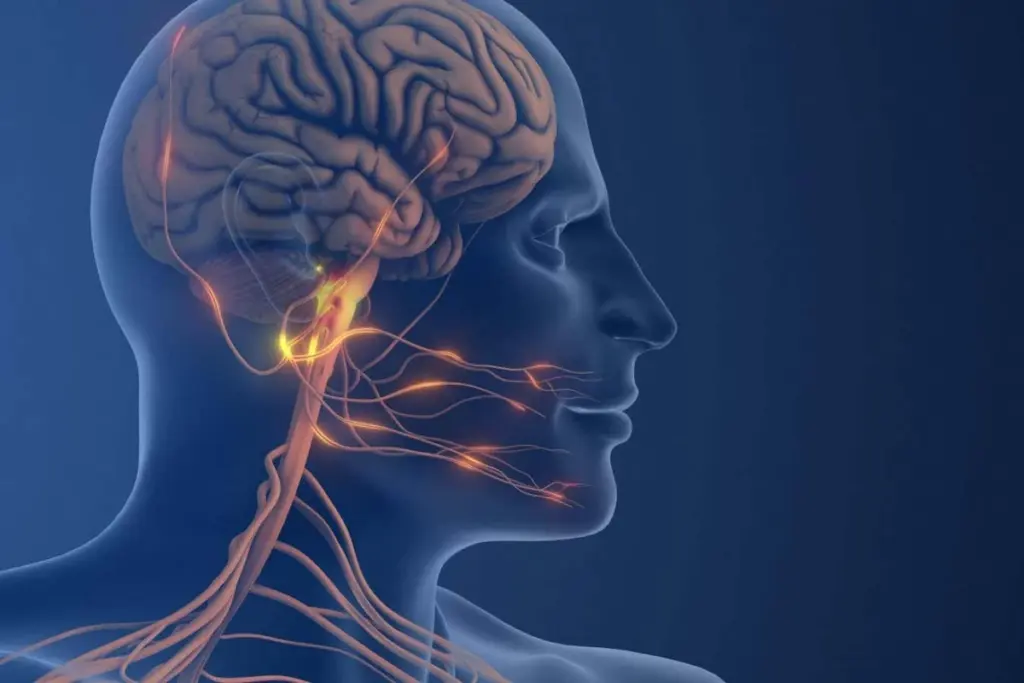
Messoud Ashina and his team at the University of Copenhagen in Denmark have focused on substance P, a neuropeptide released by the trigeminal nerve, a known factor in migraines. Substance P contributes to pain by dilating blood vessels and causing inflammation within the meninges, the membranes surrounding the brain. It also modulates nervous system activity, intensifying pain signals.
Last year, the researchers demonstrated that infusions of substance P triggered headaches in 71 percent of individuals who do not typically experience migraines. These headaches were accompanied by the dilation of the superficial temporal artery, a symptom linked to the condition. Their latest findings show a comparable effect when substance P is infused into migraine sufferers, further supporting its role in the condition.
This resurgence of interest follows substance P’s dismissal as a treatment target in the late 1990s. At that time, five experimental drugs aimed at substance P failed to show any benefit over placebo.
Addressing Past Failures Through Receptor Understanding
Ashina’s group hypothesized that the earlier drug failures might stem from their limited action on only one of substance P’s receptors, specifically the neurokinin-1 receptor (NK1-R). Current knowledge indicates that substance P also binds to a second set of receptors, MRGPRX2 receptors, which are associated with inflammation. Furthermore, it directly influences sensory neurons to amplify pain signals.
Michael Moskowitz, a researcher at Harvard who identified the trigeminal nerve’s involvement in migraines, commented, “After the NK1 receptor–targeted drug trials failed, there were no serious efforts to explain the failure.” He suggested that these trials likely missed blocking the broad spectrum of substance P’s effects. “With new knowledge comes new treatment possibilities, and based on new and existing knowledge, it seems timely and prudent to revisit strategies that target substance P,” he added.
Monoclonal Antibodies and New Treatment Avenues
The development of monoclonal antibodies, capable of directly blocking specific molecules, is expected to simplify the targeting of substance P. These antibodies have already proven effective against calcitonin gene-related peptide (CGRP), a key target in current potent migraine therapies. Investigations are also underway for another neuropeptide implicated in migraines: pituitary adenylate cyclase-activating polypeptide (PACAP).
Earlier this month, the Danish pharmaceutical company Lundbeck reported preliminary results from a randomized controlled trial of its anti-PACAP monoclonal antibody, bocunebart. Although specific data was not disclosed, the company announced that bocunebart infusions significantly reduced monthly migraine days when compared to a placebo. Lars Edvinsson of Lund University, who participated in identifying the roles of PACAP and substance P in migraines, stated, “It’s good news, of course, as long as we have hard data.” Lundbeck plans to present comprehensive data at an upcoming conference.
Shifting Focus to Reduce Reliance on CGRP Inhibitors
A renewed focus on the underlying causes of migraine could lessen the dependence on CGRP inhibitors. Since the first CGRP inhibitor received approval in the U.S. in 2018, these treatments have transformed migraine management, effectively halving monthly migraine days and reducing attack duration. However, a significant portion of patients, up to 40 percent, do not respond to these therapies.
“CGRP drugs work very well for some people, but they don’t work for everybody,” explained Peter Goadsby of King’s College Hospital in London, who co-discovered CGRP’s role in migraines. “Finding the next thing that will benefit the hundreds of millions of people who are not well treated by current therapies remains an important challenge.”
Future Prospects and Combined Therapies
The medical community awaits further evidence regarding the real-world impact of blocking these specific peptides. Moskowitz remains optimistic, noting that substance P, CGRP, and PACAP all interact with the meningeal blood vessel wall and their respective receptor systems, albeit through different mechanisms. He suggests that combining treatments targeting multiple pathways might be crucial for addressing non-responders.
However, Edvinsson cautioned that drugs targeting substance P and PACAP might not achieve the same level of impact as CGRP blockers, given that CGRP is released in substantially higher quantities by the trigeminal nerve. “I don’t think [these targets] will replace CGRP,” he stated. “I think they are more like the sprinkles on top of the ice cream.”
Reference: Preprints with The Lancet DOI: 10.2139/ssrn.6168149