
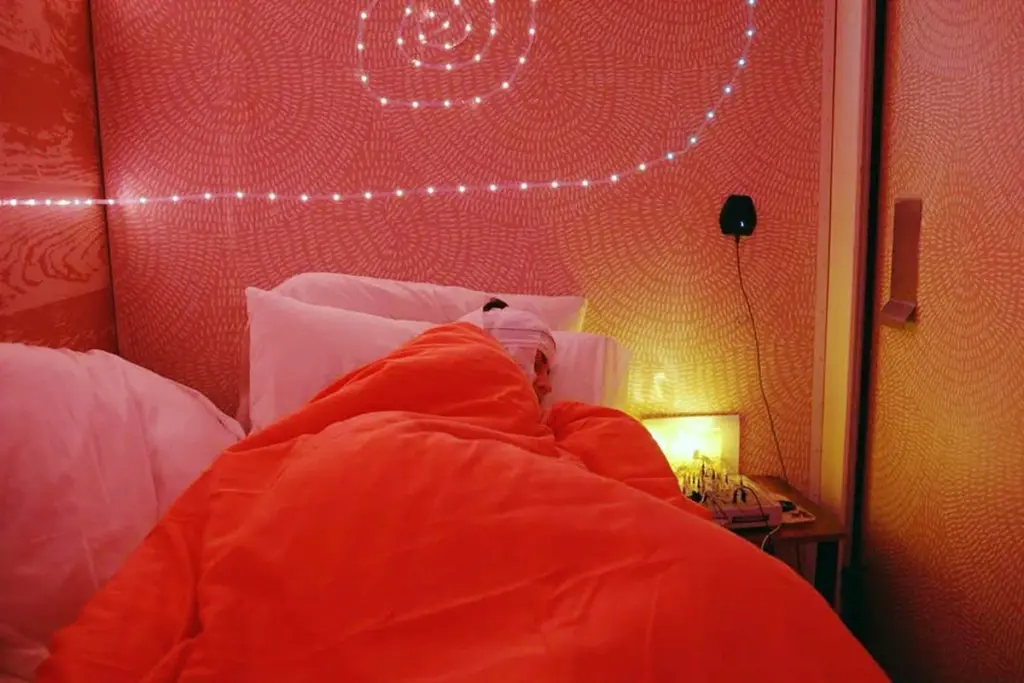
Scientists are exploring methods to subtly influence dreams, aiming to enhance problem-solving capabilities and improve cognitive function during sleep. This emerging field, termed “dream engineering,” utilizes sensory cues like sounds, touch, and particularly smells to shape dream content. Previous research has shown potential benefits in areas such as aiding smoking cessation, managing chronic nightmares, and fostering creativity.
Recent findings from Karen Konkoly and her team at Northwestern University in Illinois suggest that dream engineering could also be a powerful tool for improving problem-solving skills. The study involved 20 participants identified as lucid dreamers, individuals who possess self-awareness within their dream state and can exert a degree of control over the dream’s narrative. These participants engaged in a series of puzzles across two sessions conducted in a sleep laboratory setting.
Each puzzle was associated with a unique auditory cue, such as the sound of birdsong or steel drums. Researchers carefully monitored the participants’ brain activity and eye movements to precisely identify the onset of the rapid eye movement (REM) stage of sleep. This phase is characterized by vivid, extended, and abstract dreaming.
During REM sleep, the research team presented participants with some of the puzzles they had previously been unable to solve, playing the corresponding soundtracks. Participants were instructed to signal their awareness of being in a dream by performing at least two rapid left-to-right eye movements. They also indicated hearing the puzzle sound and actively working on a solution by executing at least two rapid in-out sniffing motions.
The following morning, participants reported a significantly higher likelihood of encountering the puzzles within their dreams if they had heard the associated soundtracks during sleep. This dream incorporation correlated with improved problem-solving success. Specifically, approximately 40 percent of those who dreamt about the puzzles went on to solve them, in contrast to only 17 percent of participants who did not report their dreams featuring the puzzles.
While the exact mechanisms behind this effect remain under investigation, researchers hypothesize that pairing the auditory stimuli with the learning task while participants were awake may have created memory associations. When the same sounds were presented during sleep, the hippocampus, a brain region crucial for memory formation, might have been triggered into a state resembling spontaneous memory reactivation. This could, in turn, influence the memories the hippocampus replays during sleep, thereby enhancing learning and problem-solving. This process is known as targeted memory reactivation.
Although dreams can occur across all sleep stages, Konkoly posits that targeting REM sleep might be particularly effective for enhancing problem-solving abilities. She explains that REM dreams are characterized by a hyper-associative and often bizarre nature, blending new and old memories with imaginative elements. “You have this brain that’s active [during this stage], but maybe with less inhibition, so you can reach farther into the corners of your mind,” Konkoly noted.
Tony Cunningham of Harvard commented that this work suggests individuals “may be able to deliberately focus on a specific unsolved problem while dreaming.”
However, concerns exist regarding the potential downsides of dream engineering. Some experts worry that such interventions could interfere with other essential sleep functions, such as the brain’s process of clearing metabolic waste. There is also apprehension about the potential for commercial exploitation, with companies potentially embedding advertisements into at-home dream-influencing devices. Cunningham expressed particular concern about this possibility. “Our senses are already assaulted from all directions by ads, emails and work stress during our waking hours, and sleep is currently one of the few breaks we get from that,” he stated.
Konkoly’s future research aims to explore the variability in individual responses to auditory stimuli even when presented on different days. She observes, “When running this study I was up all night, watching people’s brainwaves and cueing them during REM sleep. Sometimes they responded with signals, other times not. Sometimes they woke up and had incorporation of the associated puzzle, sometimes just the sound, and other times nothing. How is it that the same stimuli, presented in the same state of consciousness, can be processed so differently?”