
A powerful fertilizer derived from seabird droppings may have been instrumental in the ascent of a Peruvian agricultural kingdom approximately 900 years ago. This same resource may have also played a role in its eventual assimilation by the Inca Empire.
Chemical analysis performed on ancient maize cobs unearthed in southern Peru has revealed unusually high levels of nitrogen isotopes. These findings are substantial indicators that the plants were cultivated using a mixture of seabird excrement, feathers, and carcasses, a substance known as guano.
According to Jacob Bongers from the University of Sydney, this research offers the most compelling evidence to date that the indigenous Chincha people, who were farmers, fishers, and merchants, harvested this nutrient-rich fertilizer from nearby islands. They utilized it to enhance the productivity of their inland agricultural fields and, consequently, to bolster their own socioeconomic standing.
“Having privileged access to a crucial resource is a direct pathway to power,” Bongers stated. “The Chincha Kingdom possessed this advantage, something the Inca did not. This suggests social transformations may have originated from an unexpected source: bird droppings. It’s truly a fascinating narrative.”
The Chincha Kingdom and its Resources
Between the years 1000 and 1400 AD, the prosperous and populous Chincha Kingdom commanded one of Peru’s most fertile coastal valleys. Its influence ultimately expanded until it was incorporated into the vast Inca Empire in the 15th century.
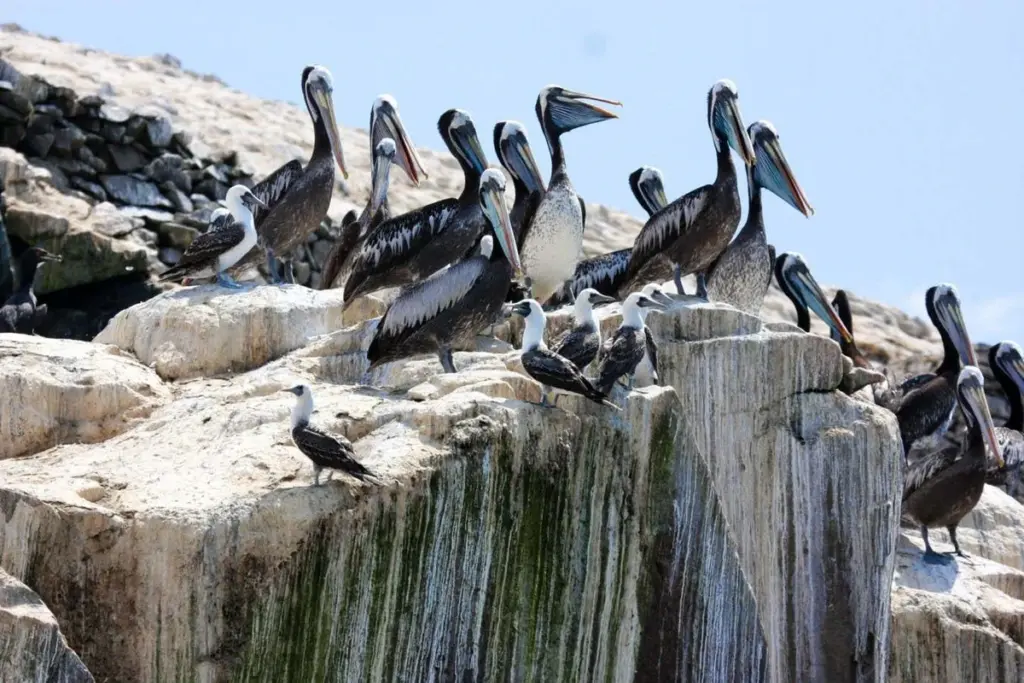
The Chincha valley is geographically situated a mere 25 kilometers from the Chincha Islands. These islands are renowned for hosting extensive colonies of large seabird populations, including Peruvian pelicans, Peruvian boobies, and guanay cormorants. Penguins and gulls also inhabit these islands.
These islands, often referred to as the Guano Islands, gained considerable international recognition in the 19th century due to the remarkable fertilizing potency of their bird excrement, a reputation largely attributed to its exceptionally high nitrogen content.
Historical Context and Archaeological Evidence
The utilization of guano by the Incas is well-documented in historical colonial records. These accounts frequently describe stringent state oversight of the islands and severe penalties for any harm inflicted upon the birds.
However, prior to this recent study, scientists lacked definitive archaeological evidence to confirm whether their Chincha predecessors had already begun to exploit this valuable resource. Bongers mentioned that many historians have long posited this theory, suggesting that access to seabird fertilizer significantly contributed to the kingdom’s economic prosperity.
Further supporting this perspective, imagery of seabirds intricately carved into ceremonial objects and prominently featured on textiles, ceramics, and architectural friezes suggests that these birds held a significant cultural and symbolic meaning for the Chincha people.
The Investigation and its Findings
Jacob Bongers had been in the process of collecting numerous ancient maize cobs from Chincha tombs, which he speculated might have served as provisions for the deceased. He began to consider whether these cobs could provide insights into the ongoing historical mystery.
Collaborating with Emily Milton from the Smithsonian Institution in Washington D.C., Bongers analyzed 35 maize cobs. These artifacts were sourced from 14 different cemeteries located within the Chincha valley. The analysis involved measuring the carbon and nitrogen isotope ratios present in the cobs.
In conjunction with the maize analysis, Bongers, Milton, and their colleagues also examined collagen extracted from 11 ancient seabird bones discovered in the region. The bone samples included those from pelicans, boobies, cormorants, a gull, and a penguin. This step was crucial to establish a reliable local isotopic baseline for guano.
The analysis of the ancient seabird bones indicated elevated levels of nitrogen-15, a characteristic commonly found in marine birds. Critically, many of the maize cobs exhibited even more pronounced nitrogen isotope ratios, a definitive marker of fertilization with seabird guano.
The published findings indicate that the Chincha people were utilizing this island resource by at least the year 1250, as noted by Jo Osborn at Texas A&M University.
Broader Implications
The researchers suggest that guano likely played a role in supporting the kingdom’s economic expansion. Furthermore, it may have strengthened their negotiating position when they were later integrated into the Inca Empire. This research also carries broader implications, suggesting that marine fertilizers may have influenced social development throughout the wider Andes region.
Dan Sandweiss, a researcher at the University of Maine who was not involved in the study, commented, “It makes considerable sense that ancient Peruvians would have used guano as fertilizer. Embarking on the considerable expedition to reach the islands was worthwhile for such a high-value commodity!”
He further elaborated that the guano from the Chincha Islands is particularly prized, likely due to the region’s limited rainfall. This drier climate helps to preserve the nitrogen content, preventing it from being leached away. Sandweiss concluded, “This Peruvian guano was truly exceptional.”
Journal reference: PLOS One DOI: 10.1371/journal.pone.0341263