
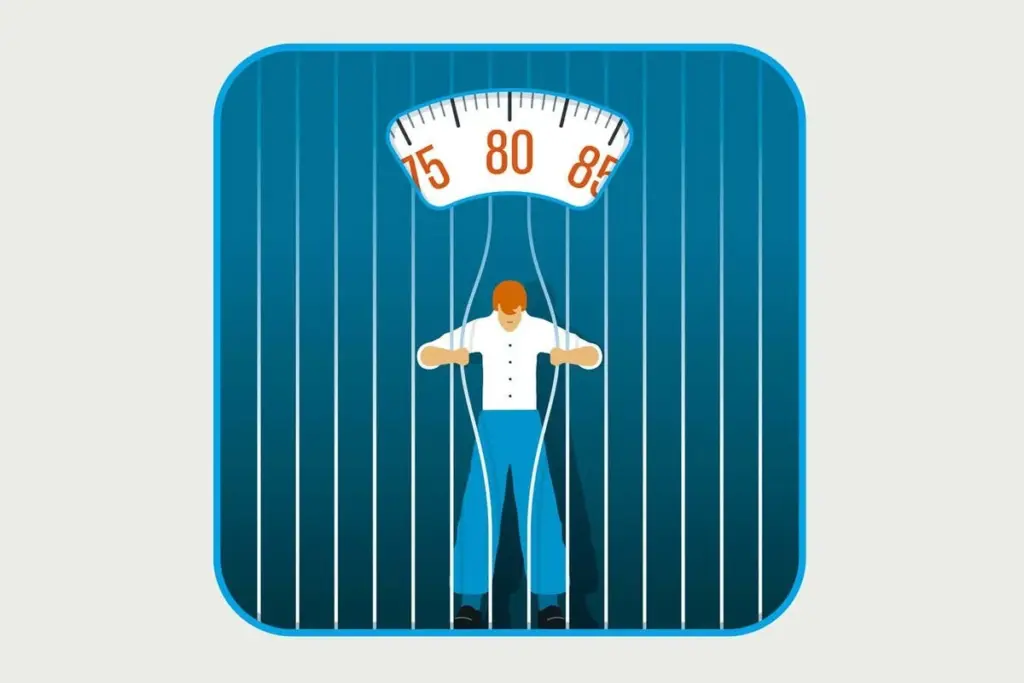
My excitement for my first post-university job as a field geologist was considerable, so much so that even the required physical assessment held a certain appeal. This changed when the doctor, after reviewing my chart, informed me I needed to lose between 10 and 15 pounds. My body mass index (BMI), he explained, classified me squarely within the “overweight” category. Although framed as a health concern, all other tests indicated excellent health: a strong heart, pristine blood markers, and a below-average disease risk. Left alone, I grappled with disbelief and a sudden sense of shame. I had entered the examination room feeling well, but the doctor’s words compelled a negative self-perception. I followed his advice throughout my twenties, pursuing a “healthy” BMI through disordered eating habits. It was much later that I learned the doctor was mistaken. While he read my chart accurately, the BMI had failed to accurately reflect my actual health.
This mischaracterization is not an isolated incident; many others have been unfairly labeled as unhealthy. BMI, calculated by dividing a person’s weight by their height squared to estimate body fat, is deeply ingrained in healthcare practices. However, this metric frequently distorts the perception of health for numerous individuals, leading to significant adverse outcomes.
The Pervasive Influence of BMI in Healthcare
BMI cut-off points often dictate access to essential medical treatments. These include knee surgeries, GLP-1 medications, infertility treatments, gender-affirming care, and bariatric procedures. Individuals falling outside the “acceptable” BMI range may be denied necessary care, while those with “normal” BMIs but high health risks can be overlooked. After three decades as the established standard, a consensus is finally coalescing around the inappropriateness of BMI as a sole diagnostic tool. Francesco Rubino, from King’s College London, states, “There is no logic, no medical coherence to using BMI to define a disease. It’s just not suitable.”
Simultaneously, the medical community is actively seeking superior measurement methods. More importantly, this paradigm shift is prompting a re-examination of the complex relationship between health and body size, and fundamentally rethinking what constitutes a truly “healthy weight.”
The Origins and Spread of BMI
BMI’s enduring presence stems not from its biological precision, but from its speed, low cost, and simplicity. Developed in the early 19th century by mathematician Adolphe Quetelet as a statistical tool for population studies, it was initially intended to document average height and weight. As obesity rates began to climb in the 1970s, a study suggested its utility for tracking this trend across large populations. Subsequent decades saw a further increase in obesity rates, making BMI an increasingly popular research instrument. When the World Health Organization officially designated obesity as a global epidemic in 1997, BMI was subsequently adopted within healthcare for individual assessments.
Despite early criticisms regarding its suitability for individual diagnosis, BMI’s convenience led to its rapid dissemination, establishing it as medicine’s default screening mechanism. Obesity is well-documented as a risk factor for several serious conditions, including cardiovascular problems, kidney disease, certain cancers, high blood pressure, and type 2 diabetes. Clinicians sought a rapid method to estimate when excess body fat might pose a health threat, and BMI appeared to fulfill this role. The measurement assigns individuals a simple numerical value, categorizing those under 18.5 as underweight, between 18.5 and 24.9 as normal weight, over 25 as overweight, and over 30 as obese. Rubino emphasizes that a population-level risk assessment tool should never have been transformed into an individual diagnostic tool.
Critiques and Limitations of BMI
A significant critique leveled against BMI is its inability to differentiate fat distribution. It does not account for the fact that men often accumulate visceral fat around their midsections, surrounding internal organs – a type of fat more detrimental to health than the subcutaneous fat typically found on the arms, buttocks, and thighs, which is more common in women. Furthermore, BMI fails to distinguish between muscle mass and fat mass, a fact that can lead to many athletes being incorrectly classified as unhealthy. This was precisely my experience during an earlier medical exam; my naturally higher muscle mass, coupled with my dedication to trail running and swimming, contributed to an “overweight” BMI, despite these activities signifying my fitness and strength.
Conversely, individuals may possess insufficient body fat for regular menstruation – a condition leading to numerous health issues including bone weakness, cardiovascular problems, and pelvic pain – yet still fall within the “normal” BMI range. This scenario is not uncommon among female athletes who maintain adequate muscle mass for a normal BMI but lack sufficient body fat. BMI acts as a proxy measurement that can too easily obscure genuine symptoms of illness.
“BMI is a good metric of volume – if a body is a cylinder. But I’m no cylinder. I have hips, I have curves on my body,” states Diana Thomas, a mathematician at the United States Military Academy at West Point. “And so to just put a cylinder on me and say, ‘We’re going to use this body measurement from your outside to tell us what’s on the inside,’ seems pretty limited.”
Five years ago, Rubino, increasingly frustrated with BMI’s limitations, co-founded a commission to re-evaluate the definition and diagnosis of obesity. The commission’s findings were published last year as part of The Lancet’s global commission on obesity. Rubino notes that the reliance on BMI created a “catch-22,” as it was used to diagnose obesity, which is considered a disease, yet failed to adequately reflect an individual’s health status.
The commission’s report advocated for a substantial overhaul. Similar to the distinction between pre-diabetes and diabetes, the report suggested that obesity should be categorized into pre-clinical obesity, where fat levels represent a risk factor, and clinical obesity, recognized as a distinct illness. Crucially, the authors argued that BMI alone should not be the sole determinant of obesity status.
The Lancet commission also highlighted another critical shortcoming of BMI: the existence of individuals who are overweight but exhibit no markers of ill health. Over the past two decades, there has been a growing recognition that excess weight does not invariably lead to disease. Rubino points out, “Some people who carry some extra fat may actually fare better or may not be affected by it, like Queen Victoria, who lived into her 80s and died from unrelated causes.” The Lancet’s recommendations have been widely adopted by over 75 international medical organizations focused on obesity, signaling a significant shift: BMI is gradually being phased out.
Re-evaluating the Weight-Health Connection
The relationship between weight and health is considerably more intricate than a singular number derived from a scale or chart. With BMI proving inadequate for its intended purpose, researchers are actively pursuing improved diagnostic tools. Evidence suggests that the location of fat deposition, rather than its total quantity, is a far more accurate predictor of health. Individuals with high levels of visceral fat face more than double the risk of heart disease and elevated risks of high blood pressure and type 2 diabetes. They also exhibit a threefold increased likelihood of developing dementia by their mid-to-late seventies and early eighties.
Consequently, the Lancet commission recommends that healthcare providers directly measure body fat when feasible, utilizing technologies like bioimpedance analysis, which employs low-voltage electrical currents to assess body composition. Alternatively, they propose employing criteria that estimate visceral fat, such as waist circumference, waist-to-hip ratio, or waist-to-height ratio, in conjunction with BMI. Regardless of the chosen metric, age, gender, and ethnicity should all be considered when interpreting results, drawing upon two decades of research demonstrating their influence on fat distribution and associated risks.
Several straightforward measurement alternatives exist. Sonia Anand, from McMaster University in Ontario, Canada, references the findings of the landmark INTERHEART study, which established over 20 years ago that waist-to-hip ratio is a superior predictor of heart attacks compared to BMI. Subsequent research has further substantiated its effectiveness as a predictor of mortality.
Another robust alternative to BMI is the weight-adjusted waist index (WWI). This metric is calculated by dividing waist circumference by the square root of body weight. Instead of solely estimating mass, it captures central fat distribution – a pattern strongly linked to inflammation, hypertension, and cardiometabolic disease. Moreover, the WWI can be quickly computed using only a tape measure and a scale.
Alternative Measures of Body Fat
-
Waist-to-Hip Ratio:
Divide the circumference of your waist (measured at its narrowest point, typically above the navel) by your hip circumference. Ratios exceeding 0.9 for men and 0.85 for women are associated with significant health risks.
-
Weight-Adjusted Waist Index (WWI):
Calculate by dividing your waist circumference in centimeters by the square root of your body weight in kilograms. Scores of 10.4 or higher in men and 10.5 or higher in women indicate potential health concerns.
-
Body Roundness Index (BRI):
Due to its complex formula, it is most practical to use an online calculator incorporating height, waist circumference, and hip circumference. Lower scores – below 4 for women and 3.5 for men – suggest reduced waist fat accumulation and diminished health risks.
A study conducted last year involving 239 white women revealed that participants in the highest WWI quartile exhibited significantly higher levels of visceral fat, elevated blood pressure, and increased inflammatory markers compared to those in the lowest quartile, even when their BMIs were comparable. Naveed Sattar, a professor of cardiometabolic health at the University of Glasgow, notes the particular significance of these findings for women. Women generally possess a greater capacity for subcutaneous fat storage, and waist circumference in women is a more reliable predictor of diabetes than BMI. “Where you put your fat matters,” he asserts.
Height also plays a role. Taller individuals naturally have larger bones and more muscle mass, factors not accounted for by BMI. About a decade ago, Thomas, motivated by critiques of BMI and her mathematical background, sought to develop her own metric. She believed that health research required “more math in it.” Using datasets from over 7,000 individuals, Thomas constructed a model linking body shape to fat patterns associated with health risks, leading to the development of the body roundness index (BRI) formula. This formula utilizes height, waist circumference, and weight to model body geometry. Subsequent studies have confirmed that BRI predicts total and visceral fat more accurately than BMI, waist, or hip measurements alone, and it allows for shape analysis as a continuum rather than a binary classification.
This nuanced approach means that waist-to-hip ratio, WWI, and BRI are all more effective at identifying metabolic risk factors for conditions such as diabetes, cardiovascular disease, high blood pressure, and cancers – all of which are disproportionately linked to abdominal fat. Beyond body measurements, physicians can incorporate blood tests to further assess risk. Sattar highlights that tests for liver function, triglyceride levels, and HDL cholesterol are both inexpensive and straightforward.
These alternative measurement methods have significantly reshaped my understanding of my own body. My WWI places me in the “most healthy” first quartile, my waist-to-hip measurements categorize me as “low risk,” and my BRI indicates I am within the healthy zone with “excellent” visceral fat levels. This offers a starkly different health narrative compared to my BMI score.
Challenging the Dominance of BMI
Beyond misclassifying individuals, evidence accumulated over two decades indicates that BMI provides a distorted health assessment for entire ethnic groups. BMI was originally developed using metrics derived from white populations. Although research exposing these limitations emerged years ago, their policy implications have only recently begun to be addressed. South Asian, Chinese, and Black individuals exhibit higher rates of diabetes at lower BMIs compared to white individuals. While the specific reasons for these disparities remain not fully understood for Black and Chinese populations, the elevated risk in South Asian populations is linked to their genetic makeup. Sattar explains that South Asian individuals tend to have naturally lower muscle mass and higher fat mass at equivalent BMIs compared to white individuals, and they accumulate fat around their midsections, particularly the liver, more rapidly.
These insights prompted South Asian countries to be among the first to question the universal applicability of BMI. By 2022, ten Asia-Pacific nations, including India, Singapore, Sri Lanka, and the Philippines, established their own BMI thresholds with lower cut-off points for obesity and began incorporating additional measures like waist circumference.
Sonia Anand’s research was instrumental in questioning BMI’s limitations. “Being a South Asian woman, my family history of early-onset heart disease and diabetes being very prevalent, I was very passionate to try and understand our biological differences,” she shared. Anand recounted that her initial grant applications to study BMI variations across ethnic groups were dismissed as unimportant and rejected. Nevertheless, she persevered. Her work ultimately demonstrated that South Asian and Chinese individuals experience cardiometabolic risk at significantly lower BMI thresholds than white Europeans, while the metric fails to accurately predict risk among Black and Inuit populations.
Nearly two decades after her initial research, Anand’s contributions helped drive a 2020 update to clinical practice guidelines in Canada. This update mandated lower BMI cut-offs for South Asian individuals and recommended the consideration of non-BMI measures in obesity evaluations for all population groups.
Other countries have also begun to adapt their approaches. In 2022, the National Institute for Health and Care Excellence (NICE), an independent regulatory advisory body for England and Wales, issued new guidance encouraging the routine use of waist-to-height ratio in clinical practice. Critics of BMI, including Rubino, assert that it should never be used in isolation. They express hope that the widespread support for the Lancet commission’s findings from numerous organizations, including the World Obesity Federation and the World Health Organization, will lead to the discontinuation of its sole use in the UK. In the United States, the American Medical Association declared BMI “imperfect” in 2023, recommending its use only in conjunction with other health indicators.
In the current era of weight-loss medications such as Mounjaro and Wegovy, this re-evaluation holds increased significance. Medication for obesity is currently prescribed based on BMI cut-offs. In England, GLP-1 treatments are restricted to individuals with a BMI of 40 or above for Mounjaro or 35 or above for Wegovy (both adjusted for ethnicity), in addition to having multiple obesity-related conditions. In Japan, these drugs are available for those with a BMI exceeding 35, while in the US, the Food and Drug Administration recommends these medications for individuals with a BMI of 30 or higher, though many insurance providers impose higher eligibility thresholds.
With approximately 1 billion people globally classified as obese according to BMI, Rubino points out that current systems lack the capacity to treat everyone, adding, “And by the way, not all of the 1 billion need it.” Relying solely on BMI to determine both obesity status and treatment eligibility creates systemic problems throughout the healthcare process.
Medicine’s understanding of obesity is unlikely to advance unless the field is willing to acknowledge and even embrace the inherent complexity of human bodies. “One of the things I always ask [doctors] is, why does everything have to be easy? My body’s complicated. Embrace that complexity!” exclaims Thomas. For myself and many others whose lives have been influenced by BMI’s authority, the shift toward shape and distribution-based measures is not about dismissing diseases linked to obesity. Instead, it is about recognizing individual biology, ethnicity, and lived experiences. The emerging scientific evidence supports a straightforward truth: health is not defined by a single number, and bodies are not interchangeable cylinders.