
My own grandparents entered the world during the late 19th century, a time defined by horse-drawn carriages. My parents, in contrast, experienced their formative years amidst the industrial surge of mass production. As for me, my childhood coincided with the dawn of the space age. This era, despite the immense challenges of world wars and the persistent threat of nuclear conflict, was largely characterized by a steady ascent in prosperity, personal safety, and ease of travel. For my family, this translated into a profound sense of liberation and improvement, a progression that bolstered an unwavering belief in human advancement. Each subsequent generation seemed destined for better prospects; life consistently evolved for the better.
However, this trajectory of steady improvement reached a standstill with my own children. One might view this as the disillusionment of a long-held dream. Yet, in a more accurate sense, it signifies the collapse of a collective illusion.
The world I was born into bears little resemblance to the one I will bequeath to my grandchildren. The inherent safety I took for granted will not be guaranteed for them. This realization constitutes the most profound and unsettling fact of my existence.
The underlying causes for this disheartening decline in future prospects are widely understood. The planet’s health has deteriorated due to the very methods we employed to fuel our prosperity and progress. The lauded arc of advancement concealed a darker reality of environmental devastation, exploitation, and inequity. Our collective successes were ultimately achieved at the steep price of a ravaged Earth.
Globally, temperatures have already risen by 1.5°C since my grandparents’ time. At our current trajectory, this figure is set to double. A world experiencing such heightened temperatures is already a place of immense chaos, posing significant challenges to ecosystems and the myriad species that depend on them. A planet facing twice the current level of warming presents a terrifying scenario that we must, at all costs, avert. Such a future implies that certain regions of the globe will become virtually uninhabitable, leading to the deaths of millions and condemning billions to lives of profound hardship.
Among those who might suffer are my own descendants. This is the personal anchor that compels me. The notion that my own comfort and mobility might have been secured through their future suffering is deeply distressing. This prospect represents my family’s ultimate nightmare.
Fiction as a Mirror to a Harsh Reality
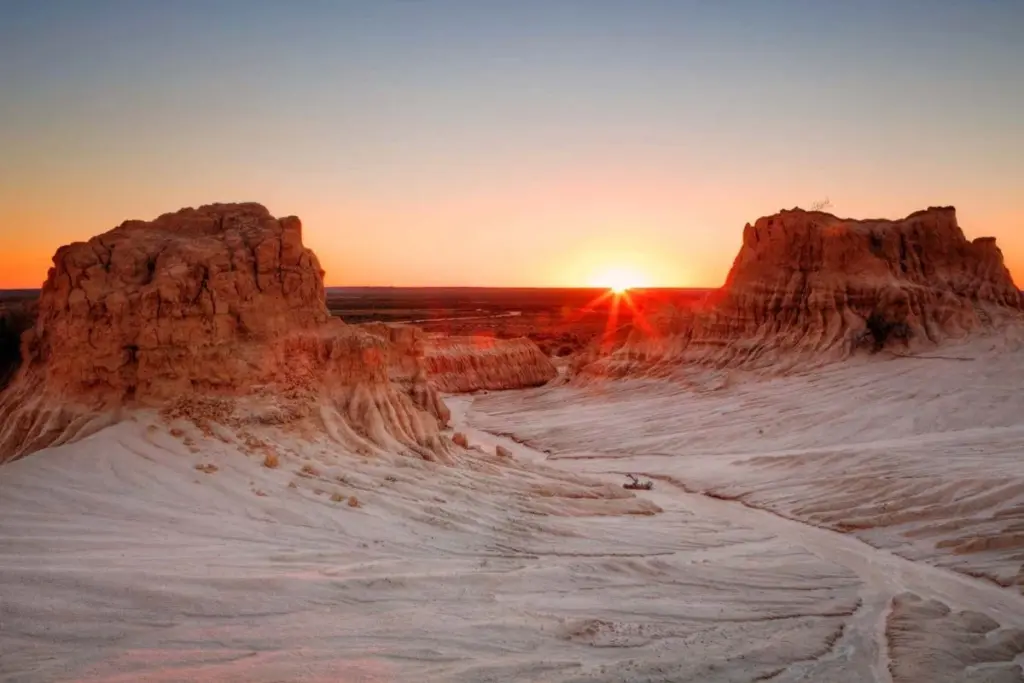
While some parts of our planet may still allow for the reality of our warming world to be overlooked or avoided, Australia, unequivocally, is not one of them. The northwestern region where I reside is already experiencing extreme climatic conditions. Just yesterday, temperatures soared to 50°C. Furthermore, the increased intensity of storms renders homes almost uninsurable.
When individuals inquire why, at this advanced stage of my career, I have authored a dystopian novel, I must carefully temper my response and mask a growing irritation. They seem to perceive this as a sudden shift in my writing, a genre departure. The truth, however, is that my writing itself has not fundamentally changed. Instead, it is the external world that has transformed. The more pertinent question, from my perspective, is how, in this current historical moment, could I possibly refrain from writing in this manner? What kind of artist would I be if I disregarded the prevailing conditions of life around me?
One might label “Juice” as a dystopian novel. Such a classification, however, implies a degree of fantasy or outlandishness that I do not perceive. Millions of people are already existing in conditions that can only be described as dystopian, experiencing hunger, displacement due to conflict, and extreme climate events. In nearly every instance, the hardships they endure are a direct consequence of fossil fuel capitalism. It often strikes me that we employ the term “dystopia” as a form of anesthetic, a means to create distance and soften the impact of reality. I believe we can no longer afford this detachment.
Imagining a Future Shaped by Environmental Collapse
“Juice” is set several generations from now in northwestern Australia. The critical actions required to avert the most severe consequences of climate breakdown were not taken. Following a 3°C rise in global temperatures, the world has entered a series of feedback loops that continue to accelerate warming. National governments have dissolved, and human settlements have retreated from equatorial regions. Those who remain on the fringes, such as in the tropics of Capricorn and Cancer, are forced to live for extended periods underground. While they have developed considerable skill in this adaptation, the lifestyle itself remains exceptionally challenging.
In common with most of my previous works, this novel is fundamentally a story about family. It explores the intricate dynamics of loyalty, the pursuit of liberty, and the interwoven influences of geography and history, making it hardly a departure from my established themes. While its framework is speculative, its speculations extend beyond purely scientific or climatic predictions to encompass moral and deeply personal dimensions. I have compelled myself to envision the lives my grandchildren’s children might lead, right here, in a landscape I deeply love and have striven to protect for the majority of my adult life.
To my mind, this narrative represents a logical, emotional, and imaginative extrapolation of the world I know. Informed by scientific data and climate modeling, it reflects my lived experience of inhabiting the “Pyrocene” in a part of the world that has always been climatically volatile but is now actively becoming uninhabitable.
The world depicted in “Juice” is undeniably harsh, populated by individuals who are resilient and stoic. Driven by tradition and sheer tenacity, they cling to existence at the edges of habitability. However, as environmental conditions continue to deteriorate, families are compelled to migrate southward, seeking cooler air and more viable places to reside.
This is not a matter of conjecture. In northern Australia, such migrations are already a reality. The individuals being forced to relocate, reminiscent of Steinbeck’s “Okies,” are among our most disadvantaged citizens. Therefore, my narrative merely amplifies this existing trend by a small margin.
Despite these formidable environmental challenges, the most significant obstacle my characters confront is not climatic, but fundamentally human. As the protagonist discovers, the most precious resources are not shelter, sustenance, or even water, but rather civility. This, I believe, lies at the heart of the novel. The sustainability of life hinges upon a shared commitment to the common good. Fossil fuel capitalism, the global force that has degraded these people’s world, stands in direct opposition to this ethic. To endure, my characters must actively revive and cherish this ethic. Whether humanity is capable of this revival remains, of course, the ultimate question requiring speculation.