
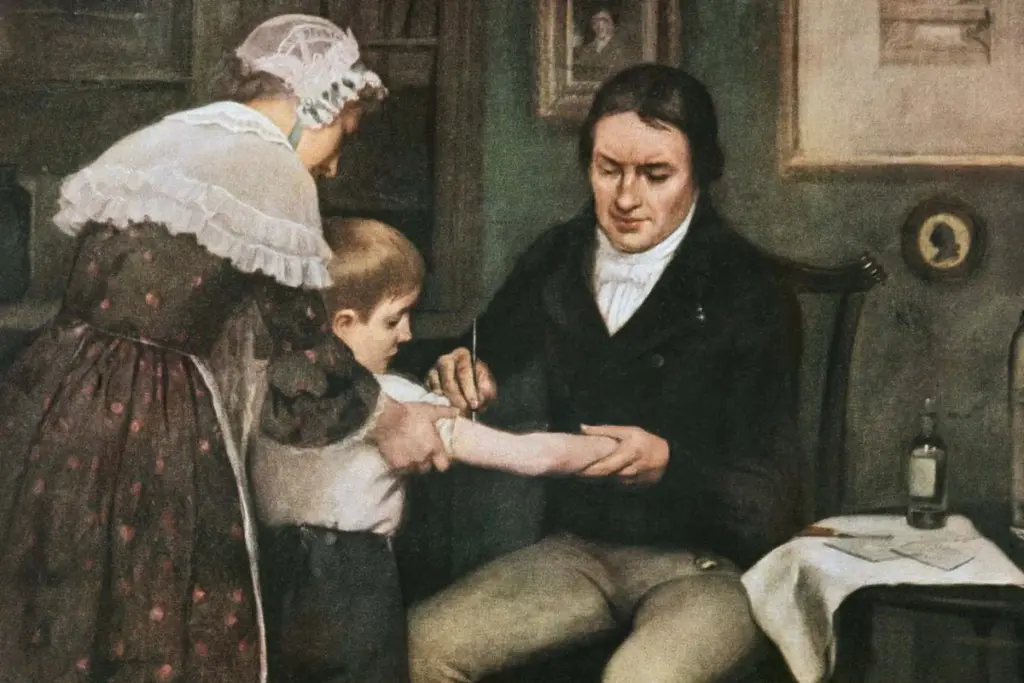
A contemporary examination of one of history’s most triumphant vaccination initiatives, which swiftly eradicated smallpox in Copenhagen during the early 19th century, has brought to light potential strategies for enhancing vaccine acceptance today.
Smallpox represented a formidable illness. It proved fatal for approximately one-third of those infected, while many survivors endured disfiguring scars or vision loss. Cumulatively, it is estimated to have caused 500 million deaths before a global vaccination effort finally eradicated it permanently in 1980.
However, one of the earliest localized instances of eradicating the disease occurred in Copenhagen in 1808. In the preceding fifty years, smallpox had claimed over 12,000 lives in the city.
The smallpox vaccine, the very first of its kind, was developed by the English physician Edward Jenner in 1796. News of this breakthrough rapidly reached the Danish medical community and its social leaders, generating “excited attention and expectation,” as noted by Henrich Callisen, a prominent Danish physician at the time.
Physicians in Copenhagen soon began sourcing smallpox vaccines from Jenner in England. The initial recipient was the child of a Danish judge, swiftly followed by the child of a bishop. The vaccine demonstrated remarkable efficacy. Callisen documented instances where recipients shared beds with infected family members, wore their clothing, or even were breastfed by mothers with active smallpox, yet remained disease-free.
Establishing a National Vaccination Framework
Based on these early positive reports, the King of Denmark decreed the establishment of a vaccine commission in 1801. This body assumed responsibility for disseminating the smallpox vaccine as broadly as possible, while meticulously documenting vaccination figures and smallpox case numbers.
Andreas Eilersen, affiliated with Roskilde University in Denmark, and his research team analyzed these historical records. Their aim was to assess the impact of the vaccine rollout on smallpox incidence. Their findings indicated that by 1810, an impressive 90 percent of children in Copenhagen had received the vaccine, positioning Denmark as the most vaccinated country per capita in Europe.
This rapid adoption of vaccination led to the disappearance of smallpox from Copenhagen a mere seven years after the campaign’s commencement. In 1809, Callisen optimistically wrote, “[We] will be freed from one of the most terrible and destructive diseases we know.”
Factors Driving High Vaccination Rates
Eilersen and his colleagues identified several key elements that contributed to these exceptionally high vaccination rates. Primarily, the vaccine was provided at no cost to individuals unable to afford it. Furthermore, a significant number of church leaders and school teachers, in addition to medical professionals, actively promoted and administered the vaccine. The vaccine commission’s annual reports frequently highlighted priests who traveled extensively to advocate for and distribute the vaccine. One such priest, for example, administered the vaccine to 1,981 children within a single year.
As smallpox began to recede, the commission grew concerned that the severity of the disease might be forgotten, leading to complacency regarding childhood vaccinations. To sustain high vaccination levels, the commission decided in 1810 to institute a semi-mandatory policy. Vaccination became a prerequisite for a child’s church confirmation.
Some individuals opted out of vaccinating their children, a decision the commission attributed to “ignorance and prejudice.” Nevertheless, Callisen observed that the overwhelming majority of the population embraced the vaccine. He admitted to his initial apprehension upon the vaccine’s introduction but stated that he had “become completely convinced of the beneficial influence of vaccination on human wellbeing and happiness, and on increasing population and national strength.”
The Power of Unified Authority
Eilersen suggests that Denmark’s leaders were successful in cultivating widespread trust in the new vaccine through a unified approach. “Basically, we had a bunch of different authorities – the government, the medical establishment and the church – that all agreed on what to do,” he explained. “When they all collaborated like this, it helped convince the broader population that was not part of this elite group to take up the vaccine.”
Denmark continues to exhibit high levels of public trust in its governmental and medical institutions. According to Transparency International, an organization that monitors perceived corruption across 180 countries, Denmark consistently ranks first for its population’s trust in public institutions. This may help account for its ongoing high rates of childhood vaccination. For instance, approximately 96 percent of children in Denmark today receive vaccinations against diphtheria, tetanus, and pertussis, a figure that stands in contrast to the 80 percent in the US, which ranks 28th in public sector trust.