
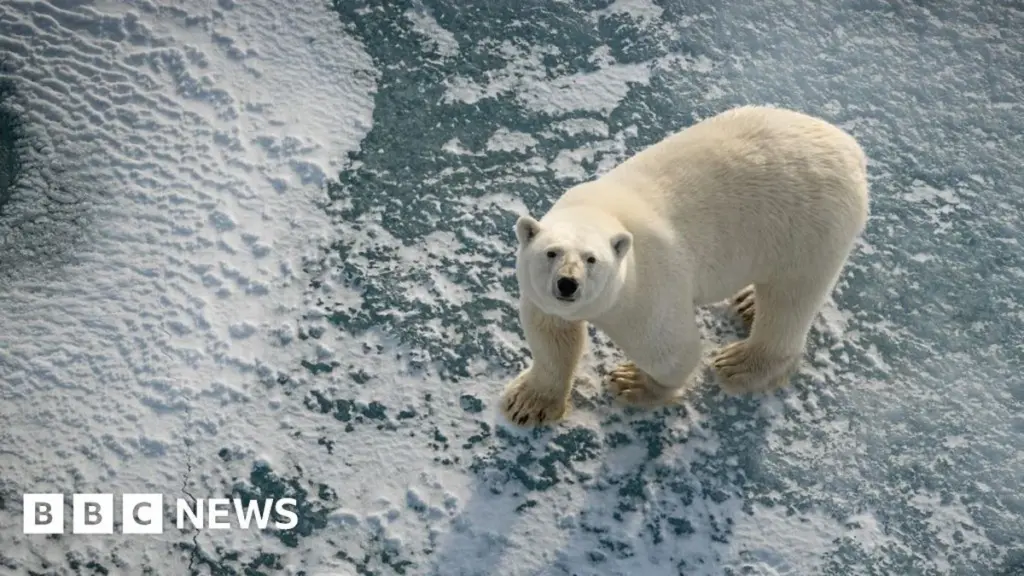
Counterintuitively, polar bears inhabiting the Norwegian Arctic archipelago of Svalbard have demonstrated improved health and increased body weight since the early 1990s. This trend has occurred concurrently with a steady reduction in sea ice, a direct consequence of ongoing climate change.
Sea ice serves as a critical hunting platform for polar bears, enabling them to prey on seals, which are rich in blubber. These fat reserves are essential for providing energy, maintaining body insulation, and supporting the production of nutrient-dense milk for cubs.
A comprehensive study conducted between 1992 and 2019 involved weighing and measuring 770 adult polar bears in Svalbard. The findings revealed a statistically significant increase in the bears’ overall fatness during this period.
Researchers hypothesize that the Svalbard bear population has adapted to the diminishing sea ice by diversifying their diet. This adaptation reportedly includes increased consumption of terrestrial prey, such as reindeer and walruses.
This surprising discovery, detailed in Scientific Reports, posed a particular challenge for scientists given the pronounced impact of climate change in the Svalbard region. Over the research timeframe, annual ice-free days in the area increased by nearly 100, equating to a loss rate of approximately four days per year due to global temperature rises.
“A fatter bear is a healthier bear,” stated Dr. Jon Aars, lead researcher from the Norwegian Polar Institute. He admitted to having anticipated a decline in the bears’ physical condition given the substantial loss of sea ice.
Walruses in Norway have been under official protection since the 1950s, following a period of severe depletion due to overhunting. The success of these conservation efforts has led to a recovery in walrus populations, potentially providing polar bears with a new, substantial food source.
“There are considerably more walruses available for them to hunt nowadays,” Dr. Aars observed. He also suggested that bears might be becoming more adept at hunting seals.
He further elaborated that if seals have less sea ice available, they tend to aggregate in smaller, concentrated areas. This could present an easier hunting opportunity for polar bears.
Temporary Reprieve, Long-Term Concerns
While this represents unexpected positive news for these Arctic predators, the researchers caution that this trend may not persist indefinitely. As sea ice continues its decline, bears will likely face longer journeys to reach hunting grounds. This increased travel will demand more energy, potentially depleting their vital fat reserves.
The charity Polar Bears International notes that Svalbard’s polar bears were once among the most heavily hunted species globally. International protections, introduced in the 1970s, significantly curbed this pressure.
Experts propose that the recent improvements in polar bear condition may be linked to the recovery of the population from past hunting levels. This, combined with an increased presence of walruses and reindeer in recent decades, appears to have offered a temporary dietary advantage to the bears.
Dr. John Whiteman, chief research scientist at Polar Bears International, described the findings as “positive in the short term.” However, he emphasized that body condition is just one aspect of a larger picture.
“Other recent research on these same bears indicated that an increase in ice-free days negatively impacted cub survival, as well as the survival rates of subadult and older female bears,” Whiteman explained.
Divergent Arctic Realities
In other parts of the Arctic, the effects of climate change on polar bears are markedly different and more severe. Across the Arctic, there are 20 recognized sub-populations of polar bears.
In Canada’s Western Hudson Bay, home to the most southerly and extensively studied polar bear population, a decline in numbers has been directly attributed to rising temperatures.
Dr. Whiteman reiterated that the long-term outlook for polar bears remains intrinsically tied to the availability of sea ice. “Ultimately, ice loss means a decline in bear populations, but this study highlights that the short-term dynamics can be highly region-specific,” he stated.
Addressing BBC News, he concluded, “In the long term, if ice loss continues unchecked, we understand that the bears will eventually disappear.”