
A new study, believed to be the first of its kind globally, aims to determine if limiting teenagers’ social media usage actually leads to improvements in their mental well-being. The findings are not expected until mid-2027. By that time, other governments might have already implemented outright prohibitions on social media for adolescents.
This trial will not offer definitive answers on the efficacy of such bans. Currently, robust evidence supporting their value is scarce. Nevertheless, Australia has already enacted a ban for individuals under 16. Similarly, the UK government is initiating a consultation regarding a comparable measure.
Centering Young People in Research
A significant aspect of the trial is its focus on the young participants themselves, including their input in designing the intervention to be tested. Historically, children and teenagers have been excluded from both the design of social media platforms and the discussions surrounding their regulation.
“Children absolutely have to be part of this conversation,” states Pete Etchells, affiliated with Bath Spa University in the UK, who is not directly involved in the study.
The Scope of Social Media’s Influence
Amy Orben, a co-leader of the trial from the University of Cambridge, notes that evidence points to social media causing harm to individual children and adolescents, some of which is severe. However, she clarifies that it remains less clear whether the overall time spent on social media affects the broader population of young people.
Addressing this question necessitates large-scale, controlled research. To that end, Orben and her colleagues are launching The IRL Trial in Bradford, UK. The project plans to enroll approximately 4000 12-to-15-year-olds from ten different schools.
Trial Mechanics and Intervention
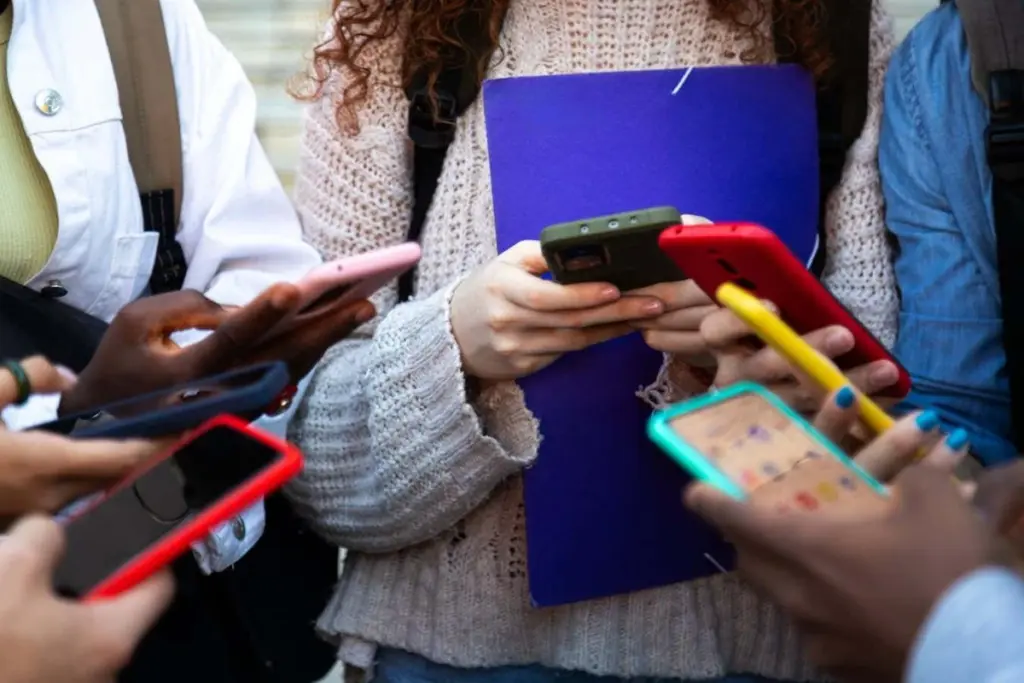
All participants will have a custom app installed on their phones to monitor their social media activity. For half of these participants, the app will also enforce time limits on selected social media applications, such as TikTok, Instagram, and YouTube. Messaging applications like WhatsApp will be excluded from these restrictions.
“They can only use all of those apps together for a total of one hour, and they also have a nighttime curfew where they can’t use it… between 9 pm and 7 am,” explains Dan Lewer from the Bradford Centre for Health Data Science, who is also a co-leader of the trial. Lewer emphasizes that this represents a substantial reduction, given that the average daily screen time for this age group, 12-to-15-year-olds, is around three hours.
The remaining participants will be permitted to continue using social media as they normally would.
Ensuring Research Integrity
Critically, the assignment of participants to either the intervention or control group will be conducted by year group. This randomization strategy means that within a single school, one year group might serve as the control, while another has its social media use restricted. The objective is to ensure comparable conditions across groups of children as much as feasible.
“If you removed or reduced social media use in one child, but their friendship group was still online after 9 pm, then they might feel like they’re missing out,” Orben points out, highlighting the necessity of such a balanced approach.
Lewer confirms that the study’s design was developed in collaboration with the teenagers themselves. “They didn’t want us to test a total ban,” he stated.
The full-scale study is scheduled to run for six weeks, commencing around October. Researchers anticipate releasing their initial findings by mid-2027.
Data Collection and Potential Insights
The trial is expected to yield more precise data than currently available regarding teenagers’ social media usage patterns and timing. This will be achieved through direct monitoring via the app, rather than relying on self-reported information, according to Orben. The research team will also gather data concerning anxiety levels, sleep quality, the extent of time spent with friends and family, overall well-being, body image perceptions, social comparison tendencies, school attendance, and experiences with bullying.
“The honest answer is that we don’t know, and that’s why studies like this are so important,” says Etchells, underscoring the necessity of understanding whether restricting or banning social media benefits or harms young individuals.
The significant lack of high-quality research in this area makes this trial particularly valuable. This gap was recently highlighted in a report by the UK’s Department for Science, Innovation and Technology, which noted the absence of robust, causal evidence connecting children’s mental health and well-being with their engagement with digital technologies, specifically social media, smartphones, and AI chatbots.
Ethical Considerations and Teen Perspectives
Margarita Panayiotou from the University of Manchester emphasizes the importance of involving young people in research concerning social media. She notes that the decision to test restrictions rather than a complete ban is more practical, as teens in her studies often describe methods they would use to bypass such prohibitions. This approach may also be more ethically sound, given the unknown potential harms of outright bans.
Panayiotou shares that teenagers often find social media a useful tool for self-discovery. However, this does not preclude them from recognizing its downsides. “They also talk about mistrusting the platforms themselves” and experiencing a “loss of control… they’ll find themselves on social media without realising.” Furthermore, adolescents have reported anxieties related to judgment online, body image comparisons, and cyberbullying.
The Role of Legislation and Future Directions
Etchells and Panayiotou suggest that a key challenge for governments is to compel technology companies to create safer and healthier social media environments for young people.
The Online Safety Act 2023 (OSA) includes provisions that require tech companies like TikTok, Meta (which owns Facebook, WhatsApp, and Instagram), and Google (owner of YouTube) to assume greater responsibility for user safety. “If the compliance elements of the OSA were actually properly enforced, I think that would go some way to solving some of the issues that we have already,” Etchells commented.