
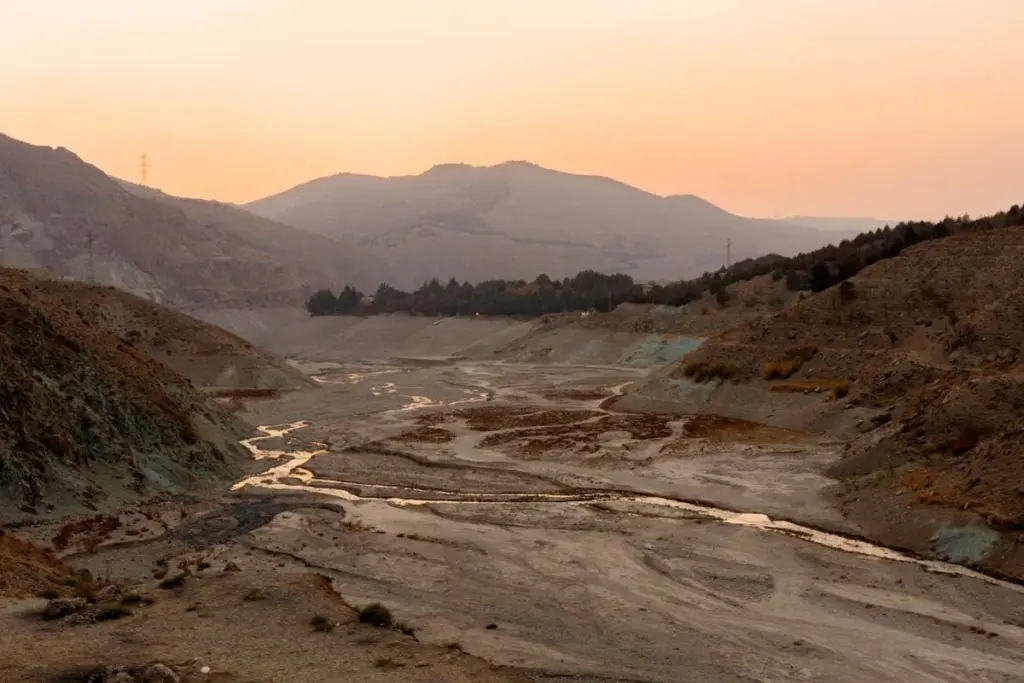
Humanity has entered a period of profound water scarcity, characterized by what a United Nations report terms “water bankruptcy.” This situation arises from a dual pressure of excessive consumption coupled with the escalating impacts of global warming. Currently, an estimated three out of every four individuals worldwide inhabit countries grappling with either insufficient water availability, contamination issues, or recurrent droughts.
The UN report underscores a critical trend: most geographical regions are exceeding their annual replenishment of freshwater from rain and snowmelt. This unsustainable practice forces a heavy reliance on groundwater reserves—resources that can take millennia to recharge. The report highlights that 70% of major underground aquifers are experiencing depletion. Disturbingly, many of these environmental shifts are proving irreversible.
Two primary drivers exacerbate this crisis: intensive agricultural practices and the expansion of urban centers into arid territories. These dry regions are becoming progressively parched due to sustained climate change. The consequences are starkly visible, with nearly 700 sinkholes forming in Turkey directly attributed to excessive groundwater extraction. Furthermore, dust storms, a direct result of desertification, have led to hundreds of fatalities in Beijing.
Kaveh Madani, the author of the report and affiliated with the UN University Institute for Water, Environment and Health, draws a stark analogy. “Our checking account, the surface water… is now empty,” he stated. “The savings account that we inherited from our ancestors, the groundwater, glaciers and so on … they’re also drained now. We are seeing symptoms around the world … of water bankruptcy.”
The immediate human toll is substantial, with approximately 4 billion people experiencing water scarcity for at least one month annually. This scarcity acts as a potent catalyst for migration, escalating conflicts, and widespread social unrest. Madani, who previously served as deputy head of Iran’s Department of Environment, pointed to water shortages as a contributing factor to recent violent protests in his country, even though a currency collapse was the proximate cause.
Iran, for instance, endured its driest autumn in half a century. Concurrently, an extensive network of dams and agricultural wells has pushed Lake Urmia, once the Middle East’s largest lake, to the brink of desiccation, while severely depleting the nation’s groundwater reserves. The Iranian government has reportedly considered evacuating the capital, Tehran, and is exploring methods like cloud seeding to artificially induce rainfall.
In the United States, the Colorado River, a vital water source for a significant portion of the American West, has seen its flow diminish by an estimated 20% over the past two decades. This reduction is largely due to decreased precipitation and increased evaporation rates. However, the river is also subjected to excessive diversion for irrigating feed crops for beef and dairy production, even as major urban areas like Los Angeles depend on it for potable water. Like an increasing number of rivers globally, it no longer consistently reaches the sea.
The river’s two principal reservoirs are currently operating at approximately 30% of their capacity. Projections suggest they could reach “dead pool” levels—between 10% and 15% of capacity—as early as 2027, according to Bradley Udall of Colorado State University. Discussions among states regarding necessary consumption reductions faltered last year.
Paradoxically, efforts to enhance agricultural water efficiency have sometimes resulted in increased water usage. Systems like drip or sprinkler irrigation allow water to be absorbed gradually by plants, whereas traditional field flooding leads to more water runoff back into rivers. Thus, Udall suggests that efficiency gains must be accompanied by direct reductions in water consumption.
“The solution is going to have to come from agriculture primarily because they use 70 percent of the water,” Udall stated. “Ag cutbacks, that’s what we’re talking about, and that’s true worldwide.”
Half of all global food production occurs in regions facing declining water storage. Curtailing agriculture’s water footprint necessitates economic diversification, as farming provides livelihoods for over 1 billion individuals. The majority of these are situated in lower-income nations, which frequently export food to the service-based economies of high-income countries.
“Water plays a major role in economies… because it puts people [in] jobs,” Madani explained. “If they lose their jobs, what happens is what you see in Iran today.”
Even in regions with ample rainfall, increased water demand arises from data centers and industrial activities. Furthermore, pollution from sewage, fertilizers, and animal waste contaminates water sources. The loss of wetlands, covering an area equivalent to the European Union, primarily due to agricultural conversion, has led to an estimated global economic loss of $5.1 trillion in ecosystem services, including flood regulation, food provision, and carbon sequestration.
In Bangladesh, roughly half the country’s groundwater is contaminated with arsenic, a problem exacerbated by rising sea levels and saltwater intrusion. Simultaneously, tap water and the “dead river” in the capital, Dhaka, have been poisoned by chemical runoff from the fast fashion industry catering to markets in Europe and North America.
“Every person knows that the rivers are being polluted because of the garment industry,” commented Sonia Hoque from the University of Oxford. “But they know that stringent regulation, if applied, would… scare away the buyers.”
Many rivers, lakes, wetlands, and aquifers may never recover their former ecological states. Additionally, extensive glacial melt has diminished water supplies for hundreds of millions of people.
Madani asserts that humanity must adapt to a reality of diminished water availability. While improved water management can facilitate this transition, a fundamental prerequisite is for most nations to accurately account for their water resources and consumption. This process should commence with the installation of water meters in households, wells, and diversion channels.
“You’re thinking about launching a [cloud-seeding] rocket to get water, but you don’t even know how much water you have in your system,” Madani concluded. “We cannot manage what we do not measure.”